Classical music history is a vast, richly layered journey that spans over a thousand years of human creativity, cultural transformation, and artistic innovation. From the earliest sacred chants sung in medieval monasteries to the electrifying symphonies that reshaped concert halls in the 20th century, the story of classical music is inseparable from the story of Western civilization itself. Whether you are a curious beginner tuning in for the first time or a seasoned listener looking to deepen your understanding, exploring the evolution of classical music offers profound insights into the societies, technologies, and philosophies that shaped each era. This guide walks you through the major periods, the composers who defined them, and the key developments that made classical music the enduring art form it remains today.
What Is Classical Music History and Why Does It Matter?
When people refer to classical music history, they are talking about the timeline of Western art music — a tradition rooted in European liturgical and secular practices that evolved through distinct stylistic periods. Unlike popular music genres that change with every decade, classical music developed over centuries, building on the innovations of earlier generations while pushing boundaries in harmony, orchestration, and form. Understanding this history matters because it gives listeners context. When you know that Beethoven was deliberately breaking the elegant structures of the Classical period, his late string quartets become even more fascinating. When you recognize that Debussy was rejecting Germanic traditions to capture impressionistic light and color, his music clicks in an entirely new way. Classical music history is not just a catalog of old compositions; it is a living narrative of human expression.
The Medieval Era: Where Western Music Began
The story of classical music begins in the Medieval period, roughly from the 5th century to the 14th century. This is where Western musical notation was born, largely thanks to the monk Guido d’Arezzo, who developed a system of lines and spaces that allowed composers to write down their ideas for the first time. Before that, music was passed down orally, and every performance was unique.
Key characteristics of Medieval music include:
- Gregorian Chant — Monophonic, unaccompanied vocal music sung in Latin, used in Catholic liturgy
- Organum — The earliest form of polyphony, where a second vocal line was added above or below a chant
- Secular Troubadour Songs — Lyrical compositions about love, chivalry, and courtly life
The Medieval era laid the essential groundwork. Without the development of notation, there would be no way to preserve or study the compositions that followed.
The Renaissance: Polyphony and the Birth of Modern Harmony
The Renaissance period, spanning roughly from 1400 to 1600, saw an explosion of musical complexity. Composers like Josquin des Prez, Giovanni Pierluigi da Palestrina, and Thomas Tallis mastered the art of weaving multiple independent vocal lines together in intricate polyphonic textures. The mass and the motet became dominant sacred forms, while the madrigal brought secular poetry to life through expressive, word-painting melodies.
This era was defined by several breakthroughs:
- The printing press — Music could now be distributed widely, accelerating the spread of new ideas across Europe
- Increased use of harmony — Composers began thinking about chords and consonance more deliberately
- Rise of secular instrumental music — Instruments like the lute, viol, and harpsichord gained prominence
For anyone studying the history of classical music, the Renaissance is a turning point where music transitioned from a purely functional, liturgical role to an art form with its own expressive power.
The Baroque Period: Drama, Ornamentation, and Grandeur
The Baroque era, from approximately 1600 to 1750, is one of the most dramatic and influential chapters in classical music history. The word “baroque” itself comes from the Portuguese barroco, meaning an irregularly shaped pearl — and the music of this period is every bit as ornate and elaborate as that metaphor suggests. Composers like Johann Sebastian Bach, George Frideric Handel, Antonio Vivaldi, and Claudio Monteverdi pushed the boundaries of what music could express.
The Baroque period introduced several foundational elements that classical music students and historians still study today:
- Basso continuo — a continuous bass line played by a keyboard and cello or bass instrument, providing harmonic structure
- Opera — born in Italy around 1600, combining music, drama, and staging into a single art form
- The fugue — a complex compositional technique where a theme is introduced and then imitated across multiple voices
- The concerto — a form featuring a solo instrument or small group contrasted with an orchestra

Bach’s Well-Tempered Clavier, Handel’s Messiah, and Vivaldi’s The Four Seasons remain cornerstones of the repertoire. The Baroque period established the tonal system and compositional techniques that every subsequent era would build upon or react against.
The Classical Period: Structure, Balance, and Clarity
Following the grandeur of the Baroque, the Classical period (roughly 1750–1820) brought a renewed emphasis on balance, clarity, and formal structure. Composers like Wolfgang Amadeus Mozart, Joseph Haydn, and the young Ludwig van Beethoven crafted music that was elegant, accessible, and architecturally precise.
The symphony, the string quartet, and the piano sonata became the dominant genres. Sonata form — with its exposition, development, and recapitulation — became the blueprint for an enormous number of compositions. The Classical orchestra grew in size and standardization, with the clarinet, flute, and horn taking their established places in the woodwind and brass sections.
What makes the Classical period so important is its democratic approach to form. Music became structured enough to be understood on first hearing, yet complex enough to reward repeated listening. This balance between order and expressiveness defined the sound of Western art music for generations.
The Romantic Era: Emotion, Individualism, and Nationalism
The Romantic period, stretching from roughly 1820 to 1910, is often considered the golden age of classical music. Where the Classical period prized restraint and proportion, the Romantics celebrated emotion, individualism, and the sublime. Composers like Frédéric Chopin, Franz Liszt, Pyotr Ilyich Tchaikovsky, Richard Wagner, Johannes Brahms, and Gustav Mahler wrote music that was larger in scale, richer in harmony, and more emotionally intense than anything that came before.
Several defining features of Romantic music include:
- Expanded harmonic language — chromaticism and lush, dissonant chords pushed tonality to its limits
- Programmatic music — symphonies and tone poems that told stories or depicted scenes, like Berlioz’s Symphonie fantastique
- Nationalism — composers like Dvořák, Sibelius, and Grieg infused their music with folk traditions from their homelands
- The virtuoso performer — Liszt, Paganini, and others became rock-star celebrities of their day
The Romantic era also saw the rise of the large-scale symphony orchestra, with Mahler and Strauss writing works that required massive ensembles and pushed musicians to their technical limits.
The 20th Century and Beyond: Breaking the Rules
The 20th century shattered many of the conventions that had defined classical music for centuries. Arnold Schoenberg developed the twelve-tone technique, fundamentally changing how composers thought about pitch. Igor Stravinsky’s The Rite of Spring caused a riot at its 1913 premiere with its aggressive rhythms and dissonant harmonies. Later, composers like John Cage, Philip Glass, and Steve Reich explored minimalism, aleatoric music, and electronic experimentation.
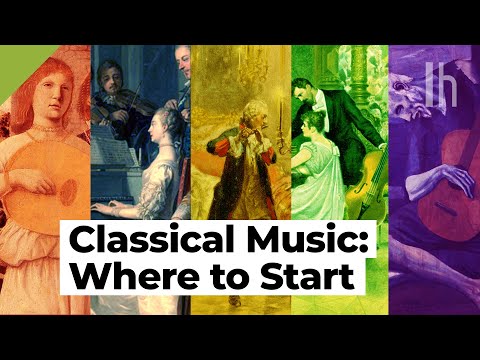
Key movements of 20th-century classical music include:
- Impressionism — Debussy and Ravel, focused on color, atmosphere, and ambiguous tonality
- Expressionism — Schoenberg and his disciples, embracing atonality and extreme emotional intensity
- Neoclassicism — Stravinsky and others who revived Baroque and Classical forms with a modern twist
- Minimalism — Glass and Reich, using repetition and gradual transformation to hypnotic effect
- Contemporary and postmodern — composers like Arvo Pärt, Thomas Adès, and Kaija Saariaho blending traditions in new ways
Today, classical music history continues to evolve. Contemporary composers blend electronic production, world music influences, and cinematic storytelling into their work, ensuring the tradition remains vibrant and relevant.
Comparison: Key Periods of Classical Music History
| Period | Dates | Key Composers | Defining Features |
| Medieval | 500–1400 | Hildegard von Bingen, Léonin, Pérotin | Monophonic chant, early polyphony, Gregorian chant |
| Renaissance | 1400–1600 | Palestrina, Josquin, Tallis | Rich polyphony, word painting, madrigals |
| Baroque | 1600–1750 | Bach, Handel, Vivaldi, Monteverdi | Fugue, basso continuo, opera, ornamentation |
| Classical | 1750–1820 | Mozart, Haydn, early Beethoven | Sonata form, symphony, clarity and balance |
| Romantic | 1820–1910 | Chopin, Wagner, Tchaikovsky, Brahms | Emotional intensity, expanded harmony, nationalism |
| 20th Century | 1900–present | Stravinsky, Debussy, Schoenberg, Glass | Atonality, minimalism, electronic experimentation |
Expert Tips for Exploring Classical Music History
Whether you are just beginning your journey or looking to refine your knowledge, these practical strategies will help you get the most out of studying classical music history:
- Listen chronologically. Start with a Medieval chant, then move to a Renaissance motet, a Baroque fugue, a Classical symphony, a Romantic tone poem, and a 20th-century piece. You will hear the evolution in real time.
- Use reliable recordings. Labels like Deutsche Grammophon, Hyperion, and Naxos offer historically informed performances that capture the sound world of each period.
- Read primary sources. Letters and diaries of composers like Mozart, Beethoven, and Debussy provide incredible personal insight into their creative processes.
- Attend live performances. Hearing a live symphony orchestra or chamber ensemble brings the music to life in a way that recordings cannot replicate.
- Learn basic music theory. Even a rudimentary understanding of keys, scales, and intervals transforms your listening experience and deepens your appreciation of compositional choices.
Frequently Asked Questions
What is the best way to start learning about classical music history as a complete beginner?
Start by listening to one representative work from each major period — a Gregorian chant for Medieval, a Palestrina motet for Renaissance, a Bach fugue for Baroque, a Mozart symphony for Classical, a Tchaikovsky orchestral piece for Romantic, and a Debussy prelude for the 20th century. Free resources like Naxos Music Library and YouTube channels like “Two Set Violin” and “Rick Beato” make this approachable and entertaining.
How did the Industrial Revolution impact classical music history?
The Industrial Revolution transformed classical music in multiple ways. Improved manufacturing made instruments more affordable and standardized, allowing larger orchestras. The expansion of railways enabled touring ensembles and international music festivals. The rise of the middle class created a growing audience for public concerts, shifting music from aristocratic salons to civic institutions and eventually to the modern concert hall.
What is the difference between “classical music” and “Western art music”?
Strictly speaking, “classical music” refers to the specific period from roughly 1750 to 1820 — the era of Mozart, Haydn, and early Beethoven. “Western art music” is the broader term that encompasses the entire tradition from the Medieval period through the present day. In everyday usage, however, most people use “classical music” as a catch-all for the entire tradition, which is perfectly acceptable in casual conversation.

Why is J.S. Bach considered the most important composer in classical music history?
Bach is often regarded as the supreme architect of Western tonal music. His works — from the Well-Tempered Clavier to the Mass in B Minor — represent the most complete synthesis of Baroque contrapuntal technique, harmonic depth, and spiritual expression. Nearly every major composer after Bach, from Mozart to Schoenberg, studied and revered his music. His compositions function as a comprehensive encyclopedia of musical possibility.
Is classical music history still evolving today?
Absolutely. Contemporary composers continue to push boundaries, incorporating electronic music, world music traditions, film scoring techniques, and experimental forms into the classical tradition. Composers like Caroline Shaw, whose Partita for 8 Voices won the Pulitzer Prize, and composers working in the post-minimalist and neo-romantic movements prove that classical music history is not a closed chapter — it is a living, breathing tradition that is still being written.
Conclusion
Classical music history is far more than a timeline of dead composers and dusty manuscripts. It is a living record of how human beings have used sound to express the full spectrum of emotion, intellect, and spirituality across a millennium. Every period — from the austere beauty of Medieval chant to the radical experimentation of the 21st century — reflects the culture, technology, and philosophical currents of its time. By studying this history, listeners gain not only a richer appreciation of individual works but also a deeper understanding of the world that created them. Whether you explore the Bach fugues, lose yourself in a Mahler symphony, or discover a contemporary masterpiece, the classical music tradition offers something profound and enduring for every generation.