Music is one of the most universal and powerful forms of human expression, yet defining it precisely can spark fascinating debate among scholars, musicians, and everyday listeners alike. At its simplest, the definition of a music refers to the art of arranging sounds and silence over time to create a composition that evokes emotion, tells a story, or reinforces cultural identity. But that is only the surface. Music is a complex, multi-layered phenomenon that spans biology, anthropology, mathematics, and neuroscience. Whether you are a curious beginner, an intermediate music enthusiast, or an advanced practitioner, understanding what music truly is — beyond just “organized sound” — opens doors to deeper appreciation and richer creative expression.
What Is the Definition of Music?
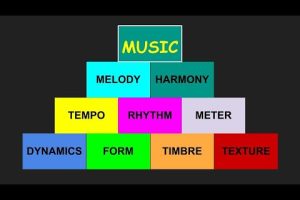
The most widely accepted music definition describes it as an art form whose medium is sound and silence. It exists in time and is expressed through elements such as pitch, rhythm, dynamics, and the sonic qualities of timbre and texture. Different cultures and academic traditions refine this definition slightly, but the core idea remains consistent: music transforms raw auditory stimuli into something meaningful.
Several authoritative sources reinforce this understanding:
- Merriam-Webster defines music as “the science or art of ordering tones or sounds in succession, in combination, and in temporal relationships to produce a composition having unity and continuity.”
- Oxford Languages describes it as “vocal or instrumental sounds (or both) combined in such a way as to produce beauty of form, harmony, and expression of emotion.”
- The Harvard Dictionary of Music takes a broader view, acknowledging music as “an art whose medium is sound and silence.”
Each definition captures a slightly different angle — structural, emotional, or philosophical — but together they paint a comprehensive picture of what music is and why it matters.
Breaking Down the Musical Definition Into Simpler Terms
If the academic definitions feel dense, here is a straightforward way to think about it. Music is what happens when a human being intentionally organizes sound in a way that communicates something — a feeling, a narrative, a spiritual experience, or pure aesthetic pleasure. The key word is intentionality. A random crash of cymbals is sound. That same crash placed deliberately within a composition, timed to a beat and supported by surrounding harmony, becomes music.
This distinction matters because it separates music from noise, or at least gives us a framework for understanding the boundary between the two — a boundary that is more fluid than most people assume.
Core Elements That Define Music
To fully grasp the definition of a music, you need to understand its building blocks. Every piece of music, regardless of genre, culture, or era, is constructed from a set of fundamental elements:
- Pitch — The highness or lowness of a sound, determined by its frequency. Pitch forms the backbone of melody and harmony.
- Rhythm — The pattern of sounds and silences over time. Rhythm gives music its pulse, its groove, and its structure.
- Dynamics — The volume and intensity of sound, ranging from pianissimo (very soft) to fortissimo (very loud).
- Timbre — Often called “tone color,” this is what makes a violin sound different from a piano, even when both play the same note at the same volume.
- Texture — The layering of musical voices or instruments, whether a piece is monophonic (single line), homophonic (melody with accompaniment), or polyphonic (multiple independent lines).
- Form — The overarching structure of a piece, such as verse-chorus, sonata form, rondo, or through-composed.
Understanding these elements is not just academic knowledge — it is a practical toolkit. Musicians use them to compose, performers use them to interpret, and listeners use them to analyze and enjoy music on a deeper level.
Rhythm, Melody, and Harmony: The Trinity of Musical Definition
Among the core elements, three stand out as the most universally recognized components of music. Rhythm organizes time; melody creates a memorable, singable line; and harmony adds depth by layering multiple pitches simultaneously. Together, these three elements form the foundation of virtually every musical tradition on Earth, from Western classical symphonies to West African drumming ensembles to Indonesian gamelan orchestras.
Here is a quick comparison of how these three elements function differently:
| Element | Primary Function | Time-Based? | Example |
| Rhythm | Organizes sound into patterns over time | Yes | A steady drumbeat in a pop song |
| Melody | Creates a recognizable, linear sequence of pitches | Yes | The main tune of “Happy Birthday” |
| Harmony | Adds vertical depth through simultaneous pitches | Partially | Chord progression underneath a vocal line |
While melody and rhythm exist even in the simplest folk traditions, harmony is more culturally specific. Many musical systems around the world emphasize rhythm and melody while using non-Western harmonic concepts or no harmony at all. This is an important nuance when defining music — harmony is not a universal requirement.
The Evolution of Music: A Historical Perspective
The definition of music has evolved alongside human civilization itself. The earliest known musical instruments — bone flutes dating back over 40,000 years — suggest that music predates written language. Ancient civilizations in Mesopotamia, Egypt, China, India, and Greece all developed distinct musical systems with their own scales, theories, and philosophical interpretations of what music is and what it does.
During the Medieval and Renaissance periods, Western music developed sophisticated notation systems and polyphonic composition techniques. The Baroque era brought expressive contrast and ornamentation. Classical music formalized sonata structure, while the Romantic period pushed emotional expression to its limits. The 20th century shattered conventions with atonality, electronic music, jazz improvisation, and eventually the digital revolution that gave rise to hip-hop, EDM, and countless subgenres.
Each era reshaped the definition of what music could be — and arguably, each era expanded what music is.
Types and Genres of Music
Music is incredibly diverse, and its genres reflect the cultural, social, and technological contexts in which they emerge. Here are some of the broadest and most recognized categories:
- Classical / Art Music — Rooted in Western orchestral and chamber traditions spanning from the medieval era to contemporary composition.
- Jazz — Originating in African American communities, jazz emphasizes improvisation, syncopation, and complex harmonic structures.
- Blues — Born from African American spirituals and work songs, blues laid the groundwork for rock, R&B, and hip-hop.
- Rock and Pop — The dominant popular genres of the late 20th and early 21st centuries, characterized by electric instruments, strong rhythms, and catchy hooks.
- Hip-Hop and Rap — Built on rhythmic vocal delivery over beats, hip-hop is one of the most globally influential music genres today.
- World and Traditional Music — Encompassing folk traditions, indigenous music, and regional styles from every continent.
- Electronic and Experimental — Music created or heavily manipulated using synthesizers, software, and digital audio technology.
Each genre carries its own conventions, but they all share the fundamental elements that define music: rhythm, pitch, dynamics, and expressive intent.
Why Music Matters: The Science and Psychology Behind It
Music is not merely entertainment — it is a profound neurological and psychological phenomenon. Research in neuromusicology has shown that listening to music activates multiple areas of the brain simultaneously, including regions responsible for motor control, emotion, memory, and reward. Dopamine release during peak musical moments is well-documented, explaining why a powerful song can literally make you feel chills.
Music therapy is now a recognized clinical practice used to treat conditions ranging from chronic pain and depression to stroke recovery and PTSD. The definition of a music extends beyond aesthetics into the realm of health and human development. Children who engage with music education show measurable improvements in language acquisition, spatial reasoning, and social skills.
On a cultural level, music serves as a marker of identity, a vehicle for storytelling, and a tool for social cohesion. National anthems, protest songs, lullabies, and ritual music all demonstrate that music is deeply embedded in what it means to be human.

Music Definition Across Different Cultures
One of the most important aspects of understanding what music is comes from recognizing that it is not a single, monolithic concept. Different cultures define music differently based on their values, spiritual beliefs, and social structures.
For example, in many West African traditions, music and dance are inseparable — you cannot fully define one without the other. In Indonesian gamelan music, the collective, interlocking patterns of instruments create a sense of communal unity that is the entire point of the music. In Western classical tradition, the composer’s written score holds near-sacred authority, while in jazz and folk traditions, improvisation and oral transmission are equally valid forms of creation.
These cultural differences do not undermine the definition of music — they enrich it. They remind us that music is a living, breathing human practice that adapts to every society that engages with it.
Music vs. Sound: Understanding the Difference
A common point of confusion is the distinction between sound and music. All music is sound, but not all sound is music. The table below clarifies the boundary:
| Criteria | Sound | Music |
| Intentionality | May be accidental or natural | Deliberately organized |
| Structure | No required pattern | Follows recognizable patterns (rhythm, melody, harmony) |
| Cultural Context | Universally present | Defined and interpreted within a cultural framework |
| Emotional Function | Not necessarily emotional | Typically designed to evoke emotion or response |
| Reproducibility | Often transient | Can be notated, recorded, and replicated |
This table highlights why the definition of a music goes beyond simply “organized sound” — it requires intention, structure, cultural meaning, and expressive purpose.
Expert Tips for Deepening Your Understanding of Music
Whether you are just beginning your musical journey or looking to refine your expertise, here are practical recommendations to help you engage more deeply with the definition and experience of music:
- Listen actively, not passively. Put on a piece of music with full attention. Notice the layers — the bass line, the percussion, the vocal melody, the harmonic shifts.
- Explore unfamiliar genres. Listen to a traditional Indian raga, a West African kora piece, or a contemporary electronic track. Cross-cultural exposure sharpens your understanding of what music can be.
- Learn an instrument, even at a basic level. Playing music reveals the physical and intellectual demands of musical creation in ways that listening alone cannot.
- Read music theory fundamentals. Understanding scales, intervals, chord progressions, and form gives you a vocabulary for discussing and analyzing music.
- Attend live performances. There is no substitute for experiencing music in a shared, physical space. The energy, acoustics, and communal atmosphere transform how you perceive sound.
- Study music history. Knowing the context in which a piece was created — the political climate, the technological innovations, the social movements — adds profound depth to your listening experience.
Conclusion
The definition of a music is far richer and more nuanced than most people realize. It is simultaneously an art form, a science, a cultural practice, a neurological experience, and a deeply personal mode of communication. From the earliest bone flutes to today’s AI-generated compositions, music has been one of humanity’s most enduring and transformative creations. By understanding its elements, its history, its cultural variations, and its psychological impact, you move beyond simply listening to music — you begin to truly know it. And that knowledge transforms every listening experience into something richer, more meaningful, and more connected to the broader human story.
Frequently Asked Questions
What is the simplest way to define music?
The simplest definition of a music is the intentional arrangement of sounds and silence over time to create an expressive composition. It is organized sound that communicates something — an emotion, a story, or an aesthetic experience — and is recognized within a cultural or social context.
How is music different from noise?
The primary difference lies in intentionality and structure. Noise is typically random, unstructured sound that lacks a clear communicative purpose. Music, on the other hand, is deliberately organized using elements like rhythm, melody, and harmony to create meaning and evoke a response. However, the boundary between noise and music is culturally defined and can be surprisingly fluid.
Can music exist without melody?
Yes. While melody is one of the most recognizable elements of music, many musical traditions emphasize rhythm and texture over melody. Drum circles, certain forms of electronic music, and some types of ritual music are built primarily on rhythmic patterns and timbral variation rather than a traditional melodic line.
Why is music important to human beings?
Music activates multiple brain regions simultaneously, triggering emotional, motor, and cognitive responses. It fosters social bonding, supports emotional regulation, aids in memory and learning, and serves as a powerful cultural marker. Its importance is deeply rooted in human biology and social evolution.
What defines a piece of music as belonging to a particular genre?
Genre classification is typically based on shared characteristics such as rhythm patterns, instrumentation, harmonic language, vocal style, lyrical themes, and cultural origins. However, genre boundaries are increasingly fluid, and many modern pieces blend elements from multiple genres, making strict categorization more challenging than it once was.
Is music a universal human phenomenon?
Yes. Every known human culture has created and engaged with music in some form. Archaeological evidence suggests that music predates written language by tens of thousands of years. While the specific sounds, structures, and functions of music vary dramatically across cultures, the fundamental human impulse to create and engage with organized sound appears to be universal.