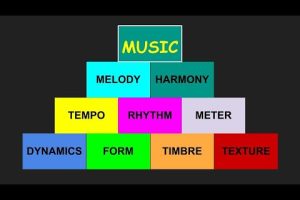
When you press play on your favorite song, tap a piano key, or even tap your foot to a rhythm on a subway platform, you are participating in one of the most universal human experiences ever known. But if someone asks you to define what music is, the answer is far more layered than it seems at first glance. Music is not simply organized sound, though that is a starting point. It is a cultural phenomenon, a neurological event, an emotional catalyst, and a profound form of human expression that has shaped civilizations for tens of thousands of years. This article breaks down the definition of music from multiple angles—scientific, cultural, philosophical, and practical—so you walk away with a genuinely deep understanding of what music really is and why it matters.
What Is Music? A Comprehensive Definition
At its most fundamental level, music can be defined as an art form and cultural activity whose medium is sound and silence, organized in time through elements like rhythm, melody, harmony, and timbre. But that academic definition barely scratches the surface. Music is also a language without words, a social bonding mechanism, a memory trigger, and a tool for emotional regulation. Different disciplines offer different definitions. Psychologists view music as a pattern-recognition exercise for the brain. Anthropologists see it as a marker of cultural identity. Neuroscientists study music as a complex interplay between auditory processing, motor planning, and emotional centers in the brain. When you combine all these perspectives, you get a richer, more accurate picture of what music truly represents in human life.
Understanding the definition of music also requires acknowledging that it is culturally constructed. What sounds like music in one culture might not be classified as such in another, which adds a fascinating dimension to the question. The Western concept of tonal harmony, for example, is just one system among many. Indonesian gamelan, West African drumming traditions, and Indian classical music all operate under entirely different organizational principles. Music is not a single, monolithic thing—it is a global tapestry of organized sonic expression.
The Core Elements That Define Music
Every piece of music, regardless of genre or culture, is built from a set of foundational elements. These are the building blocks that separate organized musical sound from random noise. Understanding these components is essential to grasping the full definition of music.
Rhythm and Beat
Rhythm is the backbone of music. It refers to the pattern of sounds and silences arranged over time, often anchored by a recurring beat. Without rhythm, music loses its sense of forward motion and pulse. Different cultures emphasize different rhythmic structures—complex polyrhythms in West African drumming, steady four-on-the-floor patterns in electronic dance music, and fluid, rubato timing in classical Japanese music all demonstrate the versatility of rhythmic organization.
Melody and Harmony
Melody is a sequence of notes that feels like a coherent, singable line. Harmony refers to the simultaneous combination of notes to create chords and chord progressions that support or contrast the melody. Together, melody and harmony are what give music its emotional direction and sense of tension and resolution. They are the elements most listeners intuitively respond to, even if they cannot name them technically.
Timbre and Texture

Timbre is the quality that distinguishes one instrument from another, even when playing the same note at the same volume. A violin and a trumpet producing the same pitch sound entirely different because of their unique harmonic overtones and resonance characteristics. Texture describes how these timbres layer together—whether a piece is monophonic (a single melodic line), homophonic (melody with accompaniment), or polyphonic (multiple independent melodic lines interweaving).
The Science Behind Why We Experience Music
Defining music also means understanding how the human brain processes it. When you listen to a song, your auditory cortex decodes the frequencies and patterns. Simultaneously, your brain’s reward system—specifically the nucleus accumbens—releases dopamine, the same neurotransmitter associated with pleasure from food and love. This is why music can feel so deeply satisfying.
Research in music cognition has revealed several fascinating insights:
- Music activates both the left hemisphere (for structural and pattern analysis) and the right hemisphere (for emotional and tonal processing) simultaneously.
- Entrainment, the process by which your brain locks onto a musical beat, explains why you naturally nod your head or tap your foot.
- Musical anhedonia—a condition where approximately 3–5% of people experience no pleasure from music—highlights how deeply wired music perception is in the human brain.
- Fetal research shows that unborn babies respond to rhythmic patterns, suggesting a biological predisposition to music from the earliest stages of life.
These findings reinforce that music is not just an abstract cultural invention. It is embedded in our biology, making the question “what is music” as much a question about human neuroscience as it is about art.
How Music Differs from Sound and Noise
One of the most common misconceptions is that music is simply “organized sound.” While partially true, this definition is incomplete and sometimes misleading. Sound is any vibration that travels through a medium—air, water, or solid materials. Noise is typically defined as unwanted or irregular sound. Music occupies a unique space between these categories. It is intentional, structured, and culturally contextual. A car engine is sound; traffic is noise; a symphony orchestra performing Beethoven is music. But a free jazz improvisation or an experimental electronic piece might blur these lines deliberately.
The following table compares sound, noise, and music across key dimensions:
| Characteristic | Sound | Noise | Music |
| Intentionality | None required | Usually unintentional | Deliberately created |
| Structure | Random or patterned | Unpredictable, chaotic | Organized in time |
| Cultural Context | Neutral | Generally negative | Meaningful and symbolic |
| Emotional Response | Varies | Often discomfort or irritation | Purposefully evocative |
| Repeatability | N/A | Rarely intentional | Composed for repetition and variation |

This comparison shows that the boundary between noise and music is not always fixed. Avant-garde composers, noise artists, and experimental musicians have spent decades challenging these definitions, proving that what counts as music is fluid and subjective.
The Evolution of Music Across Cultures and History
Music has existed for at least 40,000 to 50,000 years, with some scholars suggesting that early hominins may have used rhythmic vocalizations or percussion much earlier. The oldest known musical instruments—bone flutes discovered in German caves—date back approximately 43,000 years. Since then, music has evolved alongside human civilization, taking on vastly different forms depending on geography, spirituality, and social structure.
Key milestones in the evolution of music include:
- Prehistoric vocal and percussion-based music used in rituals and communal gatherings.
- Ancient Egyptian and Mesopotamian music, which incorporated instruments like harps, lyres, and flutes for religious ceremonies.
- Ancient Greek music theory, where philosophers like Pythagoras explored mathematical relationships between musical intervals.
- The development of Western classical music notation during the medieval period, which revolutionized how music was preserved and transmitted.
- The rise of popular music in the 19th and 20th centuries, driven by industrialization, recording technology, and radio.
- The digital revolution, which democratized music production and distribution, leading to genres like EDM, hip-hop, and lo-fi that were previously impossible.
This evolutionary arc demonstrates that defining music means recognizing it as a living, adaptive human practice rather than a static concept. Every generation reshapes what music means and how it functions in society.
Why Defining Music Matters in the Modern World
You might wonder why a precise definition of music matters in everyday life. The answer lies in how we create, consume, and protect musical works. In the digital age, questions about copyright, streaming royalties, and AI-generated music all depend on how we define music. If an algorithm composes a piece of music, does it count as music? If a soundscape recording has no melody or rhythm, is it music or just ambient sound?
These questions are not merely academic. They have real implications for artists, technologists, and legal professionals. A strong, nuanced definition of music helps us navigate these emerging challenges with clarity and fairness. It also helps educators design better music curricula, therapists develop more effective music-based interventions, and technologists build tools that genuinely serve musical creativity.
Expert tip: Whether you are a musician, a listener, or someone simply curious, the best way to deepen your understanding of music is to listen actively. Try to identify rhythm, melody, and timbre in songs you hear. Pay attention to how different genres organize sound differently. Active listening transforms passive consumption into genuine understanding.
Conclusion
So, what is music? It is organized sound shaped by intention, culture, and human emotion. It is a biological response, a social glue, an art form, and a universal language that transcends borders and generations. Defining music requires looking beyond simple dictionary entries and embracing the complexity of how sound becomes meaning. From the rhythmic patterns of ancient drumming to algorithmically generated playlists on modern streaming platforms, music continues to evolve while remaining one of the most fundamental expressions of what it means to be human. Whether you create it, perform it, or simply listen, music enriches your life in ways that science is only beginning to fully understand.
Frequently Asked Questions
What is the simplest definition of music?
The simplest definition of music is organized sound that is intentionally structured in time, typically incorporating elements like rhythm, melody, harmony, and timbre to create aesthetic and emotional meaning.
How is music different from just noise?
The key difference lies in intentionality, structure, and cultural context. Music is deliberately organized and carries meaning within a given culture, while noise is typically unstructured, chaotic, and perceived as unwanted sound.
Can animals produce music?
Some animals produce sounds that resemble music, such as birdsong and whale songs, which have complex patterns and rhythmic structures. However, whether these qualify as music depends on how you define music—the presence of human intention and cultural context is a factor many definitions include.
Why do humans make music?
Humans make music for a variety of reasons, including emotional expression, social bonding, cultural identity, ritual and ceremony, entertainment, and cognitive stimulation. Music activates reward centers in the brain and triggers dopamine release, making it inherently pleasurable.
Is AI-generated music considered real music?
This is a subject of ongoing debate. AI-generated music technically meets many structural definitions of music, as it can produce organized sound with rhythm, melody, and harmony. However, questions about intentionality, emotional depth, and cultural meaning continue to fuel the conversation about whether AI music carries the same significance as human-created music.