Music is one of the most universal and powerful forms of human expression, yet defining it precisely can be surprisingly complex. Whether you are a curious beginner picking up an instrument for the first time, an intermediate musician refining your craft, or an advanced composer pushing creative boundaries, understanding the definitions for music gives you a stronger foundation for everything you do with sound. This comprehensive guide explores what music really means from multiple angles — academic, cultural, historical, and practical. We will break down core musical elements, compare definitions across traditions, and answer the most common long-tail questions people search for online.
What Is Music? Core Definitions and Meanings
At its simplest, music can be defined as an art form and cultural activity whose medium is sound organized in time. But this broad definition barely scratches the surface. Different disciplines, cultures, and traditions offer their own interpretations of what constitutes music, which is precisely what makes the subject so rich and endlessly fascinating.
The Academic Definition of Music

In academic circles, music is typically described as a structured arrangement of sounds and silences that incorporates elements such as pitch, rhythm, dynamics, and timbre. The Oxford English Dictionary defines music as “vocal or instrumental sounds (or both) combined in such a way as to produce beauty of form, harmony, and expression of emotion.” Meanwhile, musicologists like John Paynter have emphasized that music is a humanly organized sound, distinguishing it from random noise through intentional structure and perception.
From a cognitive science perspective, researchers like Aniruddh Patel argue that music is defined not just by its physical properties but by how the human brain processes and interprets patterned sound. This neurological angle reveals that our definition of music is deeply tied to how we perceive melody, meter, and emotional contour.
Historical Definitions of Music Through the Ages
The way humanity has defined music has evolved dramatically over thousands of years. Understanding this evolution gives you valuable context for why music means what it does today.
Ancient and Classical Perspectives
In ancient Greece, philosophers like Pythagoras and Plato considered music to be a mathematical and cosmological discipline. Pythagoras believed that musical intervals corresponded to numerical ratios, linking harmony to the very structure of the universe. Plato, in his work The Republic, categorized music as essential to moral education and emotional balance, arguing that different modes of music could shape a person’s character.
During the medieval period, music was largely defined through its relationship with the divine. Gregorian chant and sacred polyphony were seen as pathways to spiritual transcendence. The definition of music was inseparable from its liturgical function.

Modern and Contemporary Shifts
The Enlightenment era brought a shift toward music as an autonomous art form, valued for its aesthetic and emotional qualities rather than purely spiritual or mathematical properties. By the 20th century, avant-garde composers like John Cage challenged traditional definitions entirely. His famous piece 4’33” — where performers play nothing — forced audiences to ask: what truly separates music from silence?
Today, the definition of music is more inclusive than ever, embracing electronic sound design, found sound, hip-hop beat-making, and cross-cultural fusions that defy classical boundaries.
Key Elements and Definitions in Music Theory
Understanding the building blocks of music is essential for anyone who wants to go beyond surface-level definitions. Each element carries its own precise meaning within the framework of music theory.
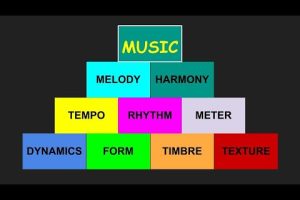
- Melody — A sequence of single notes perceived as a coherent, linear succession. It is often called the “tune” and is what most people hum from memory.
- Harmony — The simultaneous combination of different pitches to create chords and chord progressions that support or contrast with the melody.
- Rhythm — The pattern of sounds and silences organized in time, defined by beat, meter, tempo, and syncopation.
- Timbre — Also known as tone color, this refers to the unique quality of a sound that distinguishes one instrument or voice from another.
- Dynamics — The variation in volume and intensity, ranging from pianissimo to fortissimo.
- Form — The structural architecture of a piece, such as sonata form, rondo, or verse-chorus structure.
- Texture — How layers of sound interact, whether the music is monophonic, homophonic, or polyphonic.
Each of these definitions is not just a theoretical label; they are practical tools that musicians use every day to create, analyze, and discuss music.
Definitions of Music by Genre and Culture
One of the most fascinating aspects of defining music is how much it varies across genres and cultural traditions. What one culture considers music, another might classify differently.
Western Classical Music Definition
In the Western tradition, music is often defined by notation systems, harmonic complexity, and formal structures. Think of symphonies, operas, chamber music, and concertos. The emphasis is on written composition, trained performers, and a rich tradition of theoretical analysis that dates back to the Renaissance.
Traditional and Folk Music Definitions
Folk and traditional music is typically defined by oral transmission, cultural identity, and community participation rather than written notation. These genres are deeply tied to the social and spiritual life of specific communities, from West African drumming traditions to Irish sean-nós singing.
Electronic and Experimental Music
Electronic music redefines what sound can be used as music, relying on synthesizers, digital audio workstations, and production techniques. Genres like ambient, techno, and dubstep push the boundaries of rhythm and timbre far beyond traditional acoustic instruments.
Western vs. Eastern Definitions of Music: A Comparison
| Aspect | Western Music Definition | Eastern Music Definition |
| Foundation | Harmony and chord progressions based on equal temperament | Melody and rhythmic cycles (tala) based on just intonation |
| Notation | Staff notation, widely standardized | Solfège systems (e.g., sargam), oral tradition, or tablature |
| Improvisation | Present in jazz and contemporary; less central in classical | Central to genres like Indian raga and Persian dastgah |
| Rhythmic Structure | Measured in bars and time signatures (4/4, 3/4) | Complex cyclic patterns and tala systems |
| Role of Music | Concert performance, entertainment, fine art | Spiritual practice, storytelling, ritual, and devotion |
| Scale System | Major and minor scales, modes | Raga systems (Indian), maqam systems (Arabic/Persian) |
This comparison demonstrates that the definition of music is not universal — it shifts dramatically depending on cultural context, theoretical framework, and the listener’s expectations. Embracing this diversity enriches your understanding and appreciation of what music can be.
Practical Tips for Deepening Your Understanding of Music
Now that you have explored multiple definitions for music, here are actionable ways to deepen your knowledge:
- Study basic music theory — Understanding terms like interval, chord, and modulation transforms the way you listen to and create music.
- Listen across cultures — Explore genres you have never encountered, from Indonesian gamelan to Brazilian bossa nova to West African highlife.
- Analyze song structures — Break down how professional songs use form, dynamics, and texture to create emotional impact.
- Keep a listening journal — Write down your observations about what you hear, which trains your ear and deepens your vocabulary for describing music.
- Collaborate with musicians from different backgrounds — Direct experience with diverse musical traditions is the fastest way to expand your definition of music.
Expert tip: Do not limit yourself to one definition. The most insightful musicians and scholars hold multiple definitions in mind simultaneously, allowing them to appreciate music from every angle — emotional, structural, cultural, and mathematical.

Conclusion
The definitions for music are as varied and dynamic as the art form itself. From the ancient Greeks who saw music as a branch of mathematics to modern producers sculpting sound in digital studios, humanity has continually redefined what music means. Whether you approach music as a theoretical discipline, a cultural practice, an emotional outlet, or a spiritual journey, understanding these multiple definitions empowers you to engage with music on a deeper level than ever before.
Music ultimately defies a single, rigid definition — and that is what makes it endlessly compelling. The next time you listen to a piece of music, consider not just what sounds you are hearing, but what definition of music you are bringing to the experience. That awareness is the first step toward truly understanding one of humanity’s greatest creative achievements.
Frequently Asked Questions
What is the simplest and most widely accepted definition of music?
The most widely accepted definition is that music is sound organized in time, typically involving elements like pitch, rhythm, dynamics, and timbre that are arranged intentionally by a creator or performer to produce aesthetic or emotional meaning.
How do different cultures define music differently from each other?
Western cultures often define music through harmonic structure, notation, and formal composition, while many Eastern and indigenous cultures define music through melodic ornamentation, rhythmic cycles, oral tradition, and spiritual or communal function. The key difference lies in what each culture considers the most essential element that makes organized sound into music.
Can any sound be considered music, or are there strict criteria?
There are no universally strict criteria. John Cage’s 4’33” and genres like noise music challenge the idea that music requires conventional melody or harmony. Most definitions agree that intentionality and listener perception play central roles — if a creator organizes sound with artistic purpose and an audience perceives it as music, it generally qualifies.
What is the difference between music and noise from a definitional perspective?
The traditional boundary between music and noise is defined by intentionality, structure, pattern, and cultural context. Music typically exhibits organized pitch, rhythm, and repetition, while noise is perceived as unstructured or random. However, this line is increasingly blurred in genres like electronic music, sound art, and experimental compositions where noise is deliberately incorporated as a musical element.
Why is understanding music definitions important for musicians and listeners?
For musicians, a strong grasp of music definitions builds theoretical fluency, communication skills, and creative confidence. For listeners, understanding definitions sharpens analytical listening, deepens emotional engagement, and fosters appreciation for diverse musical traditions around the world. In both cases, definitions serve as a bridge between hearing and truly understanding music.