When musicians talk about the key of G major, they’re referring to one of the most popular and approachable keys in Western music theory. Whether you’re a beginner picking up the guitar for the first time or an experienced composer looking for a bright, resonant tonality, G major offers a wealth of musical possibilities. This key sits at the intersection of simplicity and richness, making it a cornerstone of music education and a favorite among songwriters across genres. In this deep dive, we’ll explore the G major scale, its chord families, progressions, famous compositions, and expert tips for mastering this essential key inside and out.
What Is G Major in Music Theory?
G major is a major scale built on the note G, characterized by a bright, uplifting sound that composers and performers have favored for centuries. The G major music theory framework revolves around seven natural notes—G, A, B, C, D, E, and F#—and a single sharp in its key signature. Understanding G major scale theory means grasping how these notes interact, which chords they form, and how progressions built from them create emotion and movement in a piece of music. The key of G major is widely used in classical compositions, folk traditions, rock, pop, country, and blues, giving it extraordinary versatility.
One reason G major resonates so strongly with learners is its physical layout on common instruments. On the piano, G major sits comfortably under the fingers, and on the guitar, several open-position chords in the key of G are among the first shapes beginners learn. This accessibility has made G major a gateway key in music education worldwide, and it remains a foundational concept in any serious study of music theory basics.
The G Major Scale: Notes, Intervals, and Key Signature
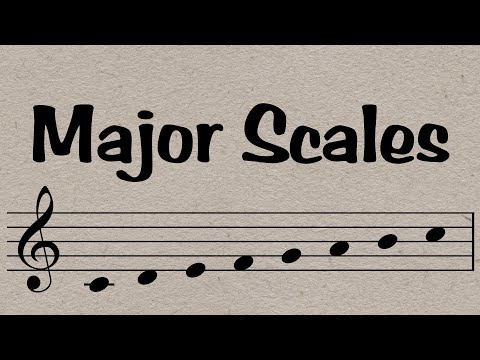
The G major scale follows the universal pattern of whole and half steps that defines every major scale. Starting on G and applying the formula Whole-Whole-Half-Whole-Whole-Whole-Half, you land on the notes G, A, B, C, D, E, F#, and back to G. The G major key signature contains exactly one sharp: F#. This single accidental changes the entire harmonic landscape of the key and is critical knowledge for anyone reading sheet music in this tonality.
Scale Degrees and Their Intervals
Each note in the G major scale carries a specific scale degree that determines its function within the key:
- 1st degree (Tonic): G — the home base and tonal center
- 2nd degree (Supertonic): A — creates tension that resolves to the tonic
- 3rd degree (Mediant): B — reinforces the major quality of the key
- 4th degree (Subdominant): C — provides a pulling sensation away from the tonic
- 5th degree (Dominant): D — the strongest harmonic pull back to G
- 6th degree (Submediant): E — offers a relative minor connection (E minor)
- 7th degree (Leading Tone): F# — resolves upward to the tonic G
Memorizing these intervals and scale degrees is essential for understanding G major music theory at a deeper level. The pattern of whole steps (W) and half steps (H) is W-W-H-W-W-W-H, which applies universally to all major scales, not just G. Internalizing this pattern means you can derive any major scale from memory and understand why the key of G major sounds the way it does.

Chords in the Key of G Major
Building triads on each scale degree of G major produces seven diatonic chords. Each chord inherits its quality—major, minor, or diminished—from the intervals between the notes of the scale. The G major chord chart reveals a clear pattern that applies to every major key, and recognizing this pattern is a fundamental step in music theory for beginners and intermediate players alike.
Primary Chords and Secondary Chords
The three primary chords in G major are the I, IV, and V chords: G major (I), C major (IV), and D major (V). These three chords form the backbone of countless songs and are often the first chords a student learns. The secondary chords—A minor (ii), B minor (iii), E minor (vi), and F# diminished (vii°)—add color, variety, and emotional depth to compositions in G major.
- G major (I) — Tonic, stable, home
- A minor (ii) — Supertonic, adds gentle tension
- B minor (iii) — Mediant, a warm, reflective quality
- C major (IV) — Subdominant, bright and expansive
- D major (V) — Dominant, strong pull back to I
- E minor (vi) — Submediant, emotional and melancholic
- F# diminished (vii°) — Leading tone chord, dissonant and tense
Knowing these chords cold is what separates a casual player from someone who truly understands the harmonic language of the key. Practice arpeggiating each chord and singing the root notes to internalize their sound and function.
Common Chord Progressions in G Major
Chord progressions are the rhythmic and harmonic engines of any song. In G major, certain progressions appear so frequently across genres that they’ve become staples of songwriting. Understanding these progressions unlocks the ability to play by ear, improvise, and compose confidently in this tonality.
Some of the most widely used G major chord progressions include:
- I – IV – V (G – C – D): The classic three-chord progression found in rock, country, and folk music
- I – V – vi – IV (G – D – Em – C): The beloved pop progression heard in thousands of modern songs
- I – IV – I – V (G – C – G – D): A driving blues and country staple
- ii – V – I (Am – D – G): A jazz-influenced resolution pattern that creates smooth harmonic movement
- I – iii – IV – V (G – Bm – C – D): A progression with emotional lift commonly used in uplifting pop and gospel
Practicing these progressions in G major on guitar or piano helps internalize the relationship between chords and develop muscle memory that transfers to other keys. Try looping each progression with a metronome and gradually increasing the tempo to build fluency and rhythmic confidence.
G Major vs. Other Popular Keys – A Comparison
Understanding how G major compares to other commonly used keys helps musicians choose the right key for their instrument, vocal range, and creative goals. The table below highlights key differences between G major and several related major keys that frequently appear in practical music-making.
| Key | Key Signature | Relative Minor | Common Instruments Favoring This Key |
| G Major | 1 sharp (F#) | E minor | Guitar, piano, voice (mid-range) |
| C Major | No sharps or flats | A minor | Piano, voice (low range), flute |
| D Major | 2 sharps (F#, C#) | B minor | Violin, guitar (higher register), trumpet |
| E Major | 4 sharps | C# minor | Guitar (open chords), horn instruments |
G major’s position with only one sharp makes it significantly easier to read and play than keys like D major or E major. At the same time, its brightness and resonance give it an advantage over C major in many guitar-based contexts, where open G chords ring beautifully with sympathetic strings and natural overtones.
Famous Songs Written in G Major
G major has been the tonal home of some of the most iconic songs in music history. The key’s warmth and clarity make it particularly effective for vocal-driven compositions and acoustic arrangements. Here are notable examples of music in G major that every theory student should know:
- “Wonderwall” by Oasis — A quintessential G major song built on the I – VII – vi – IV progression, demonstrating how simple chord choices create emotional power
- “Sweet Home Alabama” by Lynyrd Skynyrd — Opens with a D – C – G vamp that firmly anchors the song in G major’s dominant relationships
- “No Woman, No Cry” by Bob Marley — A reggae classic where the G major tonality provides a bright contrast to the song’s reflective lyrics
- “Brown Eyed Girl” by Van Morrison — A pop-folk gem that uses the I – V – vi – IV progression in G for an irresistibly singable melody
- Bach’s Keyboard Works — Several of Bach’s compositions and études explore G major, showcasing its classical credibility and contrapuntal richness
Tips for Practicing and Composing in G Major
Mastering G major goes beyond memorizing notes and chords. It requires ear training, practical application, and creative experimentation. Here are expert recommendations for deepening your understanding of the G major music scale and using it effectively in your own work.
Practical Recommendations
- Start with open-position chords on guitar. The G, C, D, and Em chords are all played near the open strings, making them ideal for beginners. Practice transitioning between these four chords until changes feel automatic and fluid.
- Use a capo to explore G major on different string sets. A capo on the second fret of a guitar tuned to standard pitch transforms what would normally be an F major shape into a G major sound, expanding your chord vocabulary without learning new fingerings.
- Sing the G major scale slowly. Vocalizing the notes G through F# and back down trains your ear to recognize the intervallic relationships unique to this key. Over time, you’ll begin to identify G major melodies by ear alone.
- Experiment with modal interchange. Borrowing chords from G minor (such as G minor or D minor) while staying rooted in G major creates unexpected harmonic color that can elevate your compositions to the next level.
- Study the relative minor. E minor shares the same key signature as G major. Practicing both keys together deepens your understanding of the relationship between major and relative minor tonalities.
Expert Tips for Advanced Players
For intermediate and advanced musicians, G major opens doors to more sophisticated harmonic exploration. Try harmonizing the G major scale in four-part writing to understand voice leading principles. Experiment with secondary dominants—such as using A major (the V of V) before resolving to D major—to add tension and sophistication to your progressions. Additionally, studying how G major interacts with its parallel minor (G minor) and its modes (G Mixolydian, G Dorian) provides a richer palette for improvisation and composition in real-world musical settings.
Frequently Asked Questions About G Major Music Theory
What notes are in the G major scale?
The G major scale consists of seven notes: G, A, B, C, D, E, and F#. The F# is the only sharp in the key signature, and it appears because of the whole-step and half-step formula (W-W-H-W-W-W-H) that builds the scale starting from G.
Why is G major so popular on the guitar?
G major is popular on guitar because many of its fundamental chords—G major, C major, D major, and Em—are played using open strings, which produce a fuller, more resonant sound than barre chords. The open G chord, in particular, allows all six strings to ring, creating a rich harmonic foundation that suits both strumming and fingerpicking styles.
What is the relative minor of G major?
The relative minor of G major is E minor. Both keys share the same key signature (one sharp, F#) and the same seven notes, but they center on different tonal centers. E minor has a more introspective, melancholic quality compared to the bright, confident sound of G major.
How many sharps are in the G major key signature?
The G major key signature contains exactly one sharp: F#. This single sharp appears at the beginning of every staff line where G major music is written, immediately signaling to the performer that every F note in the piece should be played as F# unless otherwise indicated by an accidental.
Can you modulate from G major to another key easily?

Yes, modulating from G major to closely related keys is straightforward. The most common target keys are D major (the dominant), C major (the subdominant), and E minor (the relative minor). Using pivot chords—chords that exist in both the original key and the destination key—creates a smooth, seamless modulation that listeners can follow without feeling jarred or disoriented.
Mastering G major music theory is more than an academic exercise—it’s a practical gateway to playing, writing, and understanding music across a vast range of styles. From its single-sharp key signature to its rich family of diatonic chords and progressions, G major rewards study at every level. Whether you’re strumming your first open chords or crafting complex harmonic progressions, this key provides the tools and the inspiration to grow as a musician. Dive in, practice consistently, and let the brightness of G major fuel your creative journey.