Music theory is the language that allows musicians to understand, communicate, and create meaningful sounds. Whether you are a complete beginner picking up an instrument for the first time or an experienced producer looking to deepen your craft, mastering the fundamentals of music theory opens doors that would otherwise remain locked. In this comprehensive guide, we break down the essential building blocks of music — from pitch and rhythm to harmony and form — in a way that is practical, engaging, and immediately applicable. By the time you finish reading, you will have a rock-solid foundation in understanding music theory and the confidence to apply it to your own creative work.
What Are the Fundamentals of Music Theory?
The fundamentals of music theory encompass the core principles that govern how musical sounds are organized, structured, and combined. Think of these basics as the grammar of music — just as words follow rules of syntax to form sentences, musical notes follow rules of pitch, rhythm, and harmony to create melodies and chord progressions. The key areas every musician should understand include the musical alphabet, scales, intervals, chords, rhythm, time signatures, key signatures, and harmonic relationships.
Many people assume music theory is abstract or only relevant to classical musicians. That could not be further from the truth. Whether you write pop songs, produce electronic tracks, play jazz, or compose film scores, the same foundational concepts apply. The difference lies in how creatively you apply them.
Why Learning Music Theory Matters
Some musicians resist studying theory because they fear it will restrict their creativity. The opposite is true. Understanding the fundamentals of music theory gives you a toolkit of choices rather than a set of restrictions. Here is why it matters:
- Improves communication: When you speak the same theoretical language as other musicians, collaboration becomes seamless and intuitive.
- Accelerates learning: Musicians with solid theory knowledge pick up new pieces and genres significantly faster because they recognize patterns rather than memorizing note by note.
- Enhances improvisation: Knowing how chords and scales relate allows you to improvise with intention and confidence.
- Strengthens songwriting: Understanding why certain chord progressions evoke specific emotions helps you craft more compelling songs.
- Supports music production: Producers who understand theory can make smarter decisions about arrangement, mixing, and sound design.
The fundamentals of music theory are not academic exercises — they are practical skills that translate directly into better musical outcomes.
Core Elements of Music Theory
Let us dive into each foundational element in detail so you can build your knowledge systematically from the ground up.
Pitch and the Musical Alphabet
Pitch refers to how high or low a sound is, and it is determined by the frequency of sound waves. In Western music theory, pitch is organized using the musical alphabet: A, B, C, D, E, F, and G. These seven letters repeat across the keyboard of a piano or the frets of a guitar, cycling endlessly in both directions. Each letter represents a specific note, and the distance between consecutive letters is generally one step — though the critical exception lies between B and C and between E and F, where there is no sharp or flat in between. Grasping this simple pattern is the first step in understanding music theory explained simply.
Rhythm and Time Signatures
Rhythm is the heartbeat of music. It deals with the duration and placement of sounds in time. The most basic unit of rhythm is the beat, and time signatures tell you how many beats are in each measure and which note gets the beat. Common time signatures include 4/4 (four beats per measure, with the quarter note getting one beat) and 3/4 (three beats per measure). Understanding rhythm and meter is essential for reading sheet music, keeping steady tempo, and grooving with other musicians.
Scales and Modes
A scale is a ordered sequence of notes arranged by pitch. The two most commonly studied scales in music theory for beginners are the major scale and the natural minor scale. The major scale follows a specific pattern of whole steps and half steps: W-W-H-W-W-W-H (where W equals a whole step and H equals a half step). This pattern produces the bright, happy sound most people associate with happy music. The natural minor scale uses a different pattern — W-H-W-W-H-W-W — and creates a darker, more introspective mood.
Beyond these basics, modes are scales derived from the major scale by starting on different degrees. The Dorian, Phrygian, Lydian, Mixolydian, Aeolian, and Ionian modes each carry distinct emotional colors and are widely used in jazz, folk, and progressive rock.

Intervals and Chords

An interval is the distance between two pitches. Intervals are the building blocks of chords and scales. The most important intervals to memorize include the major second, minor third, perfect fourth, perfect fifth, major sixth, and octave. When you stack thirds on top of each other, you build chords. A major chord consists of a root, a major third, and a perfect fifth. A minor chord swaps the major third for a minor third, giving it a sadder quality. Seventh chords, suspended chords, and extended chords add further color and tension, forming the harmonic vocabulary used across virtually every genre.
Key Signatures and Harmony
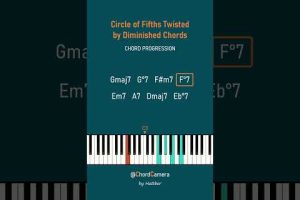
A key signature tells you which sharps or flats are present throughout a piece of music. Each major and minor key has a specific key signature that defines its set of notes. Harmony refers to the simultaneous combination of notes and how chords progress from one to another. Chord progressions like the classic I-IV-V-I or the popular ii-V-I are the backbone of countless songs across genres. Learning to recognize and construct harmonic progressions is one of the most powerful aspects of learning music theory.
Beginner vs Intermediate vs Advanced Music Theory Concepts
Music theory is not a single destination — it is a layered journey. Here is a comparison table showing how concepts progress across skill levels:
| Concept | Beginner Level | Intermediate Level | Advanced Level |
| Pitch & Notation | Musical alphabet, staff, note names | Ledger lines, enharmonic equivalents | Microtonal intervals, alternate tuning systems |
| Scales | Major and natural minor | Harmonic minor, melodic minor, pentatonic | Whole tone, diminished, octatonic, modal interchange |
| Chords | Major, minor, diminished | Seventh chords, extended chords | Altered chords, modal chords, polychords |
| Rhythm | Quarter, half, whole notes | Syncopation, compound meter, swing | Odd meters, polyrhythms, metric modulation |
| Harmony | I-IV-V-I progressions | Voice leading, secondary dominants | Chromatic harmony, modulation, tonal planing |
As you can see, the fundamentals of music theory provide the launchpad for increasingly sophisticated musical exploration.
Practical Tips for Mastering Music Theory
Theory is best learned by doing. Here are expert recommendations to accelerate your progress:
- Learn songs you love. Analyze chord progressions, melodies, and structures in tracks you already enjoy. This makes theory feel relevant and fun.
- Use solfège and ear training. Singing intervals and scales aloud helps internalize pitch relationships far more effectively than reading alone.
- Transcribe by ear. Try to figure out melodies and chord progressions from recordings before looking at sheet music. This builds practical theoretical understanding.
- Apply theory at your instrument daily. Even 15 minutes of focused practice connecting theory concepts to your instrument builds lasting neural pathways.
- Study with a community. Join online forums, local jam sessions, or theory workshops. Discussing concepts with others deepens your comprehension.
- Use technology wisely. Apps like Functional Ear Trainer, musictheory.net, and chord-building tools reinforce concepts interactively.
The most successful musicians treat music theory not as homework but as a creative superpower. When you understand why a chord progression feels tense or resolved, you gain control over your listeners emotional experience.
Common Mistakes to Avoid When Studying Music Theory
Even dedicated learners sometimes fall into traps that slow their progress:
- Memorizing without applying: Knowing the definition of a diminished seventh chord means nothing if you cannot hear it or use it in a composition.
- Skipping rhythm and ear training: Many students focus exclusively on harmony and melody while neglecting rhythm and aural skills — two equally critical pillars.
- Overcomplicating early on: Jumping into advanced jazz harmony before mastering major and minor scales creates confusion rather than clarity.
- Ignoring genre-specific theory: Different musical traditions emphasize different concepts. Understanding what is most relevant to your genre keeps your studies focused.
Conclusion
The fundamentals of music theory are more accessible than most people believe. By starting with the musical alphabet, building an understanding of rhythm and scales, and gradually exploring intervals, chords, and harmonic progressions, anyone can develop a deep and practical command of this universal language. The journey from music theory basics to advanced composition is rewarding, creative, and endlessly enriching. Commit to consistent practice, apply every concept to real music, and watch your musicianship transform in ways you never imagined possible.
Frequently Asked Questions
What are the fundamentals of music theory for absolute beginners?
For absolute beginners, the essentials include learning the musical alphabet (A through G), understanding whole steps and half steps, memorizing the major scale formula, recognizing basic rhythm and note values, and learning to read a simple treble clef staff. These core concepts provide the foundation upon which all further music theory study is built.
How long does it take to learn the basics of music theory?
With consistent practice, most dedicated learners can grasp the basics of music theory — including scales, intervals, simple chords, and time signatures — within three to six months. However, music theory is cumulative, and deeper understanding develops over years of active application and listening.
Is music theory necessary for songwriting?
While some successful songwriters create music intuitively without formal study, understanding music theory significantly expands your creative options. Theory knowledge helps you communicate ideas more precisely, troubleshoot harmonic issues, and break creative blocks by offering new frameworks for chord progressions and melodic development.
What is the best way to practice music theory on your own?
The most effective self-study approach combines ear training exercises, applied practice on your instrument, analyzing songs you love, and using structured resources like online courses or textbooks. The key is to always connect theoretical concepts to actual sounds and musical contexts rather than studying them in isolation.
Can learning music theory improve my ear training skills?
Absolutely. Music theory and ear training are deeply interconnected. Understanding intervals, scales, and chord structures gives you a mental framework that accelerates your ability to identify and reproduce sounds by ear. Conversely, strong ear training reinforces theoretical concepts by making abstract ideas feel tangible and audible.