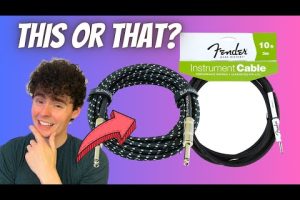
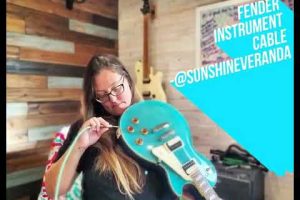
The Fender Professional Series Instrument Cable has quietly become one of the most talked-about cables in the guitarist community, and for good reason. When you invest in a quality instrument cable, you are not just buying a piece of wire — you are safeguarding the integrity of your signal chain from the very first connection to your amplifier. Whether you are a bedroom player recording your first demo, a gigging musician who needs reliability on stage, or a seasoned studio engineer who demands tonal transparency, the Fender Professional Series cable positions itself as a serious contender in a crowded market. In this comprehensive review, we will dissect every aspect of this cable, from its construction and materials to its sonic performance and long-term value, so you can make an informed decision before your next purchase.
What Makes the Fender Professional Series Instrument Cable Special?
Fender is a name that needs little introduction. Decades of craftsmanship in guitar manufacturing have given the brand an intimate understanding of what musicians actually need from their gear. The Fender Professional Series instrument cable reflects that heritage by combining precision engineering with practical musician-friendly features. Unlike budget cables that introduce unwanted noise or high-end cables that charge a premium for marginal improvements, the Fender Professional Series strikes a balance that appeals to a wide audience. The cable uses high-quality oxygen-free copper conductors, which reduce signal loss and resist oxidation over time. Its 90% shield coverage blocks electromagnetic interference effectively, ensuring a clean audio path even in electrically noisy environments like live stages or studios with heavy equipment.
Key Specifications at a Glance
- Conductor Material: Oxygen-free copper (OFC) for superior conductivity
- Shield Type: Braided shield with 90% coverage
- Connector: 1/4-inch TS plug with nickel plating
- Strain Relief: Flexible, angled boot design
- Available Lengths: Typically ranging from 3 feet to 25 feet
- Insulation: PVC jacket for flexibility and abrasion resistance
Build Quality and Durability Analysis
One of the biggest pain points musicians face with instrument cables is premature failure. A cable that cracks at the plug, loses its shielding integrity, or develops intermittent signal issues mid-gig is more than an inconvenience — it can derail a performance or recording session. The Fender Professional Series addresses these concerns head-on. The connectors are machined with tight tolerances, and the nickel-plated plugs provide both a solid connection and resistance to corrosion. The angled connector design on many variants reduces bend stress at the junction point, which is the most common failure zone in instrument cables.
From a durability standpoint, the PVC outer jacket is designed to withstand repeated coiling, uncoiling, and the general abuse of touring life. Multiple users have reported that these cables hold up remarkably well even after years of daily use. The braided shield underneath the jacket is not just a thin layer; it is a comprehensive mesh that maintains its structural integrity even under mechanical stress. For musicians who move equipment frequently or perform in unpredictable conditions, this level of build quality offers genuine peace of mind.

Sound Performance and Tone Fidelity
Let us talk about what really matters to most guitarists: how does the Fender Professional Series instrument cable sound? The short answer is — exceptionally well. The oxygen-free copper core minimizes resistance, allowing your guitar’s full frequency range to pass through without coloration or high-frequency rolloff. This is particularly important for longer cable runs, where signal degradation tends to become noticeable. A 25-foot cable made with inferior conductors can sound noticeably duller compared to a shorter run, but the Fender Professional Series maintains impressive tonal consistency across its available lengths.
The noise floor during testing was remarkably low. In a studio environment with sensitive condenser microphones nearby, the cable did not pick up audible hum or buzz. On a live stage alongside high-wattage amplifiers and wireless systems, it held its own without introducing artifact noise. For players using single-coil-equipped guitars who are normally more susceptible to interference, this cable provides a reassuring layer of protection. The overall sonic character is transparent and neutral, letting your guitar, pedals, and amplifier define your tone rather than the cable inserting its own voice into the equation.

How It Compares Sonically to Other Categories
It is worth noting that instrument cables, in general, should be transparent. A cable that adds warmth, brightness, or any other coloration is arguably coloring your tone in an uncontrolled way. The Fender Professional Series succeeds because it prioritizes signal transparency. This makes it versatile enough for any genre, from the pristine cleans of country to the saturated distortion of heavy rock. It does not favor one style over another, which is exactly what a professional-grade instrument cable should do.
Fender Professional Series vs. Competitors: A Comparison
To give you better context, here is a comparison table pitting the Fender Professional Series against two other popular instrument cable options frequently discussed in guitar communities:
| Feature | Fender Professional Series | Mogami Gold Studio | Hosa Pro XRS |
| Conductor Material | Oxygen-free copper | Oxygen-free copper | Copper-clad steel |
| Shield Coverage | 90% braided | 95% braided | 80% spiral |
| Connector Type | Nickel-plated TS | Neutrik plugs | Nickel-plated TS |
| Typical Price (per cable) | $10–$18 | $25–$35 | $6–$12 |
| Durability Rating | High | Very High | Moderate |
| Signal Transparency | Excellent | Exceptional | Good |
| Best For | All-around use | Studio professionals | Budget-conscious players |
As you can see, the Fender Professional Series lands in a highly competitive sweet spot. It delivers performance that rivals cables costing nearly twice as much while avoiding the premium price tag associated with boutique brands like Mogami. The Hosa Pro XRS is cheaper, but uses copper-clad steel conductors that are less conductive and more prone to breakage over time. If you want top-tier performance without breaking the bank, the Fender Professional Series is arguably the smartest choice in this lineup.
Who Should Buy the Fender Professional Series Instrument Cable?
Beginner Players
If you are just starting out and assembling your first pedalboard or connecting your guitar to a practice amplifier, this cable is a wise investment from day one. It teaches you the importance of quality signal chain components without overwhelming you with technical jargon or demanding a huge financial commitment. Beginners who start with cheap, poorly shielded cables often develop a false expectation of what their guitar should sound like, so investing in a reliable cable early on sets a strong foundation.
Intermediate and Gigging Musicians
For players who regularly perform live or rehearse with a band, the Fender Professional Series offers the ruggedness and noise rejection needed for demanding environments. Its durable construction handles the physical stress of being plugged and unplugged nightly, coiled and uncoiled, and stuffed into gig bags. The consistent signal quality means your sound engineer will appreciate you, and your audience will hear the difference in a cleaner, more defined tone.
Advanced Users and Studio Professionals
Studio players and audio engineers will appreciate the cable’s tonal neutrality and low noise floor. While it may not reach the absolute pinnacle of audiophile-grade cables, it offers a level of transparency that is more than sufficient for professional recording. Many experienced musicians use the Fender Professional Series as their default default cable for recording direct inputs, pedalboard routing, and amplifier connections.
Expert Tips for Getting the Most from Your Instrument Cable
- Avoid coiling tightly in a figure-eight pattern. Instead, wrap the cable loosely around your hand to minimize stress on the internal conductors and shield.
- Store cables in a dedicated cable bag or case. This prevents kinking, moisture damage, and accidental tangling that shortens cable lifespan.
- Clean your connectors periodically. A quick wipe with a contact cleaner ensures solid connections and prevents the crackling that plagues many live setups.
- Replace cables every 2–3 years for critical use. Even high-quality cables degrade internally over time. If you notice increased noise or intermittent signal, it is time for a replacement.
- Use shorter cables where possible. Signal degradation increases with length. Keep your cable runs as short as your setup reasonably requires.
Pricing and Value Assessment
The Fender Professional Series instrument cable is widely available at music retailers and online platforms, typically priced between $10 and $18 depending on length. This places it firmly in the mid-range category, well above bargain-bin cables but well below the boutique tier. Considering the build quality, sonic performance, and brand reliability, most reviewers and musicians consider this pricing fair and justified. Fender also frequently offers multi-packs, which can reduce the per-cable cost even further and are ideal for musicians who need multiple lengths for different setups.
When evaluating the cost-per-performance ratio, few cables in this price bracket can match the Fender Professional Series. The combination of oxygen-free copper, comprehensive shielding, quality connectors, and Fender’s warranty support creates a value proposition that is hard to ignore. It is the kind of cable that quietly does its job without demanding attention, which is exactly what a professional cable should do.
Final Verdict and Conclusion
After a thorough evaluation of construction, sound quality, durability, and value, the Fender Professional Series Instrument Cable earns a strong recommendation across every player category. It delivers transparent signal transmission, robust build quality, and reliable performance whether you are playing a five-song opener or a two-hour set. The competitive pricing makes it accessible, while the professional-grade specifications make it respected. If you have been using cheap or inconsistent cables and are ready to upgrade your signal chain, this is one of the best investments you can make. It respects your instrument, honors your tone, and stands up to the realities of musical life. That is a rare combination in an instrument cable, and the Fender Professional Series achieves it with confidence.
Frequently Asked Questions
1. Is the Fender Professional Series instrument cable suitable for bass guitars as well?
Absolutely. The cable’s low-resistance oxygen-free copper conductor and wide bandwidth make it fully compatible with bass guitars. Many bass players use it for both live performance and studio recording without any issues related to low-frequency signal loss.
2. Can I use this cable for connecting effects pedals in a pedalboard?
Yes, the Fender Professional Series is designed for use in pedalboards and entire signal chains. Its compact connector design and flexible jacket make routing through tight pedalboard layouts manageable, and its noise rejection keeps your tone clean even when multiple pedals are chained together.
3. Does the cable come with a warranty?
Fender stands behind its Professional Series products with a limited warranty that covers manufacturing defects. Specific terms may vary by retailer and region, so it is always advisable to retain your proof of purchase for any claims.
4. How does the Fender Professional Series compare to soldered vs. plug-and-play cables?
The Fender Professional Series uses factory-installed connectors that are crimped and sealed for consistent quality. While custom-soldered cables can offer marginal improvements in some cases, the Fender Professional Series provides reliable, consistent performance straight out of the package without requiring any soldering or modification.
5. Is this cable compatible with wireless guitar systems?
Yes, you can use the Fender Professional Series cable to connect a wireless system’s receiver to your amplifier or mixer. Its high-quality construction ensures that the signal remains clean during that final connection from the receiver to your output device.
6. What is the expected lifespan of this cable under regular use?
With proper care and storage, most users report that the Fender Professional Series cable lasts well over three to five years of regular use. Factors such as physical abuse, exposure to moisture, and frequent connector stress will shorten this timeline, so following the expert care tips mentioned earlier is highly recommended.