


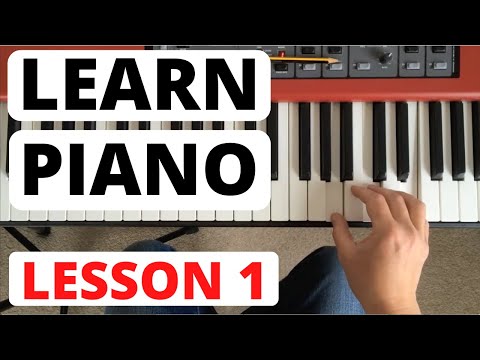
Piano is one of the most rewarding instruments a person can learn, and starting with basic piano lessons sets the foundation for a lifetime of musical enjoyment. Whether you are a complete beginner picking up the keys for the first time or someone revisiting the fundamentals after years away, understanding the core concepts of piano playing transforms a confusing instrument into a powerful creative tool. This guide covers everything you need to know about beginner piano education, from finger positioning and music theory to choosing the best learning path for your goals.
What Are Basic Piano Lessons and Why Do They Matter?
Basic piano lessons refer to the foundational instruction that teaches new players how to read sheet music, understand hand coordination, play scales, and develop proper technique. These introductory sessions are not just about pressing the right keys — they build the essential muscle memory and theoretical knowledge that every pianist needs. Skipping the fundamentals often leads to bad habits, frustration, and plateaus that are hard to overcome later.
Think of basic piano instruction as the grammar of music. Without understanding simple chords, rhythm patterns, and note recognition, even the most talented students struggle to play complex pieces confidently. A strong start in beginner piano lessons dramatically accelerates your progress and makes intermediate and advanced material far more accessible.
Essential Piano Skills Every Beginner Should Learn
When you sit down for your first piano lesson, the instructor will typically focus on several core skills that form the backbone of your musical development. These elements are interconnected, and mastering each one builds confidence for the next.
1. Keyboard Layout and Note Recognition
The piano keyboard follows a repeating pattern of 12 notes across octaves. The white keys correspond to the musical alphabet (A through G), while the black keys represent sharps and flats. Recognizing the layout quickly is essential because it allows you to locate any note instantly without hesitation.
- Learn the groups of two and three black keys as reference points
- Identify middle C as your anchor note on the keyboard
- Practice naming notes in both treble and bass clefs
- Use flashcards or apps to reinforce note recognition daily
2. Proper Hand Position and Finger Technique
Correct hand posture prevents injury and produces a clean, controlled sound. Beginners often slouch or collapse their wrists, which limits dexterity and tone quality. Keep your fingers curved, your wrists relaxed but supportive, and your forearms parallel to the floor. Each finger is numbered from one (thumb) through five (pinky), and learning to move them independently is a primary goal of early piano training.
3. Reading Sheet Music and Understanding Rhythm
Sight-reading is a skill that separates casual players from serious musicians. Basic piano lessons introduce the treble clef for the right hand and the bass clef for the left hand. You will learn about time signatures, note durations (whole notes, half notes, quarter notes), and rests. Practicing rhythm exercises with a metronome builds an internal sense of timing that is invaluable.

4. Major and Minor Scales
Scales are the building blocks of melodies and harmonies. The C major scale is usually the first scale taught because it uses only white keys. From there, students progress to other major scales and their relative minor keys. Practicing scales strengthens finger independence, improves dexterity, and trains your ear to recognize intervallic patterns.
5. Basic Chords and Harmony
Understanding triads (three-note chords) opens the door to playing accompaniments and understanding how songs are constructed. The most common chords — C, F, G, and Am — appear in countless popular songs. Learning to transition smoothly between these chords is a milestone that makes playing real music exciting and rewarding.
How to Start Learning Piano: A Step-by-Step Guide
Starting piano does not require expensive equipment or years of prior experience. Here is a practical roadmap to get you playing with confidence.
- Set a clear goal. Decide whether you want to play classical pieces, jazz improvisation, pop songs, or compose your own music. Your goal shapes your practice routine.
- Get access to a keyboard or piano. A weighted 88-key digital piano is ideal, but a 61-key starter keyboard works perfectly for the first six months.
- Find a qualified teacher or structured course. Private instructors, online platforms, or community classes each offer distinct advantages.
- Establish a consistent practice schedule. Fifteen to thirty minutes daily is far more effective than two-hour weekend sessions.
- Focus on one skill at a time. Dedicate weeks to scales, then chords, then sight-reading, building layer by layer.
- Track your progress. Record yourself periodically to hear improvement and identify areas needing attention.
Basic Piano Techniques Every New Player Needs to Master
Technique is the physical mechanics behind musical expression. Without proper technique, even simple songs sound forced or strained. Here are the core techniques emphasized in quality beginner piano instruction.
| Technique | What It Involves | Why It Matters |
| Finger Independence | Moving each finger separately and with control | Enables complex passages and clean articulation |
| Hand Rotation | Rotating the wrist naturally during scales and arpeggios | Reduces tension and increases speed |
| Dynamic Control | Playing softly (piano) and loudly (forte) with intention | Adds emotional depth and musicality |
| Pedal Usage | Operating the sustain pedal for smooth note connections | Creates a rich, connected sound on piano pieces |
| Sight-Reading Fluency | Reading new music in real time with minimal errors | Expands your repertoire and accelerates learning |
Practicing these techniques slowly and deliberately is the secret to long-term improvement. Speed comes naturally once accuracy is established.
Choosing the Right Piano Learning Method

Not every approach to learning piano works for every student. The best beginner piano lessons are the ones that match your learning style, schedule, and budget. Below is a comparison of the most popular methods available today.
| Method | Pros | Cons | Best For |
| Private In-Person Teacher | Personalized feedback, real-time correction, accountability | Higher cost, fixed schedule, location-dependent | Serious learners who want hands-on guidance |
| Online Video Courses | Flexible scheduling, affordable, self-paced | No personalized feedback, requires self-discipline | Self-motivated learners on a budget |
| Apps and Interactive Software | Gamified learning, instant feedback, portable | Limited depth, may skip music theory | Casual learners and children |
| Group Classes | Social interaction, lower cost per student | Slower pace, less individual attention | Beginners who enjoy learning in community |
Many successful students combine two methods — for example, taking an online course for structured learning and supplementing with occasional private lessons to address specific challenges.
Common Mistakes Beginners Make in Piano Lessons
Avoiding these pitfalls can save you months of frustration and help you develop good habits from day one.
- Skipping warm-ups. Cold fingers lead to stiffness and sloppy playing. Spend five minutes on finger exercises before every session.
- Practicing too fast. Speed without accuracy ingrains errors into muscle memory. Always start slow and gradually increase tempo.
- Ignoring rhythm. Playing with inconsistent timing undermines musicality. Use a metronome religiously during early practice.
- Neglecting the left hand. The left hand often feels weaker and less coordinated, but developing it equally is critical for balanced playing.
- Playing without understanding the music. Memorizing a song note-for-note without understanding the chord progressions or structure limits your ability to adapt and improvise.
- Inconsistent practice. Three short sessions per week will always beat one marathon session. Regularity is the single biggest predictor of progress.
How Long Does It Take to Learn Basic Piano?
The timeline varies depending on practice frequency, natural aptitude, and the quality of instruction. Most students can play simple songs with both hands within four to six weeks of consistent daily practice. Achieving fluency in sight-reading and comfortable chord transitions typically takes three to six months. The key factor is not talent — it is consistency. Students who practice fifteen minutes every day progress faster than those who cram for hours once a week.
Tips to Maximize Your Basic Piano Learning Experience
- Practice with intention. Identify the exact measure or passage you want to improve rather than playing through entire songs mindlessly.
- Use a quality metronome. Apps like Pro Metronome or physical metronomes help you internalize steady tempo.
- Learn songs you love. Motivation is the engine of progress. Choose beginner arrangements of songs that excite you.
- Record and listen back. Your ears hear things your brain filters out during performance. Playback reveals timing issues and dynamics problems.
- Be patient with yourself. Plateaus are normal. Every piano player hits a point where progress feels invisible, but the breakthrough always comes with persistence.
Conclusion
Basic piano lessons are the gateway to musical freedom. Whether your dream is to perform classical concertos, accompany a choir, improvise jazz, or simply play your favorite songs at family gatherings, starting with a solid foundation makes all the difference. Focus on finger technique, music reading, chord knowledge, and consistent practice, and you will build skills that last a lifetime. The piano is an instrument that rewards dedication with beauty — and there is no better time to start than today.
FAQ: Frequently Asked Questions About Basic Piano Lessons
What age is best to start basic piano lessons?
Children as young as four can begin introductory piano lessons if they can sit still for short periods and recognize letters and numbers. However, most experts agree that ages six to nine offer the ideal balance of attention span, finger strength, and cognitive readiness for structured learning. Adults are equally capable of starting at any age, and many adult beginners progress faster than children because of their discipline and intrinsic motivation.
How often should I practice basic piano exercises?
Daily practice of at least fifteen minutes is more effective than longer, infrequent sessions. Consistent repetition builds muscle memory and reinforces neural pathways. If you can manage thirty minutes a day, that is ideal for steady progress. The most important factor is showing up regularly rather than practicing for long stretches sporadically.
Do I need a full-size 88-key piano for beginner lessons?
Not necessarily. A 61-key or 76-key keyboard is sufficient for learning basic piano techniques, scales, and simple songs during the first several months. However, transitioning to an 88-key weighted digital piano or acoustic piano is recommended within the first year, as full-sized keyboards develop proper hand span and dynamic control that shorter keyboards cannot replicate.
Can I learn basic piano lessons online effectively?
Yes, online piano lessons can be highly effective for beginners, especially when the course includes structured curricula, video demonstrations, and opportunities for feedback. Platforms that combine interactive elements with music theory instruction tend to produce the best results. However, supplementing online learning with periodic check-ins from a qualified teacher helps correct technical issues early.
What are the easiest beginner piano songs to learn first?
Songs that use simple five-finger positions, limited chord progressions, and repetitive patterns are ideal for beginners. Classics like “Ode to Joy” by Beethoven, “Chopsticks,” “Amazing Grace,” and simplified versions of popular songs like “Let It Be” by The Beatles are excellent starting points. These pieces teach coordination between both hands without overwhelming the student with complex notation.