


The year 2013 was nothing short of a musical revolution. It was the year electronic dance music crashed the mainstream pop charts, streaming platforms began to genuinely challenge physical sales, and a new wave of genre-blending artists redefined what it meant to be a hitmaker. Whether you were spinning vinyl in your bedroom, discovering tracks through Pandora’s algorithm, or caught up in the global phenomenon of “Gangnam Style,” 2013 left an indelible mark on the music industry. This deep dive explores every major 2013 music trend, from the chart-topping genres and breakthrough artists to the technological shifts that permanently altered how we consume music. Whether you’re a casual listener, a music historian, or an aspiring artist studying what made hits stick, this guide delivers the full picture with expert-level insight.
The Dominant Genres That Defined 2013
2013 wasn’t about one genre ruling the roost — it was a year of collision, fusion, and fierce competition across multiple categories. Understanding the musical landscape requires breaking down each genre’s specific contribution to the cultural moment.
Pop Music’s Absolute Reign
Pop music in 2013 operated at peak commercial power. Artists like Taylor Swift, Bruno Mars, and Justin Timberlake dominated radio play, Billboard charts, and television performances. Taylor Swift’s album Red debuted with over one million copies sold in its first week, signaling that traditional pop album sales were still a formidable force. Bruno Mars blended funk, soul, and R&B into a pop package that felt both retro and cutting-edge, while Justin Timberlake’s The 20/20 Experience pushed the boundaries of pop production with orchestral arrangements and elongated song structures.
- Key pop hits: “Blurred Lines” by Robin Thicke, “Can’t Hold Us” by Macklemore & Ryan Lewis, “Radioactive” by Imagine Dragons
- Production style: Layered vocals, orchestral elements, and hybrid pop-dance arrangements
- Cultural impact: Pop albums drove massive first-week sales, proving physical media still mattered
The EDM Explosion and Pop Crossover
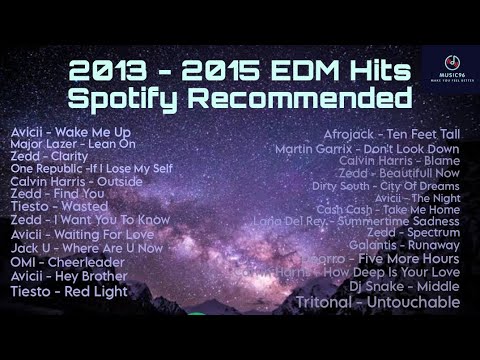
Perhaps no trend was more defining than the full-scale crossover of electronic dance music into mainstream pop. EDM wasn’t just a club phenomenon anymore — it was the engine driving pop hits. Avicii’s “Wake Me Up” fused folktronica with EDM and became a global anthem. Calvin Harris transitioned from being a DJ-producer to a full-fledged pop star. Daft Punk’s Random Access Memories won the Grammy for Album of the Year, proving that electronic music could carry artistic weight equal to any rock or pop record.
Key characteristics of 2013 EDM-pop crossover included:
- Build-ups and drops integrated into verse-chorus song structures
- Collaborations between EDM producers and pop vocalists (e.g., Avicii and Aloe Blacc)
- Festival culture becoming a primary driver of music discovery
- Dubstep-influenced bass drops entering top-40 radio
Hip-Hop’s Creative Renaissance
2013 is widely regarded as one of hip-hop’s strongest years in recent memory. Kendrick Lamar released good kid, m.A.A.d city, a cinematic, autobiographical masterpiece that earned critical acclaim and commercial success. Drake’s Nothing Was the Same explored darker, more introspective themes. J. Cole delivered Born Sinner, and Kanye West shocked the industry with Yeezus, an industrial-leaning avant-garde statement. This was hip-hop operating on multiple creative levels simultaneously — from introspective storytelling to aggressive sonic experimentation.
Breakthrough Artists and Landmark Albums of 2013
Some artists transcended their previous profiles entirely in 2013. Macklemore & Ryan Lewis, an independent duo from Seattle, won Best New Artist at the Grammy Awards — a historic moment that showcased how grassroots marketing and viral music videos could compete with major label machinery. Their album The Heist addressed social issues including drug addiction, gender identity, and economic inequality with remarkable depth.
Other landmark releases included:
- Lorde — Pure Heroine: A debut album from a 16-year-old from New Zealand that redefined minimalist pop
- Daft Punk — Random Access Memories: A love letter to disco and funk that reimagined electronic music’s possibilities
- Kendrick Lamar — good kid, m.A.A.d city: A narrative hip-hop landmark still studied in music programs today
- Taylor Swift — Red: A genre-hopping pop-country hybrid that broke sales records
Expert tip: When studying 2013’s artist breakthroughs, notice how each succeeded through authentic storytelling rather than chasing trends. This is a principle that remains relevant for emerging artists today.
How Streaming Technology Reshaped the Music Landscape
The Rise of Spotify and Pandora
2013 marked a critical inflection point for music streaming. Spotify, which had launched in the US only in 2011, expanded aggressively and began competing directly with iTunes downloads. Pandora continued to dominate algorithmic radio, while new entrants like YouTube Music began to surface. The concept of “discovering” music shifted from buying an album to playlist curators and recommendation algorithms introducing listeners to unfamiliar artists.
Digital Downloads vs. Streaming: A Comparison
| Factor | Digital Downloads (iTunes) | Streaming (Spotify/Pandora) |
| Revenue model | Per-purchase ($0.99-$1.29 per song) | Per-stream fractions of a cent |
| User accessibility | Requires purchase per track | Unlimited on-demand access via subscription |
| Discovery mechanism | Charts, recommendations, ads | Algorithmic playlists, curated radio |
| Artist income potential | Higher per-unit revenue | Long-tail passive income over time |
| Industry trajectory in 2013 | Declining but still dominant | Rapidly growing, projected to surpass downloads |
By the end of 2013, industry analysts were openly discussing the day when streaming would overtake downloads — a prediction that proved accurate within just a few years. For artists and labels, this meant rethinking release strategies. Singles became more important than albums, and playlist placement grew into a critical marketing priority.
The Indie and Alternative Wave
Indie music in 2013 benefited from both streaming accessibility and a cultural backlash against overproduced pop. Imagine Dragons, though arguably pop-rock, carried an indie sensibility into the mainstream. Arctic Monkeys continued their evolution from raw garage rock to polished indie-pop. The indie-folk movement gained momentum, setting the stage for the explosive growth it would experience in the following years. This was the period where bedroom producers began uploading tracks to SoundCloud, creating a pipeline from independent creation to global discovery that fundamentally democratized music distribution.
Key indie milestones from 2013 include:
- Macklemore & Ryan Lewis proving indie artists could outperform major labels
- SoundCloud emerging as a critical platform for emerging producers
- Album-oriented rock acts finding renewed audiences through streaming
Country and Latin Music’s Growing Influence
Country music in 2013 rode the wave of the “bro-country” subgenre, characterized by party anthems, pickup trucks, and beach references. Florida Georgia Line’s “Cruise” became one of the best-selling country digital singles of all time. Luke Bryan and Jason Aldea dominated the charts. Meanwhile, Latin music began its steady climb toward eventual mainstream dominance — artists like Shakira and Daddy Yankee were laying groundwork that would bloom into the full Latin explosion of the late 2010s.
For intermediate music students, 2013 serves as a case study in genre boundary erosion. Country artists incorporated EDM production, pop stars experimented with hip-hop beats, and electronic producers embraced live instrumentation. The rigid genre categories that had defined the previous decade were dissolving in real time.

Expert Tips for Understanding 2013’s Musical Legacy
For those looking to deepen their knowledge of this pivotal year, here are practical recommendations drawn from industry professionals:
- Listen to complete albums, not just singles. 2013 rewarded album listening — artists like Kendrick Lamar and Daft Punk created experiences meant to be consumed start to finish.
- Study the production credits. Producers like Pharrell Williams, Diplo, and Max Martin were shaping sound at a scale rarely acknowledged by casual listeners.
- Explore the live performance scene. Festival lineups in 2013 (Coachella, Lollapalooza, Tomorrowland) reflected the EDM-pop convergence like no other medium.
- Track streaming data. Comparing 2013 streaming numbers to current data reveals how dramatically consumption patterns shifted within a single decade.
- Don’t overlook international markets. Psy’s “Gangnam Style” proved that non-English-language music could achieve global mainstream success, opening doors for K-Pop and other international movements.
Advanced insight: The true significance of 2013 lies not in any single hit or genre, but in the structural shifts it accelerated. Streaming became viable, genre walls crumbled, independent artists gained unprecedented access to audiences, and the album’s centrality began its long decline in favor of the single and the playlist. These shifts were already underway before 2013, but this year crystallized them into irreversible industry transformations.
Conclusion: Why 2013 Still Matters
The musical landscape of 2013 was defined by convergence — genres merged, technologies disrupted, and new pathways from artist to audience opened permanently. Pop music absorbed electronic DNA. Hip-hop achieved both critical and commercial peaks. Streaming began its inevitable march toward dominance. Independent artists proved they could compete with industry giants. Two decades later, nearly every major trend in contemporary music can trace its roots or at least its acceleration back to this extraordinary year. Understanding 2013 isn’t just nostalgia — it’s studying the blueprint of modern music itself.
Frequently Asked Questions About 2013 Music Trends
What was the biggest song of 2013?
While several tracks dominated the year, “Blurred Lines” by Robin Thicke featuring T.I. and Pharrell was among the best-selling singles globally, though “Get Lucky” by Daft Punk and “Can’t Hold Us” by Macklemore & Ryan Lewis were equally defining. Streaming data later reshuffled some rankings, but these tracks collectively represented 2013’s sonic identity.
How did streaming change the music industry in 2013?
2013 was the year streaming platforms like Spotify gained serious traction in the United States and internationally. Subscription-based listening began challenging digital download sales, leading labels to renegotiate contracts and prioritize playlist placements. This year laid the foundation for streaming to become the industry’s primary revenue source by the mid-2010s.
Why was EDM so popular in 2013?
EDM’s popularity surged due to massive festival culture growth, high-profile collaborations between DJs and pop vocalists, and crossover hits that made electronic music accessible to audiences who had never visited a club. Artists like Avicii, Calvin Harris, and Skrillex brought electronic production into everyday pop listening.
Which 2013 album is considered the most influential?
Kendrick Lamar’s good kid, m.A.A.d city is widely regarded as the most influential album from 2013. It received universal critical acclaim, commercial success, and is now considered a modern classic in hip-hop. Daft Punk’s Random Access Memories is equally significant for its impact on electronic music production.
How did 2013 impact independent and DIY artists?
2013 was a landmark year for independent artists because Macklemore & Ryan Lewis won Best New Artist at the Grammys without a major label, SoundCloud became a vital platform for emerging producers, and streaming services began offering alternatives to traditional distribution. This empowered DIY artists to reach global audiences without label backing.
Social media, particularly Twitter, Instagram, and YouTube, became essential marketing tools for artists. Viral moments like Psy’s “Gangnam Style” becoming the first video to reach one billion YouTube views demonstrated social media’s power to transcend geographic and linguistic barriers, fundamentally changing music promotion strategies forever.