


If you’ve ever looked at a piece of sheet music and felt completely lost, you’re not alone. Thousands of aspiring musicians begin their journey by asking the same fundamental question: what are the basic music notes? Understanding musical notes is the absolute cornerstone of music literacy — it’s the alphabet you need before you can write a single sentence. Whether you’re picking up a guitar, sitting down at a piano, or studying vocal technique, mastering the basic music notes opens the door to reading melodies, understanding chord progressions, and eventually improvising your own compositions. This comprehensive guide breaks down everything from the simplest note identification to advanced reading strategies, giving you a clear, structured roadmap to musical confidence.
What Are Basic Music Notes?
Basic music notes are the building blocks of Western music notation. Think of them as the individual syllables that combine to form words, phrases, and ultimately entire stories. In standard Western music, there are seven primary notes, each assigned a letter name that cycles repeatedly across the musical alphabet:
- A
- B
- C
- D
- E
- F
- G
After G, the cycle restarts at A. This looping system is what makes reading music on a staff a consistent, predictable process. These seven notes — sometimes called natural notes — sit at the foundation of every major scale, minor scale, and chromatic sequence you’ll encounter in your musical journey.
How Notes Relate to the Staff
Music notes are placed on a staff (also called a stave), which consists of five horizontal lines and four spaces. Each position on the staff corresponds to a specific pitch. Notes placed higher on the staff represent higher pitches, while notes positioned lower represent lower pitches. This spatial relationship between vertical placement and sound frequency is what makes written music so powerful — you can glance at a page and instantly hear the melody in your mind.
The Seven Natural Notes and Their Accidentals
While the seven natural notes give you a solid starting point, real-world music requires additional symbols called accidentals. These modify a note’s pitch by raising or lowering it by a half step (also known as a semitone).
Sharps (♯)
A sharp symbol placed before a note raises its pitch by one half step. For example, C♯ is one half step higher than C. On a piano keyboard, this means moving one key to the right — whether it’s a white or black key.
Flats (♭)
A flat symbol lowers a note’s pitch by one half step. So D♭ sits one half step below D. Flats and sharps often represent the same key on a piano (for instance, C♯ and D♭ are enharmonically equivalent), but they’re spelled differently depending on the musical context and key signature.
Complete Note Chart
| Natural Note | Sharp (♯) | Flat (♭) |
| A | A♯ | A♭ |
| B | B♯ (enharmonically C) | B♭ |
| C | C♯ | C♭ (enharmonically B) |
| D | D♯ | D♭ |
| E | E♯ (enharmonically F) | E♭ |
| F | F♯ | F♭ (enharmonically E) |
| G | G♯ | G♭ |
Reading Basic Music Notes on the Staff
Learning to identify notes on the staff is arguably the most critical skill in early music education. There are two primary clefs you’ll encounter, and each assigns different pitch ranges to the same staff positions.
The Treble Clef (G Clef)
The treble clef is used for higher-pitched instruments and voices — violin, flute, trumpet, and the right hand of the piano. The curl of the clef wraps around the second line from the bottom, designating that line as the note G. Here’s a reliable way to remember the notes:
- Lines (bottom to top): E, G, B, D, F — commonly memorized with the phrase “Every Good Boy Does Fine”
- Spaces (bottom to top): F, A, C, E — which conveniently spells “FACE”
The Bass Clef (F Clef)
The bass clef handles lower-pitched sounds — cello, bass guitar, the left hand of the piano, and male vocal ranges. The two dots of the clef surround the fourth line, which represents the note F. Use these mnemonics:
- Lines (bottom to top): G, B, D, F, A — remember with “Good Boys Do Fine Always”
- Spaces (bottom to top): A, C, E, G — think “All Cows Eat Grass”
Understanding Note Values and Durations
Notes don’t just tell you what pitch to play — they also tell you how long to hold it. This is where note values become essential. Each shape (called a notehead with its attached stem and flags) represents a specific rhythmic duration.
- Whole Note (semibreve): An open notehead with no stem. Typically lasts four beats in common time (4/4).
- Half Note (minim): An open notehead with a stem. Receives two beats.
- Quarter Note (crotchet): A filled notehead with a stem. Gets one beat — the heartbeat of most rhythmic exercises.
- Eighth Note (quaver): A filled notehead with a stem and one flag. Half a beat each, often grouped in pairs or threes.
- Sixteenth Note (semiquaver): Filled notehead, stem, and two flags. A quarter of a beat — these create fast, intricate rhythmic passages.
Understanding these durations is what separates someone who can identify a note from someone who can actually perform music fluently. Practice clapping or tapping along with these values to internalize the rhythm before you worry about pitch accuracy.
Intermediate Concepts: Intervals, Key Signatures, and Scales

Once you’re comfortable identifying individual notes and their durations, you’ll want to explore how notes relate to each other. This is where music truly starts to make sense as a language.
Intervals
An interval measures the distance between two notes. Intervals are named by quantity (second, third, fourth, etc.) and quality (major, minor, perfect, augmented, diminished). For example, the distance from C to E is a major third — four half steps — and it’s one of the most universally recognizable intervals in music. Training your ear to identify intervals by sound is a game-changer for sight-reading and improvisation.
Key Signatures
A key signature appears at the beginning of each staff line, right after the clef. It tells you which notes should be consistently sharp or flat throughout the piece. The key of C major, for instance, has no sharps or flats — making it the easiest starting point for beginners. The key of G major introduces one sharp (F♯), while F major uses one flat (B♭). As you advance, you’ll encounter keys with up to seven sharps or flats.
Major and Minor Scales
A scale is simply an ordered sequence of notes following a specific pattern of whole steps and half steps. The major scale follows the pattern: whole, whole, half, whole, whole, whole, half. The natural minor scale adjusts this to: whole, half, whole, whole, half, whole, whole. Every scale you learn reinforces your understanding of how basic music notes interact within a tonal framework.
Advanced Tips for Mastering Music Notes
At the advanced level, musicians develop techniques that allow them to process notes almost instantaneously:
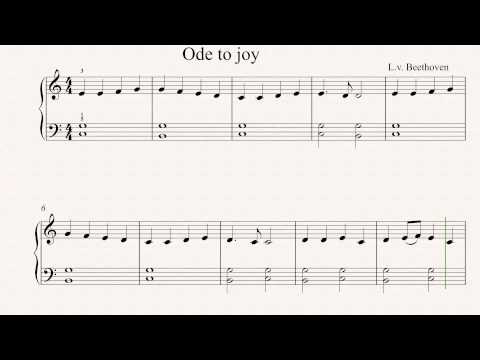
- Sight-reading practice: Dedicate 10–15 minutes daily to reading unfamiliar pieces. Apps like Sight Reading Factory or Music Theory provide structured exercises.
- Interval recognition drills: Train your brain to recognize the “shape” of an interval rather than calculating half steps each time. Listen to interval playback tools until you can identify major seconds, thirds, and fifths on instinct.
- Transposition exercises: Practice playing the same melody in different keys. This deepens your understanding of how note relationships remain consistent regardless of the starting pitch.
- Chord construction knowledge: Learn how basic triads (root, third, fifth) are built from scale degrees. This connects your note-reading skills directly to harmonic understanding.
Expert Recommendations and Practical Tips
Here’s advice from experienced music educators that accelerates note mastery:
- Start with one clef. Don’t try to learn treble and bass simultaneously. Achieve fluency in treble clef first, then introduce bass clef once you’re confidently identifying notes without hesitation.
- Use flashcard systems. Physical or digital flashcards (try Anki or Quizlet) with note-on-staff images help build instant recognition through spaced repetition.
- Connect the keyboard to the staff. Always point to the corresponding key while reading a note, and vice versa. This multi-sensory reinforcement cements the connection between symbol and sound.
- Learn songs you love. Technical exercises build foundational skill, but motivation sustains progress. Find simple arrangements of your favorite songs and apply your note-reading skills to real music.
- Don’t ignore rhythm. Many beginners obsess over pitch while neglecting note values. Tap, clap, or use a metronome to internalize the rhythmic component alongside pitch identification.
Conclusion
Mastering basic music notes isn’t a sprint — it’s a skill that compounds over time. Every note you recognize fluently, every rhythm you internalize, and every scale you construct adds another layer to your musical vocabulary. Start with the natural notes on one clef, build your note-value knowledge, explore intervals and key signatures, and gradually layer in advanced techniques. The journey from confused beginner to confident reader is entirely achievable with consistent, focused practice. Remember: every professional musician you admire started exactly where you are now — staring at a page of notes and wondering where to begin. The beginning is exactly the right place to be.
Frequently Asked Questions About Basic Music Notes
What are the 7 basic music notes and why do they repeat?
The seven basic music notes — A, B, C, D, E, F, and G — are named from the first seven letters of the Latin alphabet. They repeat across octaves because each octave doubles the frequency of a note, and Western music theory standardized this seven-note system centuries ago. After G, the pattern cycles back to A, creating an infinite ladder of pitches organized into manageable, repeating units called octaves. This cyclical structure is why sheet music uses ledger lines above and below the staff rather than inventing entirely new symbols for higher or lower pitches.
How can I memorize notes on the staff faster?
The fastest method combines mnemonic devices with active recall practice. Use phrases like “Every Good Boy Does Fine” for treble clef lines and “FACE” for spaces, but don’t stop there — quiz yourself randomly without looking at the mnemonic first. Pair this with physical flashcards showing notes on the staff, and spend 10 minutes daily identifying notes under timed conditions. Most learners report noticeable improvement within two to three weeks of consistent daily drills, especially when they simultaneously play the identified notes on their instrument.
What is the difference between a sharp, flat, and natural note?
A sharp (♯) raises a note by one half step, a flat (♭) lowers it by one half step, and a natural (♮) cancels a previous sharp or flat, returning the note to its unmodified pitch. For example, if a piece is in the key of G major (which has F♯), encountering an F natural means you play the white key F instead of F♯. Accidentals appear directly before the note they modify and apply only within that specific measure unless a key signature dictates otherwise.
How long does it take to learn basic music notes fluently?
Most dedicated students achieve reliable note identification on one clef within one to three months of regular practice (15–30 minutes daily). Full fluency — instant recognition without deliberate effort — typically takes six months to a year. This timeline depends heavily on prior musical exposure, the quality of your learning resources, and whether you’re simultaneously applying notes on an instrument. Adult learners with consistent practice habits often progress faster than children because they can leverage analytical pattern recognition alongside rote memorization.
Can I learn music notes without an instrument?
Technically yes — you can learn to identify written notes on paper alone using flashcards and apps. However, this approach only develops your visual recognition, not your auditory connection. The most effective learning always ties written notes back to heard sounds. Even without a traditional instrument, you can use free piano apps, online keyboard simulators, or virtual instruments to reinforce the link between a staff notation symbol and its actual pitch. Combining visual and auditory practice dramatically accelerates retention and real-world application.
What are the most common mistakes beginners make with music notes?
The top mistakes include: (1) trying to learn both clefs at once, which dilutes focus and slows progress; (2) relying solely on mnemonics without testing independent recognition; (3) ignoring rhythmic note values and focusing exclusively on pitch; (4) skipping key signatures and intervals, which creates gaps when encountering music beyond C major; and (5) practicing without a metronome or steady pulse, which leads to rhythmically inaccurate note execution. Avoiding these pitfalls from day one builds a much stronger foundation for advanced musicianship.