Music theory is far more than a set of dry rules scribbled on manuscript paper — it is the language through which musicians communicate, create, and connect with one another across cultures and centuries. If you have ever wondered what music theory means or how learning about scales, chords, and rhythm can transform your musical journey, you are in the right place. This comprehensive guide defines music theory at every level, from absolute beginner concepts to advanced compositional techniques, while providing practical insights, expert recommendations, and actionable strategies that will accelerate your understanding. Whether you are picking up an instrument for the first time or refining your craft as a seasoned performer, understanding the framework behind the music you love is one of the most rewarding investments you can make.
What Is Music Theory? A Clear and Comprehensive Definition
At its core, music theory definition refers to the systematic study of how music works — the principles, structures, and conventions that govern the creation, interpretation, and analysis of musical sounds. It encompasses everything from the physics of sound waves and the anatomy of pitch to the cultural traditions that shape how different societies organize rhythm and harmony.
In practical terms, music theory gives musicians a shared vocabulary. When a composer writes a piece in D major with a I–V–vi–IV chord progression, any trained musician reading the score immediately understands the harmonic tension, resolution, and emotional color of that passage. Understanding music theory is not about restricting creativity; it is about expanding your creative toolkit so that you can make informed, intentional choices in your playing, writing, and performing.
The study of music theory covers a remarkably wide range of topics, including:
- Pitch and notation — how musical sounds are represented on a staff using notes, clefs, and time signatures
- Scales and modes — the organized patterns of intervals that form the foundation of melodies
- Harmony and chords — the vertical combination of notes that creates chord progressions and tonal color
- Rhythm and meter — the patterns of duration and accent that give music its temporal structure
- Form and analysis — the large-scale architecture of a piece, from sonata form to modern song structures
- Timbre and texture — the quality of sound and the layering of musical parts
Why Music Theory Matters for Musicians of All Levels
One of the most persistent myths about music theory is that it only benefits classical musicians or composers. In reality, why music theory is important extends across every genre — jazz, pop, rock, electronic, hip-hop, folk, and beyond. Whether you are a self-taught guitarist learning your first songs or a university-level composition student, the theoretical framework provides clarity and intentionality.
Benefits for Beginners
For those just starting out, music theory basics serve as a roadmap rather than a constraint. Beginners who learn about intervals and scales can:
- Understand why certain notes sound good together on their instrument
- Read sheet music and chord charts with greater confidence
- Memorize songs faster by recognizing recurring patterns
- Communicate more effectively with other musicians during jam sessions
- Build a foundation that supports faster progress and deeper musicality
Advantages for Intermediate and Advanced Players

As musicians progress, music theory becomes a powerful tool for creative expression. Intermediate players begin exploring modal interchange, chromatic harmony, and counterpoint, while advanced musicians use theoretical knowledge to deconstruct complex works, innovate within their genre, and teach others effectively. Learning music theory at every stage ensures that your technical skill is always matched by a deeper conceptual understanding.
Core Elements of Music Theory Explained
To truly define music theory in practice, it helps to break down its essential components into manageable building blocks. Each element connects to the others, forming an interconnected web of knowledge that musicians use daily.

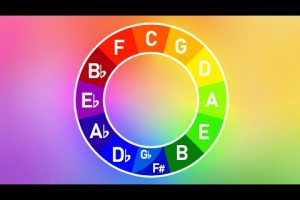
Pitch and the Musical Alphabet: Music is organized around twelve pitches in Western tonal systems, labeled A through G with sharps and flats filling the gaps. These pitches exist in specific frequency ratios that the human ear perceives as distinct notes.
Scales: A scale is a sequence of pitches arranged in ascending or descending order according to a specific pattern of whole steps and half steps. The major and natural minor scales are the most fundamental, but the harmonic minor, melodic minor, pentatonic, blues, and various modes (Dorian, Phrygian, Lydian, etc.) expand the palette enormously.
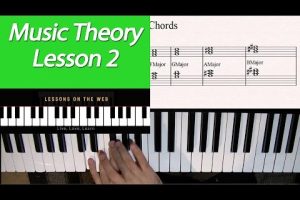
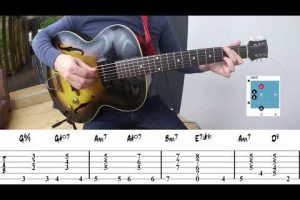
Chords and Harmony: A chord is formed when three or more pitches sound simultaneously. Triads — built from a root, third, and fifth — are the simplest harmonic units, but seventh chords, extended chords, and altered chords add rich harmonic color. Harmony describes how chords relate to one another and to the overarching key of a piece.
Rhythm and Meter: Time signatures like 4/4, 3/4, and 7/8 dictate how beats are grouped and accented. Syncopation, polyrhythm, and odd meters add complexity and groove, and mastering them separates a competent player from a truly expressive one.
Musical Form: Every piece has a structure. Common forms include binary, ternary, sonata-allegro, verse-chorus, and AABA. Recognizing form helps you anticipate musical events and understand the composer’s larger narrative arc.
Key Concepts at a Glance
The table below compares foundational music theory concepts to help you quickly reference what each element means and how it functions within a musical context.
| Concept | Definition | Why It Matters |
| Pitch | The perceived frequency of a sound, organized into notes | Forms the basis of melody and harmony |
| Interval | The distance between two pitches | Determines the character of scales and chords |
| Scale | A patterned sequence of intervals | Provides the palette for melody and improvisation |
| Chord | Three or more pitches sounded simultaneously | Creates harmonic tension and resolution |
| Chord Progression | A sequence of chords in a piece | Establishes the harmonic journey of a song |
| Key Signature | The set of sharps or flats that defines a key | Organizes the tonal center and related chords |
| Time Signature | A notational convention indicating beats per measure | Shapes the rhythmic feel and structure |
| Tempo | The speed at which a piece is played | Directly affects mood and energy |
| Dynamics | Variations in volume and intensity | Adds emotional expression and contrast |
| Texture | The number of independent melodic layers | Determines the density and richness of sound |

How to Learn Music Theory Effectively
Studying music theory does not require a formal degree program, although structured courses can accelerate your progress. The most effective approach combines conceptual learning with active, hands-on practice. Here is a step-by-step path that works for learners at every level:
- Start with the fundamentals: Learn the musical alphabet, the piano keyboard layout, and basic rhythm values (whole note, half note, quarter note, eighth note).
- Master the major and natural minor scales: These are the backbone of Western music. Practice building them in every key using whole-step and half-step formulas.
- Study intervals by ear and by sight: Intervals are the DNA of melodies. Train your ear to recognize them using solfege, movable-do systems, or relative pitch exercises.
- Build chords from scales: Learn how triads and seventh chords are constructed using scale degrees. Understand the relationship between a key and its diatonic chords.
- Analyze real music: Take songs you love and identify the chord progressions, key centers, and formal structures. This bridges the gap between theory and practice.
- Apply theory to your instrument: Whether you play piano, guitar, violin, or sing, always connect theoretical concepts to physical practice on your instrument.
- Use quality resources: Textbooks like Music in Theory and Practice by Bruce Benward, online platforms like musictheory.net, and YouTube channels dedicated to music theory offer excellent structured content.
Expert Tips and Practical Recommendations
seasoned musicians and educators offer several strategies that can dramatically improve your grasp of music theory:
- Learn in context: Do not study theory in isolation. Always connect concepts to actual songs, exercises, or improvisation sessions so the knowledge sticks and feels relevant.
- Transcribe by ear: Listening to a recording and writing down the notes and chords forces you to apply theoretical knowledge in real time. This is one of the fastest ways to internalize harmonic concepts.
- Sing what you learn: Vocalizing intervals, scales, and chord tones strengthens your ear and deepens your understanding far more than reading alone.
- Study multiple genres: Jazz theory, pop harmony, and classical counterpoint all offer unique insights. Cross-pollinating ideas from different traditions makes you a more versatile and creative musician.
- Teach others: Explaining a concept to a friend or student forces you to articulate it clearly, which reveals gaps in your own understanding and solidifies your knowledge.
Frequently Asked Questions About Music Theory
1. Is music theory necessary if I just want to play for fun?
Not strictly necessary, but highly beneficial. Even casual players who learn basic music theory concepts like keys, chords, and rhythm patterns find that they can pick up new songs faster, improvise more confidently, and communicate more effectively with other musicians. Think of theory as a shortcut, not a rulebook.
2. Can I learn music theory without knowing how to read sheet music?
Absolutely. While standard notation is a valuable tool, music theory concepts can be learned through tablature, chord charts, ear training, and practical application on your instrument. Many successful songwriters and producers have minimal formal reading ability but a deep intuitive grasp of harmonic and rhythmic principles.
3. What is the best age to start learning music theory?
Children as young as five or six can begin absorbing foundational concepts like rhythm, pitch matching, and simple patterns. Older teens and adults often benefit from a more analytical approach. There is no wrong age — the key is matching the teaching method to the learner’s developmental stage and musical goals.
4. How long does it take to become proficient in music theory?
This depends on your goals and practice consistency. A working knowledge of basic theory — scales, chords, progressions, and song forms — can be developed in three to six months of regular study. Advanced topics like counterpoint, atonal analysis, and extended harmonic techniques may take years of dedicated exploration.
5. Does music theory apply to electronic music production?
Yes, and arguably even more so in some ways. Electronic producers use scales, chord progressions, and rhythmic theory constantly when designing patches, arranging tracks, and mixing elements. A strong theoretical foundation helps producers make intentional decisions about key changes, harmonic tension, and the emotional arc of a track.
6. What is the difference between music theory and music appreciation?
Music theory is the technical, analytical study of how music is constructed — notes, chords, forms, and the relationships between them. Music appreciation focuses on the emotional, cultural, and aesthetic experience of listening to music. Both enrich your relationship with music, but they approach it from different angles: theory from the inside out, appreciation from the listener’s perspective inward.
Conclusion
To define music theory in a single sentence, it is the framework that reveals the logic and beauty behind the music we hear, play, and create. It is not a gatekeeping mechanism designed to exclude newcomers; it is an empowering toolkit that opens doors to deeper expression, stronger collaboration, and more confident musicianship at every level. By studying the core elements — pitch, rhythm, harmony, form, and texture — and applying them consistently in practical settings, you transform from someone who simply plays notes into someone who truly understands and shapes the sound. Start where you are, stay curious, and let music theory become the foundation that supports every new skill you develop.