


If you have ever stood in front of a mirror and wondered, can anybody learn to sing, you are far from alone. This question stops millions of people from even trying, held back by the belief that vocal talent is something you are simply born with. The truth, backed by decades of vocal science and real-world coaching experience, is that singing is a skill — and like any skill, it can be developed with the right guidance, consistent practice, and a willingness to grow. Whether you dream of performing on stage, singing confidently at karaoke, or just improving the sound of your voice in the shower, this comprehensive guide will walk you through everything you need to know about unlocking your vocal potential.
Can Anyone Actually Learn to Sing?
The short answer is yes. The longer answer is even more encouraging. Research in music education and vocal pedagogy consistently shows that the vast majority of people who believe they are “tone deaf” are not. True congenital amusia — the clinical inability to perceive pitch differences — affects less than four percent of the population. That means roughly ninety-six percent of humans have the biological capacity to learn to sing in tune, match pitch, and develop a pleasing vocal tone. Learning to sing well is about training your ear, coordinating your breathing, and building muscle memory in your larynx, diaphragm, and resonating chambers. No matter your age, background, or current ability level, your voice can improve dramatically with intentional work.
What Science Says About Singing Ability
Modern vocal science has debunked the idea that singing is purely a gift from birth. Studies from institutions like the Royal Northern College of Music and the University of Montreal confirm that pitch accuracy improves significantly with training. Your vocal cords are muscles, and like any other muscle group, they respond to exercise and repetition. The brain’s auditory-motor connections — the pathways that link what you hear to how you produce sound — actually strengthen over time as you practice singing regularly.
The Role of Vocal Anatomy
Every person’s vocal anatomy is slightly different. The size and shape of your larynx, the length and thickness of your vocal folds, the dimensions of your throat and mouth, and the configuration of your sinuses all influence your unique vocal tone. These anatomical differences do not prevent you from learning to sing; they simply give you a distinctive sound to work with. Understanding your voice type — whether you are a soprano, tenor, baritone, or bass — helps you choose appropriate exercises and repertoire that match your natural range and timbre.
Can Genetics Limit Your Singing Potential?
Genetics do play a role in your baseline vocal characteristics, including your natural range and the resonance qualities of your voice. However, genetics account for only a portion of your singing ability. Environment, training, and dedication matter just as much. Some people are born with vocal tracts that naturally produce a rich, warm sound, but without technique and practice, even the most naturally gifted voice will stagnate. Conversely, someone with a less conventionally “beautiful” voice can develop extraordinary skill, control, and expressiveness through disciplined training.
Common Myths That Stop People From Singing
Misinformation about singing holds countless people back from developing their voices. Let’s address some of the most persistent myths:
- Myth: You either have it or you don’t. Reality: Singing is a learned motor skill that improves with structured practice.
- Myth: You are born with a fixed vocal range. Reality: Most singers can expand their range by several notes through targeted exercises and vocal conditioning.
- Myth: Only young people can learn to sing. Reality: Adults of every age can make meaningful improvements. The voice continues to be trainable throughout life.
- Myth: Bad singers cannot become good singers. Reality: The vast majority of people who consider themselves bad singers simply lack training and confidence, not ability.
- Myth: Singing is all about natural talent. Reality: Technique, breath support, ear training, and consistent practice matter far more than raw talent.
Essential Skills Every Beginner Needs to Develop
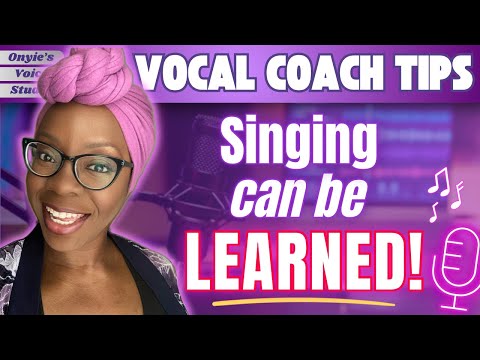
Before diving into advanced techniques, every aspiring singer should focus on building a strong foundation. These core skills form the backbone of vocal development:
- Pitch Accuracy — Learning to match pitch is the single most important first step. This means reproducing the exact frequency of a note you hear, whether from a piano, a recording, or a voice coach.
- Breath Control — Proper diaphragmatic breathing provides the power and stability your voice needs. Without breath support, even the most talented singer will struggle with volume, endurance, and tone quality.
- Vocal Warm-Ups — Warming up your voice before singing prevents strain and injury. Lip trills, humming scales, and gentle sirens prepare your vocal cords for more demanding exercises.
- Ear Training — Developing your ability to hear intervals, recognize chords, and identify pitch discrepancies allows you to self-correct and improve faster.
- Resonance and Projection — Learning to use your chest, head, and nasal cavities as resonating chambers helps you produce a fuller, louder sound without straining your throat.
How to Start Learning to Sing: A Step-by-Step Guide

Starting your singing journey does not require expensive equipment or a professional studio. What it does require is consistency, patience, and a structured approach.
For Absolute Beginners
Begin by spending just ten to fifteen minutes per day on simple vocal exercises. Start with humming to find your comfortable speaking range, then gradually expand upward and downward using scales. Record yourself regularly so you can hear your progress over time. Focus on matching pitch using apps like SingTrue, Vanido, or simply singing along with your favorite songs and paying close attention to whether you are hitting the notes accurately. The goal at this stage is not perfection — it is building awareness and establishing healthy vocal habits.

Intermediate Techniques to Level Up
Once you have consistent pitch accuracy and basic breath control, you can start exploring more advanced concepts. Work on expanding your vocal range through gentle scale exercises and interval training. Learn about vocal registers — chest voice, head voice, and mixed voice — and practice transitioning smoothly between them. Begin incorporating dynamics, meaning you practice singing softly and loudly with control. At this stage, working with a qualified vocal coach becomes highly valuable, as they can identify habits you cannot hear yourself and provide personalized feedback that accelerates your progress.
Advanced Training Methods
For singers who want to reach a professional level, advanced training involves mastering techniques like vibrato, melisma, vocal runs, and stylistic phrasing. You will explore different genres to discover where your voice naturally excels. Advanced singers also focus on performance skills, stage presence, microphone technique, and the ability to sing live without vocal fatigue. Endurance training, vocal health maintenance, and regular practice sessions of thirty minutes to an hour become essential parts of the routine.
Comparison Table: Self-Taught vs. Professional Vocal Training
| Factor | Self-Taught | Professional Training |
| Cost | Low to free (apps, YouTube) | Moderate to high ($50–$200+ per lesson) |
| Feedback Quality | Limited; self-assessment only | Immediate, personalized, expert feedback |
| Progress Speed | Slower; risk of developing bad habits | Faster; structured path avoids common mistakes |
| Accountability | Low; easy to skip practice | High; scheduled lessons and homework |
| Best For | Casual singers, hobbyists, budget-conscious learners | Serious singers, performers, aspiring professionals |
| Risk of Vocal Damage | Higher without proper guidance | Lower; coach monitors technique in real time |
Expert Tips That Accelerate Vocal Improvement
Top vocal coaches and professional singers share several habits that separate those who improve quickly from those who plateau. Here are the most impactful tips:
- Practice daily, even if only for fifteen minutes. Consistency beats duration every time. Short, focused sessions build muscle memory far more effectively than occasional marathon rehearsals.
- Record and listen back to yourself. Your voice sounds different to you internally than it does to others. Recording eliminates this gap and lets you identify areas for improvement objectively.
- Stay hydrated. Your vocal cords need moisture to vibrate efficiently. Drink plenty of water throughout the day, and avoid dehydrating beverages like excessive caffeine and alcohol before singing.
- Never sing through pain. Discomfort during singing is a warning sign. Rest your voice if you feel strain, and consult a vocal health professional if the pain persists.
- Sing with intention and emotion. Technical skill without expression sounds flat. Focus on conveying the meaning and emotion of a song, and your audience — and your own confidence — will soar.
- Be patient with yourself. Vocal improvement is a gradual process. Most singers notice meaningful changes within three to six months of consistent practice, but mastery takes years of dedication.
Frequently Asked Questions
Can I learn to sing if I am tone deaf? True tone deafness, clinically known as congenital amusia, is extremely rare, affecting fewer than four percent of the population. The vast majority of people who think they are tone deaf simply lack pitch-matching training. With ear exercises and consistent practice, most individuals can learn to sing in tune and improve their pitch accuracy significantly.
How long does it take to learn to sing well? The timeline varies depending on your starting point, practice frequency, and quality of instruction. Beginners typically notice pitch improvement within one to three months of regular practice. Developing a strong, controlled voice with good range usually takes one to two years of dedicated training. Becoming a highly skilled or professional-level singer can take several years of advanced study and performance experience.
Can adults learn to sing, or is it only for young people? Absolutely, adults can learn to sing at any age. While younger singers may have more flexible vocal cords and faster neural adaptation, adults possess advantages such as greater discipline, self-awareness, and emotional depth — all of which contribute to expressive, compelling singing. The voice does not lose its ability to be trained simply because you are older.
What is the best way to start learning to sing at home? Begin with daily warm-ups that include humming, lip trills, and gentle scales. Use pitch-matching apps or karaoke tracks to practice hitting notes accurately. Focus on breathing from your diaphragm rather than shallow chest breathing. Recording yourself and comparing your progress over weeks and months will keep you motivated and help you identify specific areas that need more work.
Is a vocal coach necessary to learn to sing? A vocal coach is not strictly necessary, but they dramatically accelerate your progress and help you avoid developing harmful habits. Many self-taught singers eventually hit a plateau or develop tension-based techniques that limit their range and power. A qualified coach provides real-time feedback, personalized exercises, and technical corrections that are difficult to achieve independently, especially if you are serious about advancing beyond a beginner level.
Conclusion
The question can anybody learn to sing deserves an unequivocal yes. The evidence from vocal science, the experiences of countless singing students, and the fundamental biology of the human voice all point to the same conclusion: singing is a trainable skill, not an exclusive talent reserved for a lucky few. Whether you are a complete beginner picking up a microphone for the first time, an intermediate singer looking to refine your technique, or an advanced vocalist striving for professional excellence, your voice has the potential to improve — often far beyond what you currently believe is possible. The only ingredients you truly need are curiosity, consistency, and the courage to start. So take a deep breath, open your mouth, and let your voice be heard. Your journey as a singer begins the moment you decide to try.