


Learning how a chord on guitar works is one of the most transformative milestones any guitarist can experience. Whether you are picking up the instrument for the first time or refining your skills after years of playing, understanding chords is the backbone of everything you do on the strings. A chord is not just a collection of notes played at the same time — it is the language through which guitarists express emotion, build songs, and connect with listeners. In this comprehensive guide, we will walk you through the complete journey of guitar chords, from the very first open shapes you will learn as a beginner to the advanced voicings that separate intermediate players from true professionals. By the end of this article, you will have a deep, practical understanding of how chords are constructed, how to play them cleanly, and how to use them creatively in your own music.
What Exactly Is a Chord on Guitar?
At its core, a guitar chord is a combination of three or more notes played simultaneously across the strings of the instrument. The word “chord” comes from the Latin chorda, meaning string or chord, and in music theory, chords are built using specific intervals — the distances between notes on a scale. The most fundamental type of chord is the triad, which consists of a root note, a third, and a fifth. For example, a C major chord contains the notes C, E, and G. When you press down on the fretboard and strum across multiple strings, your fingers are essentially shaping a three-dimensional blueprint that determines which notes sound together and how they interact.
Understanding chord construction helps you move beyond memorizing shapes and into a deeper, more intuitive relationship with the instrument. When you know why a chord sounds the way it does, you can transpose it to any key, modify it to create different moods, and even invent your own voicings. This knowledge becomes especially valuable when you start writing songs, improvising solos, or jamming with other musicians.

The Anatomy of a Guitar Chord
Every chord on guitar has several components that work together to define its sound and character.
- Root Note: The foundational note that gives the chord its name. In an A minor chord, the root is A.
- Chord Quality: This refers to whether a chord is major, minor, diminished, augmented, or something more complex. The quality changes the emotional color of the sound.
- Intervals: The specific distances between the notes within the chord. Major chords use a major third and a perfect fifth, while minor chords use a minor third and a perfect fifth.
- Voicing: The specific arrangement of notes and the order in which they appear across the strings. The same notes can be voiced in many different ways, and each voicing produces a unique texture.
- Fingering and Position: Where on the fretboard you place your fingers and which fingers you use. This affects playability, tone, and ease of transitioning to other chords.
How to Play Your First Guitar Chords as a Beginner
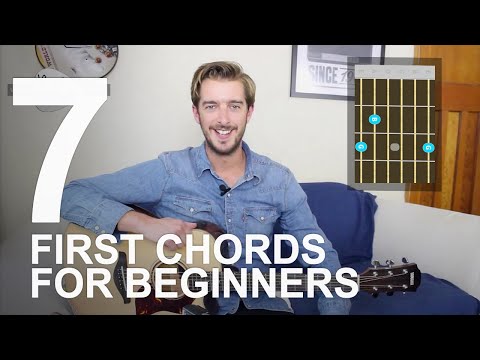
If you are just starting out, the first chords you should learn are the basic open chords. These are called “open” because they use one or more unfretted (open) strings, making them easier to finger and more resonant in sound. Most beginner guitar lessons start with a handful of essential shapes that unlock thousands of popular songs.
Top Beginner Open Chords to Master First
- E Major — One of the easiest chords to play. All six strings are strummed, and the shape feels natural under the fingers.
- A Major — A great chord for building finger strength and coordination across the fretting hand.
- C Major — A staple chord that teaches you how to spread your fingers across frets while keeping your wrist relaxed.
- G Major — One of the most frequently used chords in popular music and a gateway to understanding chord movement on the fretboard.
- D Major — Compact and bright-sounding, D major is essential for playing in the key of G and many folk and pop progressions.
- E Minor — The easiest minor chord on guitar; it requires only two fingers and produces a soulful, melancholic tone.
- A Minor — Closely related to C major and E minor, Am is a cornerstone of many genres including rock, blues, and acoustic singer-songwriter music.
When you first start practicing these shapes, focus on pressing each string down firmly and close to the fret wire. Strum each string individually to make sure every note rings out clearly. Muted or buzzing strings are normal at the beginning, but consistent practice will clean up your sound quickly. Spend at least 15 to 20 minutes per day switching between two or three chords slowly before trying to play at full tempo.
Essential Open Chords Every Guitarist Needs in Their Toolkit
Beyond the beginner chords, there is a set of open chords that form the foundation of virtually all popular music. These shapes appear in chord charts, songbooks, and tablature across virtually every genre from country and folk to rock and pop.
The key open chords that every guitarist should know include F major (often played as a simplified one-finger version), B minor, D minor, E seventh, and A seventh. These chords introduce you to the concept of chord extensions and give your playing a more sophisticated harmonic palette. Seventh chords, in particular, add warmth and tension that make progressions sound more interesting than plain major and minor triads.
A practical approach is to group chords by key and practice the progressions that naturally occur within that key. For example, the key of G uses G, C, D, Em, and Am as its most common chords. Practicing chord transitions within a single key helps you build muscle memory while also teaching you how harmonies work together.
Barre Chords: The Bridge to Intermediate and Advanced Guitar Playing
Once you are comfortable with open chords, the next major leap is learning barre chords. A barre chord uses your index finger to press down all six (or five) strings across a single fret, essentially creating a movable capo with your hand. This technique opens up the entire fretboard and allows you to play the same chord shape in any key by simply shifting the shape up or down the neck.
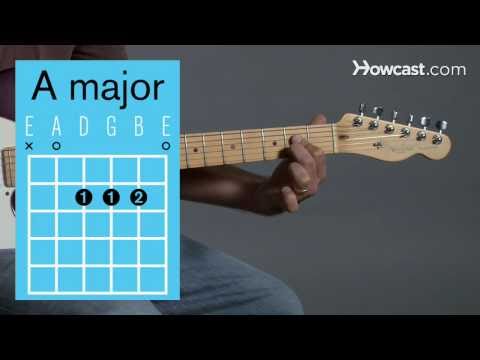
The two most important barre chord shapes are based on the E shape and the A shape from open position. The E-based barre chord uses the open E major shape as a template, with the index finger barring across the desired fret. The A-based barre chord does the same using the open A major shape. Both require significant finger strength and proper thumb placement behind the neck, so do not get discouraged if they feel difficult at first.
| Feature | Open Chords | Barre Chords |
| Difficulty Level | Beginner | Intermediate to Advanced |
| Mobility | Fixed position on the fretboard | Movable to any fret and key |
| String Range | Typically 4–6 strings | Typically 5–6 strings |
| Finger Strength Required | Minimal | High, especially for the index finger |
| Common Uses | Beginner songs, acoustic strumming | Full band playing, lead guitar, transposing |
| Tone | Bright, open resonance | Tighter, more focused tone |
Pro tip for mastering barre chords: focus on using the side of your index finger rather than the flat pad. Position your thumb directly behind the neck for maximum support, and make sure your wrist is slightly angled forward. Practicing partial barre chords (where only certain strings are barred) is an excellent stepping stone to full barre shapes.
Advanced Chord Voicings and Extensions
Once you have a solid command of open chords and barre chords, you can start exploring advanced voicings that add depth and sophistication to your playing. Chord extensions include the seventh, ninth, eleventh, and thirteenth intervals, and they are widely used in jazz, neo-soul, R&B, and sophisticated pop arrangements.
Some important advanced chord types include:
- Major Seventh (Maj7): Adds a dreamy, jazzy quality. Example: Cmaj7 (C, E, G, B).
- Minor Seventh (m7): Adds warmth and complexity. Example: Am7 (A, C, E, G).
- Dominant Seventh (7): Creates tension that naturally resolves to the tonic. Example: G7 (G, B, D, F).
- Sus2 and Sus4: Suspend the third to create an open, ambiguous sound. Common in alternative and post-rock music.
- Add9: Adds the ninth note without removing the third, creating a lush, open sound popular in acoustic and pop music.
- Diminished and Augmented: Unstable chords that create dramatic tension and are used heavily in film scores and progressive music.
These chords are often played using shell voicings (where you strip the chord down to just the root, third, and seventh) or using open string drones that create a rich, ambient texture. Guitarists like Joe Pass, Wes Montgomery, and Andy McKee are excellent study references for anyone looking to deepen their chord vocabulary.
Common Chord Progressions in Popular Music
Understanding chord progressions is one of the fastest ways to improve your practical guitar skills. A chord progression is simply a sequence of chords played in a specific order, and certain progressions have been used in hit songs for decades. Some of the most famous progressions include:
- I – V – vi – IV (used in countless pop songs across every era)
- I – IV – V – I (the classic blues and rock progression)
- vi – IV – I – V (the emotional, cinematic progression often found in ballads)
- ii – V – I (the backbone of jazz harmony)
- I – vi – IV – V (a staple of 1950s and 1960s rock and roll)
Practicing these progressions slowly with a metronome is one of the best exercises for developing timing, chord transitions, and musical feel. Try applying them to different keys and different strumming patterns to build versatility.
Frequently Asked Questions About Guitar Chords
What is the easiest chord to learn on guitar for absolute beginners?
The E major chord is widely considered the easiest chord for absolute beginners because it requires only three fingers, uses open strings for a full, ringing sound, and feels very natural in the hand. Many guitar instructors recommend starting with E major before moving to E minor, A major, and C major.
How long does it take to learn all basic guitar chords?
With consistent daily practice of 20 to 30 minutes, most beginners can learn all seven basic open chords (E, A, C, D, G, Em, Am) within two to four weeks. However, playing them cleanly and transitioning between them smoothly may take two to three months of regular practice.
What is the difference between a chord progression and a chord chart?
A chord progression refers to the sequence of chords played in a piece of music, while a chord chart is a visual representation that shows the specific chord shapes, finger positions, and strumming patterns for each chord. Chord charts are essential tools for learning songs quickly and accurately.
Why do my barre chords sound muted or buzzy?
The most common reason is insufficient pressure from the barre finger or incorrect finger placement. Make sure you are using the bony side of your index finger, position your thumb directly behind the neck, and angle your barre finger slightly toward the headstock. Practicing partial barres on just the bottom four strings is an excellent way to build strength and confidence before tackling full six-string barres.
Do I need to learn music theory to play guitar chords effectively?
No, you can learn thousands of songs and become a proficient guitarist without deep music theory knowledge. However, learning even basic concepts like the major scale, intervals, and chord construction will dramatically accelerate your ability to understand why chords work together, how to transpose songs to different keys, and how to create your own chord voicings and progressions.
Final Thoughts on Mastering the Guitar Chord
Mastering a chord on guitar is not about memorizing shapes — it is about developing an intimate understanding of how notes interact, how your hands and fingers move across the fretboard, and how rhythm and timing bring harmony to life. From the first open chords you learn as a beginner to the sophisticated extended voicings that define advanced playing, every chord you add to your repertoire expands your creative possibilities. Practice consistently, focus on clean technique, and always listen critically to the sounds you produce. The guitar is an instrument that rewards patience and curiosity, and chords are the gateway to a lifetime of musical expression. Keep practicing, keep exploring, and most importantly, enjoy the journey.