The classical time period is one of the most transformative and influential eras in human history, shaping everything from philosophy and politics to music and architecture. Whether you are a student diving into ancient history for the first time or a music enthusiast exploring the roots of Western composition, understanding the classical time period offers a window into the very foundations of modern civilization. This era encompasses multiple domains — from the golden age of ancient Greece and Rome to the distinguished classical music era of the 18th and early 19th centuries. In this comprehensive guide, we will unpack the defining features, key figures, lasting contributions, and lesser-known nuances of the classical time period so you can develop a genuine, expert-level understanding of its significance.
What Exactly Is the Classical Time Period?
The term “classical time period” can refer to different things depending on context. In historical studies, it most commonly points to the era of ancient Greece and Rome, roughly spanning from the 5th century BCE to the 5th century CE. In music, the classical period is more narrowly defined, covering approximately 1750 to 1820. Both usages share a common thread: they represent ages of extraordinary intellectual achievement, artistic refinement, and cultural development that continue to influence contemporary society deeply. Scholars often refer to these eras as classical antiquity or the classical epoch, emphasizing their foundational role in Western thought.
It is important not to confuse the classical historical period with other eras that use similar terminology. The Renaissance, for example, was a revival or “rebirth” of classical ideals, while the Neoclassical movement in the 18th century drew direct inspiration from ancient Greek and Roman aesthetics. Each of these periods interacts with the classical time period in fascinating ways, creating a layered tapestry of cultural evolution.
The Classical Period in Ancient Civilizations
Ancient Greece: The Birthplace of Western Thought
Ancient Greece stands at the very heart of the classical time period. From roughly 500 BCE to 323 BCE, Greek city-states like Athens, Sparta, and Corinth produced advancements that still resonate today. The Athenian Golden Age, particularly under the leadership of Pericles, saw the construction of the Parthenon, the flourishing of dramatic arts, and the development of democratic governance. Philosophers such as Socrates, Plato, and Aristotle laid the groundwork for logic, ethics, and metaphysics. Historian Herodotus and later Thucydides pioneered the discipline of historical writing itself.
The Greeks also made monumental strides in mathematics, with Euclid’s geometry and Pythagoras’s theorems forming pillars of mathematical education for centuries. The Hippocratic school of medicine moved healthcare away from superstition toward observation and reason. Greek theater — with its tragedies by Sophocles and comedies by Aristophanes — established narrative structures that playwrights still use today. The concept of paideia, or holistic education, was born here and remains a guiding principle in liberal arts education worldwide.
Ancient Rome: Engineering, Law, and Empire
Rome inherited and amplified Greek classical ideals, extending them across a vast empire that stretched from Britain to Mesopotamia. The Roman classical period, roughly from 27 BCE to 476 CE in the West, was characterized by extraordinary engineering feats including aqueducts, roads, and the Colosseum. Roman law formed the backbone of many modern legal systems, including the civil law traditions used across continental Europe and Latin America.
Latin, the language of Rome, evolved into the Romance languages — French, Spanish, Italian, Portuguese, and Romanian — and contributed heavily to English vocabulary, especially in science, medicine, and law. Figures like Cicero, Virgil, and Ovid shaped literature and rhetoric for millennia. The adoption of Christianity as the state religion under Emperor Constantine marked a pivotal transition that would define the post-classical world.

The Classical Period in Western Music
When people refer to the classical time period in music, they are usually talking about the era between approximately 1750 and 1820. This period followed the Baroque era and preceded the Romantic period. It was defined by a shift toward clarity, balance, and structural elegance in composition.
Key Composers of the Classical Era
The classical music period produced some of the most celebrated composers in history. Their works remain central to orchestral repertoires and concert halls around the globe:
- Joseph Haydn — Often called the “Father of the Symphony,” Haydn standardized orchestral forms and string quartets, composing over 100 symphonies and 68 string quartets during his career.
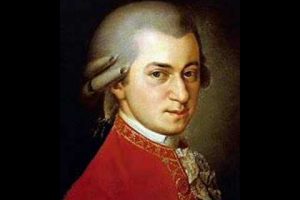
- Wolfgang Amadeus Mozart — A prodigious talent who composed more than 600 works, including operas like The Marriage of Figaro and Don Giovanni>, symphonies, concertos, and chamber music of breathtaking depth.
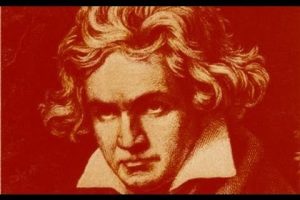
- Ludwig van Beethoven — Beethoven bridges the classical and romantic eras. His early works adhere to classical structures, while his later compositions, including the Ninth Symphony, push boundaries with unprecedented emotional intensity and innovation.
- Franz Schubert — Known as the “King of Lieder,” Schubert brought new poetic and musical depth to the art song form despite a tragically short life.
Musical Characteristics of the Classical Period
The classical era introduced several defining features that distinguished it from previous musical styles:
- Homophonic texture — A clear melody supported by subordinate accompaniment replaced the complex polyphony of the Baroque period.
- Sonata form — Exposition, development, and recapitulation became the standard structure for movements, giving compositions a logical, dramatic arc.
- Orchestral expansion — The orchestra grew in size and range, incorporating new instruments like the clarinet and gaining greater dynamic variety.
- Emphasis on balance and proportion — Composers valued symmetry, elegant phrasing, and structural clarity over the ornate complexity of earlier styles.
- Rise of public concerts — Music moved beyond royal courts and churches into public spaces, democratizing access to live performance.
Defining Characteristics of the Classical Time Period Across Domains
Across both history and music, the classical time period shares several recurring themes:
- Rationalism and order — A commitment to logic, proportion, and structured beauty influenced philosophy, governance, and art alike.
- Humanism — The focus shifted toward human experience, potential, and dignity, a principle that powered both Greek philosophy and Enlightenment-era music.
- Innovation rooted in tradition — Classical creators honored existing forms while pushing them forward with new techniques and ideas.
- Enduring influence — Nearly every subsequent Western cultural movement either revived, reacted against, or built upon classical foundations.
Classical Period vs. Baroque and Romantic Eras: A Comparison
Understanding how the classical time period fits within the broader timeline of Western culture is essential. The following table highlights key differences between three interconnected eras:
| Feature | Baroque Era (1600–1750) | Classical Era (1750–1820) | Romantic Era (1820–1900) |
| Music Texture | Polyphonic, complex | Homophonic, clear | Rich, expressive |
| Key Composers | Bach, Handel, Vivaldi | Haydn, Mozart, early Beethoven | Chopin, Liszt, Wagner |
| Philosophy | Divine order, grandeur | Reason, balance, humanism | Emotion, individualism, nature |
| Art and Architecture | Ornate, dramatic | Restrained, symmetrical | Romanticized, emotional |
| Historical Context | Counter-Reformation, absolutism | Enlightenment, revolution | Industrialization, nationalism |

Major Contributions and Lasting Legacy
The contributions of the classical time period are so deeply woven into modern life that they often go unrecognized. In governance, Athenian democracy directly inspired the framers of the United States Constitution. The Roman Republic’s system of checks and balances informed Enlightenment thinkers like Montesquieu and James Madison. In science, the empirical methods championed by Aristotle and later formalized during the classical and early modern periods remain the standard for research today.

In architecture, the neoclassical movement gave us the U.S. Capitol, the British Museum, and countless civic buildings worldwide. Columns, domes, and pediments drawn from Greek and Roman models continue to signal authority, permanence, and democratic ideals. In literature, the classical unities of time, place, and action influenced dramatic writing for centuries, and classical myths remain a primary source for modern storytelling across film, television, and novels.
Music education still revolves around classical era forms. Sonata form, symphonic structure, and orchestral conventions established during the classical time period are taught in every conservatory and university music program on earth. The works of Haydn, Mozart, and Beethoven consistently rank among the most performed and recorded compositions in history.
Expert Tips for Studying the Classical Time Period
Whether you are approaching this topic as a beginner or seeking to deepen advanced knowledge, here are practical recommendations:
- Start with primary sources. Read Plato’s Republic, Homer’s Iliad, or Haydn’s letters to gain direct access to classical-era thinking rather than relying solely on secondary summaries.
- Listen actively to classical music. Compare a Baroque piece by Bach with a Mozart symphony and then a Romantic work by Brahms. Train your ear to hear the differences in texture, form, and emotional intent.
- Visit museums and archaeological sites. Institutions like the British Museum, the Acropolis in Athens, and the Roman Forum bring the classical time period to life in ways no textbook can replicate.
- Take structured courses. Platforms like Coursera and edX offer free courses on ancient Greek history, classical archaeology, and Western music history that provide expert-guided pathways through the material.
- Read broadly across disciplines. The classical period intersects with philosophy, art history, political science, and linguistics. Cross-disciplinary reading builds a richer, more nuanced understanding.
Conclusion
The classical time period represents far more than a chapter in a history textbook. It is the crucible in which much of Western civilization’s most enduring ideas, art forms, and institutions were forged. From the philosophical schools of Athens to the symphonic halls of Vienna, the classical era established patterns of thought and creativity that continue to shape our world profoundly. By studying this era with curiosity and depth, you connect yourself to a lineage of human achievement that remains as relevant and inspiring today as it was thousands of years ago.
Frequently Asked Questions About the Classical Time Period
1. What is the classical time period in history?
The classical time period in history generally refers to the era of ancient Greece and Rome, spanning roughly from the 5th century BCE to the 5th century CE. It is characterized by major advances in philosophy, democracy, law, literature, and the arts, and is often considered the foundation of Western civilization.
2. How does the classical period differ from the neoclassical period?
The classical period refers to the original ancient Greek and Roman eras, while the neoclassical period was a later movement (roughly 17th to 19th centuries) that revived and reinterpreted classical ideals in art, architecture, literature, and music. Neoclassicism was inspired by archaeological discoveries and Enlightenment rationalism.
3. Why is the classical period in music so important?
The classical period in music (1750–1820) is crucial because it established foundational structures like sonata form, standardized the symphony and string quartet, and produced legendary composers such as Haydn, Mozart, and Beethoven. Its emphasis on clarity, balance, and emotional expression set the stage for all subsequent Western music traditions.
4. What are the best primary sources to study the classical time period?
For ancient history, key primary sources include Homer’s epics, Plato’s dialogues, and Roman historical works by Tacitus and Livy. For classical music, scores and letters by Haydn, Mozart, and Beethoven provide invaluable insight into compositional intent and the cultural context of the era.
5. How did the classical time period influence modern democracy?
Athenian democracy, where citizens participated directly in governance, provided the conceptual blueprint for modern representative democracies. The Roman Republic’s system of separated powers and checks and balances heavily influenced Enlightenment philosophers and the framers of constitutions worldwide, including that of the United States.
6. Can beginners easily appreciate classical music from the classical period?
Absolutely. Beginners can start with widely accessible works such as Mozart’s Eine kleine Nachtmusik, Beethoven’s Symphony No. 5, or Haydn’s Surprise Symphony. Listening actively to the themes, dynamics, and structure helps build appreciation over time, and many streaming platforms offer curated classical playlists designed for new listeners.