


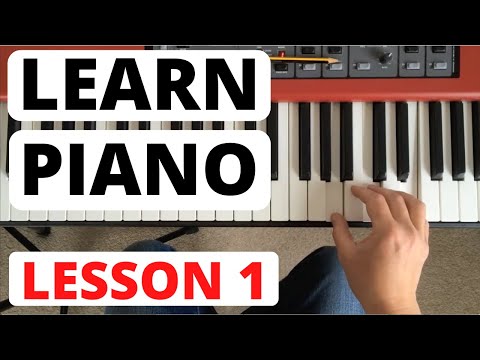
Starting your journey with beginner keyboard lessons is one of the most rewarding decisions you can make for your musical growth. Whether you dream of playing classical compositions, jamming along with your favorite pop songs, or improvising jazz chords on the spot, a solid foundation in keyboard fundamentals sets you up for lasting success. In this comprehensive guide, we walk you through everything you need to know about beginning keyboard instruction — from choosing the right instrument and understanding basic techniques to building practice habits that accelerate your progress. This article covers beginner essentials, intermediate insights, and advanced strategies, so learners at every level can find value here.
What Are Beginner Keyboard Lessons and Why Do They Matter?
Beginner keyboard lessons are structured learning sessions designed to introduce new players to the fundamentals of piano and electronic keyboard playing. These lessons typically cover hand placement, music theory basics, finger dexterity exercises, and simple song repertoire. Unlike learning guitar or drums, the keyboard offers a visual layout where every note is right in front of you, making it one of the most accessible instruments for absolute beginners. The importance of quality beginner instruction cannot be overstated — building correct technique from day one prevents bad habits that are notoriously difficult to unlearn later on.
When you invest time in proper beginner keyboard lessons, you are not just learning songs. You are developing muscle memory, ear training, rhythmic accuracy, and a deep understanding of how music is constructed. These foundational skills transfer to every other instrument you might pick up in the future.
What to Expect in Your First Keyboard Lessons
A well-designed introductory course will guide you through several core areas. Here is what most reputable beginner keyboard lesson plans include during the first few weeks of instruction.
Proper Hand Position and Posture
Correct posture is the bedrock of keyboard playing. Your forearms should be parallel to the floor, wrists relaxed but not limp, and fingers curved as if resting gently on a curved surface. Many beginners make the mistake of hunching over the keys or pressing too hard, which leads to fatigue and even repetitive strain injuries over time.
- Keep your back straight and shoulders relaxed
- Position the bench height so your elbows are slightly above the keys
- Use a curved finger shape, often described as holding a small ball in each hand
- Avoid collapsing your wrists or lifting your fingers too high
Learning the Layout and Note Names
Before diving into songs, you need to become comfortable with the keyboard layout. The 88-key standard piano has a repeating pattern of 12 keys — seven white keys and five black keys grouped in twos and threes. Memorizing the notes on the staff and their corresponding keys on the instrument is essential for reading music fluently.
Understanding Basic Music Theory
Even at the beginner level, you will encounter foundational music theory concepts. These include the musical alphabet, scales (major and minor), intervals, and time signatures. Understanding keyboard music theory early on gives you the ability to learn songs faster, transpose keys, and eventually compose your own music.

Playing Your First Chords and Melodies
Within the first few lessons, you should be able to play simple chords and single-note melodies. The C major scale is often the starting point because it uses only white keys, making it the most approachable entry into keyboard playing. From there, instructors introduce basic chord progressions like C-F-G, which form the backbone of countless popular songs.
Choosing the Right Keyboard for Your Beginner Lessons
Selecting the right instrument is a critical step in your learning journey. Not all keyboards are created equal, and the wrong choice can hinder your progress or make practice frustrating. Below is a comparison of the most common keyboard types suited for beginners.
| Keyboard Type | Weighted Keys | Best For | Price Range |
| Portable Digital Keyboard | Semi-weighted or synth-action | Casual learners, portability | $100 – $400 |
| Home Digital Piano | Graded hammer action | Serious beginners, classical training | $400 – $1,200 |
| Arranger Workstation | Weighted with accompaniment features | Performers, songwriters, bands | $600 – $2,500 |
| Acoustic Piano | Fully weighted, natural hammer | Advanced beginners, dedicated players | $3,000+ |
For most beginner keyboard lessons, a portable digital keyboard with at least 61 keys and touch sensitivity is a practical starting point. If you plan to pursue classical piano, consider a home digital piano with fully weighted keys that simulate the feel of an acoustic instrument. The key action and touch response directly affect how your fingers develop strength and control.
Look for features like built-in metronomes, lesson modes, headphone jacks for quiet practice, and USB connectivity for accessing online learning platforms. These extras can significantly enhance your practice experience and keep you motivated.
Top Skills You Will Build Through Beginner Keyboard Lessons
Beyond simply learning to play individual notes, structured beginner instruction develops a wide range of transferable skills that extend far beyond the keyboard.
- Finger Independence and Dexterity — Exercises like Hanon drills and five-finger patterns train each finger to move independently, building the agility needed for complex pieces.
- Sight-Reading Ability — Regular practice reading sheet music trains your brain to decode notation quickly, a skill that accelerates learning new songs dramatically.
- Ear Training — Recognizing intervals, chords, and progressions by ear helps you play by ear, improvise, and transcribe music without written notation.
- Rhythmic Precision — Working with metronomes and backing tracks develops your internal clock, which is essential for playing with other musicians.
- Music Theory Literacy — Understanding keys, scales, chords, and harmonic progressions gives you the language to communicate with other musicians and understand how songs are built.
- Performance Confidence — Playing for others, even in simple settings, builds stage presence and reduces performance anxiety over time.
Intermediate and Advanced Insights for Long-Term Growth

While this guide focuses on beginner keyboard lessons, it is worth understanding how your learning path evolves. After mastering basic scales and simple chord progressions, intermediate students typically explore more complex techniques like arpeggios, broken chords, and pedal usage. At the advanced stage, players tackle intricate repertoire, advanced harmony, improvisation, and stylistic interpretation across genres like jazz, blues, and contemporary pop.
The transition from beginner to intermediate is often the most critical phase. Students who develop strong fundamentals during their early lessons find that intermediate and advanced material builds naturally on their existing skills. Conversely, those who skip foundational work often plateau and struggle to progress.

Expert Tips to Accelerate Your Keyboard Learning
seasoned instructors and professional keyboard players consistently recommend several strategies that separate fast learners from slow ones. Here are actionable tips you can implement immediately.
- Practice consistently, not just intensely. Thirty focused minutes daily beats a two-hour weekend session every time. Your brain consolidates motor skills during rest, so regular, shorter sessions are far more effective.
- Use a metronome from day one. Many beginners rush through pieces without regard for tempo. A metronome forces you to develop steady timing and exposes rhythmic inconsistencies you might otherwise ignore.
- Slow down difficult passages. Play challenging sections at half speed until you can execute them cleanly. Gradually increase the tempo only after you have mastered the slower version.
- Record yourself regularly. Listening back to recordings of your playing provides objective feedback that is impossible to gain in the moment. You will notice timing issues, uneven dynamics, and technical mistakes you might not have caught otherwise.
- Balance technique with repertoire. Do not spend all your practice time on scales and exercises. Apply what you learn by playing actual songs you enjoy — this keeps motivation high and makes practice feel rewarding.
- Take advantage of online resources. Platforms offering beginner keyboard lessons online provide video tutorials, interactive feedback, and structured curricula that complement private instruction or serve as a standalone learning path.
Frequently Asked Questions About Beginner Keyboard Lessons
How long does it take to see progress in beginner keyboard lessons?
Most students notice meaningful improvement within four to six weeks of consistent practice, typically 20 to 30 minutes per day. Early progress is often rapid because the fundamentals build quickly. However, reaching an intermediate level where you can play full songs fluently usually takes six months to a year of dedicated practice, depending on the frequency and quality of your sessions.
Do I need prior musical experience to start beginner keyboard lessons?
No prior musical experience is required. The best beginner keyboard lessons are designed for complete newcomers who have never touched a keyboard before. Instructors start from absolute zero, teaching you how to find notes, read music, and develop proper technique step by step. What matters most is your willingness to practice regularly and stay patient with the learning process.
Can children take beginner keyboard lessons, and what age is appropriate?
Children as young as four or five years old can begin introductory keyboard lessons, though the ideal starting age varies by individual maturity and attention span. For younger children, lessons should be play-based and short — typically 15 to 20 minutes. Many music schools offer specialized kids keyboard classes that use games, colorful visuals, and simple songs to keep young learners engaged and motivated.
Are online beginner keyboard lessons as effective as in-person instruction?
Online beginner keyboard lessons can be highly effective, especially for self-motivated learners who benefit from the flexibility of learning at their own pace. High-quality online programs offer structured curricula, video demonstrations, and interactive feedback tools. However, in-person instruction provides the advantage of real-time correction from a teacher who can observe your posture, hand position, and technique directly. Many successful students combine both approaches — taking occasional in-person lessons while supplementing with online practice resources.
What is the best way to practice scales and chords effectively?
The most effective approach is to practice scales and chords in short, focused blocks rather than marathon sessions. Start with the C major scale using proper finger numbering, then gradually add G major, D major, and other keys as you become comfortable. For chords, practice transitioning between common progressions like C-F-G-C until the changes feel automatic. Using a metronome at a slow tempo ensures accuracy before building speed. The key is consistency — daily short practice sessions produce far better results than infrequent longer ones.
Conclusion
Beginner keyboard lessons open the door to a lifetime of musical enjoyment, creative expression, and cognitive growth. From learning proper hand positioning and reading your first notes to playing full songs and understanding harmonic progressions, every step of the journey builds upon the last. The key to success lies in choosing the right instrument, finding instruction that matches your goals, and committing to consistent, mindful practice. Whether you are a complete beginner picking up the keys for the first time or returning to music after years away, the fundamentals covered in this guide give you a roadmap to follow. Start today, stay patient with yourself, and enjoy the incredible journey that keyboard playing has to offer.