


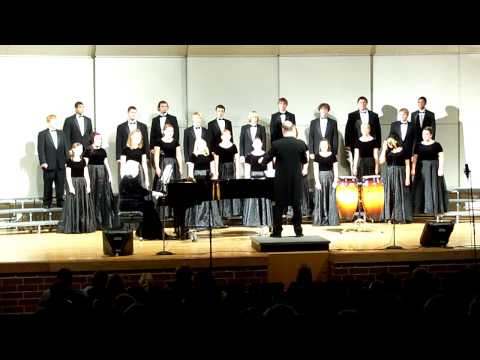
The history of western music is one of the most fascinating and evolving cultural narratives in human civilization. Spanning over two millennia, the journey from ancient Greek modes to contemporary electronic compositions tells a story of innovation, rebellion, spirituality, and artistic daring. Whether you’re a beginner trying to understand the classical music periods, an intermediate learner exploring the evolution of western music, or an advanced enthusiast diving into musicology, this comprehensive guide covers everything you need to know about how western music developed into the rich tapestry we recognize today. Understanding this timeline isn’t just academic — it gives you a deeper appreciation for every genre that followed, from opera to jazz to modern pop.
The Origins of Western Music: Ancient Greece and Early Beginnings

Before we can trace the history of western music through its well-known eras, we have to look back to the ancient world. The foundations of what we call “western music” were actually laid thousands of years before the first note was written down in a medieval monastery.
Greek Modes and Early Music Theory
Ancient Greek philosophers, particularly Pythagoras, Plato, and Aristotle, were among the first to treat music as a subject worthy of systematic study. The Greeks developed the concept of musical modes — scales that gave each piece a distinct emotional character. These included the Dorian, Phrygian, Lydian, Mixolydian, Aeolian, and Ionian modes, each believed to evoke specific moods and ethical qualities.
What made Greek contributions so significant was their mathematical approach to pitch and harmony. Pythagoras discovered that musical intervals could be expressed as numerical ratios, essentially proving that music and mathematics were deeply intertwined. This insight would echo through centuries of western music theory.
- Dorian Mode: Associated with courage and manliness
- Phrygian Mode: Linked to mysterious and emotional qualities
- Aeolian Mode: Later became the basis for natural minor scales
- Ionian Mode: The foundation of modern major scales
Unfortunately, very little actual Greek music survives. We know the theory, but reconstructing the performance practice remains an ongoing challenge for musicologists studying the evolution of western music.
The Medieval Period: Foundations of Western Musical Tradition
The Medieval period, roughly from 500 to 1400 CE, represents the earliest well-documented phase of the western music timeline. This era was dominated by the Catholic Church, which became the primary patron and preserver of musical knowledge in Europe.
Gregorian Chant and Sacred Music
Gregorian chant — named after Pope Gregory I — remains the most iconic musical form of the early Medieval period. These monophonic, unaccompanied vocal compositions were designed to accompany religious texts and liturgical services. Characterized by their flowing, sinuous melodies and free rhythm, Gregorian chants created an atmosphere of spiritual contemplation that defined worship for centuries.
What’s remarkable about this period is how standardized musical practice became across Europe. The Church established rules about which modes could be used for which occasions, creating an early form of musical governance that influenced the entire history of western music.
The Rise of Polyphony
Things got dramatically more interesting around the 9th and 10th centuries when musicians began experimenting with polyphony — the practice of layering multiple independent melodic lines simultaneously. Early forms like organum involved adding a second voice singing in parallel motion to the original chant.
By the 12th and 13th centuries, composers like Léonin and Pérotin at the Notre-Dame school in Paris were creating increasingly complex polyphonic works. This shift from single-line melody to multi-layered harmony fundamentally changed the trajectory of western classical music and set the stage for everything that followed.
The Renaissance: A Rebirth of Musical Expression
From approximately 1400 to 1600, the Renaissance period brought a dramatic expansion in the scope and ambition of western music. The word “rebirth” is apt — composers rediscovered ancient Greek and Roman ideals while simultaneously pushing boundaries in new directions.
Key developments during this era of the evolution of western music included:
- Imitation counterpoint: Voices weaving together in intricate, interdependent patterns
- Textural complexity: Moving from monophonic to homophonic and polyphonic textures
- Secular music flourishing: Madrigals, chansons, and instrumental pieces gained prominence alongside sacred works
- Printing revolution: Ottaviano Petrucci’s music printing technology (c. 1501) allowed compositions to spread across Europe with unprecedented speed
Composers like Josquin des Prez, Palestrina, and Thomas Tallis exemplified the Renaissance ideal of combining technical mastery with emotional expressiveness. The period also saw the development of richer harmonic language, with composers beginning to use chords and progressions that pointed toward the tonal systems that would dominate later centuries.
The Baroque Era: Grandeur and Complexity
The Baroque period (approximately 1600–1750) introduced western music to an entirely new level of sophistication, drama, and technical brilliance. The word “baroque” originally carried a negative connotation — suggesting something overly ornate or irregular — but today it represents one of the most creative periods in the history of western music.
The Birth of Opera and Instrumental Music
Opera, the dramatic fusion of music, poetry, and theatrical staging, emerged in Italy around 1600. The Florentine Camerata — a group of intellectuals and musicians — deliberately sought to recreate what they believed were the dramatic singing styles of ancient Greece. The result was a brand-new art form that would dominate European culture for centuries.
Beyond opera, the Baroque era gave us:
- The concerto and sonata as established musical forms
- The basso continuo, a foundational accompaniment practice
- Functional tonality — the major/minor system that underpins most western music today
- Virtuosic performance traditions that pushed instrumental technique to new limits
No discussion of the Baroque period is complete without mentioning Johann Sebastian Bach, George Frideric Handel, and Antonio Vivaldi. Bach’s intricate counterpoint, Handel’s dramatic operas and oratorios, and Vivaldi’s vivid concertos remain cornerstones of the classical music repertoire.
The Classical Period: Elegance and Form
From roughly 1750 to 1820, the Classical period brought a shift toward clarity, balance, and structural elegance. Where Baroque music often reveled in complexity, Classical composers prioritized clean lines, symmetrical phrases, and well-defined forms.
The three titans of this era — Joseph Haydn, Wolfgang Amadeus Mozart, and Ludwig van Beethoven — each contributed profoundly to the evolution of western music:
- Haydn: Often called the “Father of the Symphony,” he standardized the symphony and string quartet forms
- Mozart: Brought melodic grace and dramatic depth to opera, concertos, and chamber music
- Beethoven: Bridged the Classical and Romantic eras, injecting raw emotional intensity into established forms
The Classical period also established the modern orchestra, expanded public concert culture beyond aristocratic courts, and elevated the composer from servant to artistic genius — a shift in social status that would have lasting consequences.
The Romantic Era: Emotion and Expression
The Romantic period (approximately 1820–1900) prioritized individual emotional expression above all else. Composers explored themes of nature, nationalism, the supernatural, and personal suffering with unprecedented intensity.
Orchestras grew larger, harmonies became richer and more adventurous, and musical forms expanded to accommodate grander artistic visions. The symphony concert became a major cultural event, and virtuoso performers like Franz Liszt and Niccolò Paganini achieved rock-star-like adulation.

Key figures include Frédéric Chopin, whose intimate piano works revolutionized keyboard composition; Richard Wagner, whose operas reimagined what musical drama could achieve; and Pyotr Ilyich Tchaikovsky, whose ballets and symphonies brought Russian musical identity to the world stage.
The Modern Era and Beyond: 20th Century and Contemporary Developments
The 20th century shattered many conventions that had governed western music for centuries. Composers experimented with atonality, serialism, minimalism, and electronic media, creating a pluralistic musical landscape where no single style dominated.
Major movements in the modern history of western music include:
- Impressionism (Debussy, Ravel): Focused on atmosphere, color, and sensory experience over rigid form
- Atonality and Serialism (Schoenberg, Webern, Berg): Abandoned traditional tonal centers entirely
- Neoclassicism (Stravinsky, Prokofiev): Returned to classical forms while incorporating modern harmony
- Minimalism (Reich, Glass, Riley): Used repetitive patterns and gradual processes to create hypnotic textures
- Electronic and experimental music: Embraced technology as both tool and inspiration
Today, the evolution of western music continues to accelerate. Composers blend classical traditions with jazz, world music, film scoring, and digital production. The boundaries between “high art” and popular music have never been more fluid, creating exciting opportunities for new listeners and creators alike.
Comparison of Major Western Music Periods
| Period | Approximate Dates | Key Characteristics | Notable Composers |
| Medieval | 500–1400 CE | Monophonic chant, early polyphony, sacred focus | Gregory I, Léonin, Pérotin |
| Renaissance | 1400–1600 | Imitative counterpoint, secular growth, rich textures | Josquin, Palestrina, Tallis |
| Baroque | 1600–1750 | Ornate melody, basso continuo, opera, tonality | Bach, Handel, Vivaldi |
| Classical | 1750–1820 | Balance, clear form, symphony standardization | Haydn, Mozart, early Beethoven |
| Romantic | 1820–1900 | Emotional depth, expanded orchestra, nationalism | Chopin, Wagner, Tchaikovsky |
| Modern | 1900–present | Atonality, minimalism, electronic, experimental | Debussy, Stravinsky, Reich, Riley |
Expert Tips for Exploring Western Music History
Whether you’re just beginning your journey or looking to deepen existing knowledge, here are practical recommendations from musicologists and educators:
- Start with recordings, not textbooks. Listen to representative works from each period before reading about them. Your ears will ground your understanding.
- Use reliable listening guides. Programs like Leonard Bernstein’s “Young People’s Concerts” make complex ideas accessible without oversimplifying.
- Compare different interpretations. Hearing multiple performances of the same piece reveals how interpretive traditions have evolved over decades.
- Explore beyond the canon. While Bach and Beethoven deserve their status, many deserving composers from underrepresented groups await discovery.
- Learn basic music theory. Even rudimentary knowledge of scales, intervals, and chord progressions transforms how you hear and appreciate structural choices.
Frequently Asked Questions About the History of Western Music
What are the six main periods in the history of western classical music?
The six widely recognized periods are Medieval (500–1400), Renaissance (1400–1600), Baroque (1600–1750), Classical (1750–1820), Romantic (1820–1900), and Modern (1900–present). Each period introduced distinct innovations in harmony, form, instrumentation, and expressive intent that collectively define the evolution of western music.
Who is considered the father of western music theory?
Pythagoras of Samos is frequently credited as the foundational figure in western music theory. His discovery of mathematical relationships between string lengths and musical intervals established the principle that music could be understood through rational, scientific inquiry — an idea that profoundly influenced subsequent centuries of theory.
What was the most significant innovation of the Baroque period?
The development of functional tonality — the major/minor system — is arguably the most consequential Baroque innovation. This harmonic framework gave composers predictable yet flexible rules for chord progressions and key relationships, becoming the foundation for virtually all popular and classical music that followed in the history of western music.
Why did the Classical period move away from Baroque complexity?
The Classical period reflected broader Enlightenment values of reason, clarity, and natural order. Composers simplified the dense polyphonic textures of the Baroque in favor of clearer melodic lines supported by harmonic accompaniment. This shift aligned with contemporary ideals of balance and was facilitated by new instruments like the fortepiano.
How did recording technology change western music?
Recording technology, beginning with Thomas Edison’s phonograph in 1877, fundamentally altered western music by preserving performances permanently, democratizing access, and creating new artistic possibilities. Composers could now write for playback media, performers gained global audiences, and the very concept of a “definitive” performance was established.
What is the future of western music history?
The future is inherently interdisciplinary. Composers increasingly integrate artificial intelligence, immersive audio, cross-cultural traditions, and real-time interactive systems into their work. The history of western music is not a closed book — it’s a living tradition that continues to evolve in response to technology, global exchange, and the ever-changing human experience.
Conclusion
The history of western music is far more than a chronological list of composers and dates. It is a mirror reflecting humanity’s deepest aspirations — spiritual transcendence, emotional truth, intellectual rigor, and creative freedom. From the echoing stone chambers of medieval monasteries to the digital studios of today, each era built upon the innovations of its predecessors while daring to imagine something entirely new. Whether you approach this tradition as a casual listener, dedicated student, or lifelong musician, understanding these roots transforms every note you hear into a conversation across centuries. The beauty of western music lies not just in its masterpieces, but in the extraordinary human journey that created them.