The composers of the classical music period represent one of the most transformative chapters in Western musical history. Spanning roughly from the mid-1700s to the early 1800s, the Classical era produced some of the most celebrated and enduring works ever written. If you have ever listened to a symphony that felt perfectly balanced, a sonata with elegant structure, or an opera dripping with emotional clarity, you were almost certainly hearing the fingerprint of a composer from this golden age. Understanding these composers of the Classical period goes far beyond memorizing names and dates. It means immersing yourself in the artistic revolution that shaped how music is composed, performed, and appreciated to this day. In this deep dive, we will explore the defining figures, their masterworks, the musical characteristics that set this era apart, and practical insights for anyone looking to deepen their appreciation of classical era music.
What Defines the Classical Music Period?
Before exploring individual composers, it helps to understand the broader context of the Classical period in music. The era emerged around 1750 and lasted until roughly 1820, bridging the gap between the ornate Baroque style and the emotionally intense Romantic period. The word “classical” is often used loosely to describe all orchestral and symphonic music, but the Classical period specifically refers to a distinct movement rooted in clarity, symmetry, and formal structure.
The Classical era was deeply influenced by Enlightenment ideals. Thinkers like Voltaire and Jean-Jacques Rousseau championed reason, order, and accessibility, and these values shaped the music of the time. Composers of this period moved away from the dense polyphony and elaborate ornamentation of the Baroque, embracing cleaner textures, balanced phrases, and homophonic melodies where a single clear voice rides above supporting harmonies.
The most famous composers of the Classical era are Wolfgang Amadeus Mozart, Ludwig van Beethoven, and Joseph Haydn. Together, they are often referred to as the “Viennese Classical school” because all three spent significant portions of their careers in Vienna, Austria. This city became the epicenter of musical innovation and remains a pilgrimage destination for classical music enthusiasts worldwide.

The Major Composers of the Classical Music Period
Wolfgang Amadeus Mozart (1756–1791)
Mozart is arguably the most universally recognized name among the composers of the classical music period. Born in Salzburg, Austria, he was a child prodigy who began composing at age five and performed for European royalty as a young boy. By the time he died at just 35 years old, Mozart had produced over 600 works spanning nearly every genre of his day.
Mozart’s genius lay in his ability to blend technical mastery with deep emotional expression. His operas, including The Marriage of Figaro, Don Giovanni, and The Magic Flute, remain cornerstones of the operatic repertoire. His symphonies, particularly Symphony No. 40 and Symphony No. 41 (“Jupiter”), showcase his gift for melody and structural elegance. His piano concertos are still considered the gold standard for the genre.
What makes Mozart unique among Classical period composers is his seemingly effortless style. His music feels natural and effortless, yet the underlying craftsmanship is extraordinary. He mastered the use of sonata-allegro form, theme and variations, and the concerto structure with an ease that made complexity feel invisible to the listener.
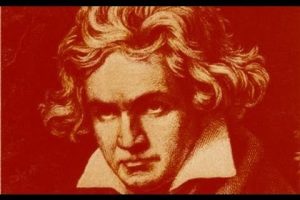
Ludwig van Beethoven (1770–1827)
Beethoven is the towering figure who bridges the Classical and Romantic eras. Born in Bonn, Germany, he moved to Vienna in his early twenties and quickly established himself as a formidable pianist and composer. His early works clearly show the influence of Haydn and Mozart, but as he matured, his music became bolder, more dramatic, and more emotionally expansive.
What sets Beethoven apart from other composers of the classical era is his relentless innovation. He expanded the symphony from a roughly 20-minute form to a sweeping 40- or 50-minute journey. His Ninth Symphony, with its revolutionary choral finale setting Schiller’s “Ode to Joy,” remains one of the most powerful musical statements ever composed. His Moonlight Sonata, Pathétique Sonata, and Emperor Concerto continue to challenge and inspire pianists and listeners alike.

Perhaps most remarkably, Beethoven composed some of his greatest works while gradually losing his hearing. His ability to push past physical limitation to create music of such profound vision cements his status not just as a Classical period composer but as one of the greatest artists in human history.
Joseph Haydn (1732–1809)
Joseph Haydn is often called the “Father of the Symphony” and the “Father of the String Quartet.” Born in Rohrau, Austria, Haydn spent much of his career as a court musician for the wealthy Esterházy family. This long, stable period gave him the space to experiment and refine his craft across hundreds of compositions.
Haydn’s contributions to Classical music composition are immense. He helped standardize the four-movement symphony structure and pioneered the string quartet as a serious artistic form. His humor and wit are evident in works like the “Surprise” Symphony, where a sudden loud chord startles the audience, and the “Clock” Symphony, with its tick-tick-tick rhythm mimicking a pendulum.
Haydn was also a generous mentor to the young Beethoven and a contemporary of Mozart, with whom he shared a deep mutual respect. His influence on the development of Western classical music cannot be overstated.
Other Notable Composers of the Classical Era
While Mozart, Beethoven, and Haydn dominate the conversation, several other composers made significant contributions during the Classical period:

- Christoph Willibald Gluck — An opera reformer who stripped away the excesses of Baroque opera seria and brought dramatic clarity to the genre. His opera Orfeo ed Euridice remains a landmark work.
- Franz Schubert — Often considered a transitional figure between Classical and Romantic music, Schubert composed over 600 songs (Lieder) and several symphonies before his death at age 31.
- Muzio Clementi — An Italian-born pianist and composer who greatly influenced piano technique and wrote influential studies that prefigured later pedagogical works.
- Luigi Boccherini — An Italian composer known for his elegant chamber music and string quintets that beautifully capture the Classical style’s grace and refinement.
Comparing the Key Classical Era Composers
Understanding the differences and overlaps between the most prominent composers of the Classical music period helps listeners appreciate each figure’s unique contribution. The table below highlights key distinctions.
| Composer | Lifespan | Primary Genre | Key Contribution | Signature Work |
| Haydn | 1732–1809 | Symphony, String Quartet | Father of the Symphony | Symphony No. 94 “Surprise” |
| Mozart | 1756–1791 | Opera, Symphony, Concerto | Perfection of Classical form | Symphony No. 41 “Jupiter” |
| Beethoven | 1770–1827 | Symphony, Sonata, Concerto | Bridge to Romanticism | Symphony No. 9 |
| Gluck | 1714–1787 | Opera | Opera reform | Orfeo ed Euridice |
| Schubert | 1797–1828 | Lied, Symphony | Art song revolution | Trout Quintet |
As you can see from this overview of classical period composers, each figure brought something distinct to the table. Haydn laid the structural foundations, Mozart elevated the art form to new heights of beauty, Beethoven shattered boundaries and expanded the emotional scope, and others like Gluck and Schubert pushed specific genres forward in meaningful ways.
Key Musical Characteristics of Classical Period Music
The composers of the Classical music era shared a set of musical traits that distinguish their work from both the Baroque and Romantic periods:
- Clear melodic lines — Melodies are singable, balanced, and easy to follow, often built on periodic phrases of four or eight measures.
- Homophonic texture — Music typically features one dominant melody supported by harmonic accompaniment, creating a transparent sound.
- Formal structure — Sonata-allegro form, theme and variations, rondo form, and minuet and trio became standard frameworks for symphonies, sonatas, and chamber works.
- Dynamic contrast — Composers used sudden shifts between loud and soft passages to create drama and interest, moving away from the terraced dynamics of the Baroque.
- Orchestral standardization — The classical orchestra settled into a standardized ensemble of strings, woodwinds, brass, and percussion, allowing composers to explore a wider palette of timbres.
- Emphasis on elegance and proportion — Music valued balance, restraint, and clarity over the overwhelming grandeur of the Baroque or the unrestrained emotion of early Romanticism.
Why Understanding These Composers Matters Today
The legacy of classical era composers extends far beyond concert halls. Their formal innovations directly influenced film scoring, jazz harmony, and contemporary popular music. When you hear a perfectly structured pop song with a clear verse, chorus, and bridge, you are hearing the descendant of sonata-allegro form refined by Mozart and Haydn.
For musicians, studying the works of composers who defined classical music provides an essential foundation. Their compositions teach phrasing, structural awareness, dynamic control, and the art of saying more with less. For listeners, exploring these works offers a gateway to deeper musical appreciation and emotional enrichment.
Expert tip: If you are new to this music, start with a few accessible entry points. Mozart’s Eine kleine Nachtmusik and Beethoven’s Symphony No. 5 are excellent starting points that showcase the Classical style’s beauty and power without overwhelming the listener. From there, you can gradually explore deeper works like Haydn’s string quartets or Mozart’s operas.
Frequently Asked Questions
Who are the three most famous composers of the Classical music period?
The three most famous composers of the classical music period are Joseph Haydn, Wolfgang Amadeus Mozart, and Ludwig van Beethoven. These three Viennese masters defined the sound and structure of Classical era music and continue to be the most performed and studied composers from this period.
What time period does the Classical music period cover?
The Classical music period spans roughly from 1750 to 1820, falling between the Baroque era (1600–1750) and the Romantic era (1820–1900). This roughly 70-year window saw the emergence of the symphony, the string quartet, and the modern orchestra as we know them today.
How did Beethoven differ from other Classical period composers?
Beethoven differed from other composers of the Classical era by pushing the boundaries of musical form and emotional expression. While Haydn and Mozart worked primarily within the Classical framework, Beethoven began incorporating Romantic elements such as extended harmonic language, larger orchestral forces, and unprecedented emotional intensity. His later works are often considered proto-Romantic, making him a pivotal transitional figure.
What are the best classical music period compositions for beginners?
For beginners exploring composers of the classical music period, recommended starting points include Mozart’s Eine kleine Nachtmusik, Beethoven’s Symphony No. 5, Haydn’s Symphony No. 94 “Surprise”, and Mozart’s The Magic Flute overture. These works are accessible, memorable, and representative of the Classical style at its finest.
Why is Vienna so important in the history of Classical music?
Vienna was the cultural capital of Europe during the Classical period and attracted the greatest musical talent of the era. Haydn, Mozart, Beethoven, and Schubert all lived and worked in Vienna, creating a concentrated hub of innovation. The city’s patronage system, concert culture, and cosmopolitan atmosphere made it the ideal birthplace for the Classical music movement.
Conclusion
The composers of the classical music period laid the groundwork for virtually everything we associate with Western concert music today. From Haydn’s structural genius and Mozart’s effortless brilliance to Beethoven’s revolutionary spirit, these figures gave us a musical language that remains vibrant and relevant more than two centuries later. Whether you are a lifelong listener, a student musician, or someone just discovering the wonders of Classical era music, there is always something new to uncover in their extraordinary body of work. The beauty, intelligence, and emotional depth of these compositions ensure that the legacy of the Classical period composers will continue to inspire audiences for generations to come.