


When we think of ancient Greece, towering marble temples, epic philosophers, and legendary Olympic athletes often come to mind first. Yet music was one of the most deeply woven threads in the fabric of Greek civilization, touching every aspect of life from religious worship and theater to education, warfare, and everyday entertainment. The relationship between ancient Greece and music was not merely a pastime — it was a sacred institution, a philosophical pursuit, and a cultural pillar that shaped the Western musical tradition for millennia. Understanding how the ancient Greeks created, performed, and conceptualized music offers invaluable insight into the intellectual and artistic achievements of one of history’s most influential civilizations.
The Origins and Mythological Roots of Music in Ancient Greece
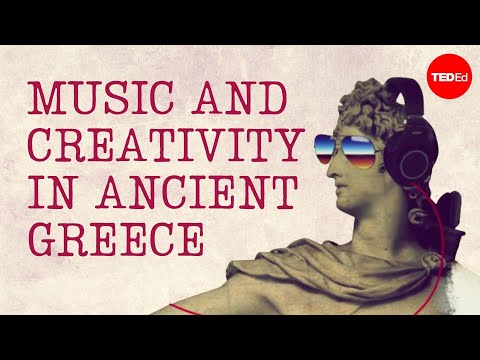
The ancient Greeks did not separate music from spirituality, philosophy, or daily existence. Their word for music, mousikē, encompassed music, poetry, dance, and even visual art, all under the patronage of the Muses. This holistic view meant that music was considered a divine gift, a bridge between mortal life and the realm of the gods. Understanding these mythological origins helps us appreciate why ancient Greek music was treated with such reverence and intellectual seriousness.
Music and the Greek Gods
Several Greek deities were closely associated with music and its various forms. Apollo, the god of the sun, prophecy, and the arts, was perhaps the most prominent musical figure. He was said to have invented the lyre and was celebrated as the patron of poetry and song. His twin sister Artemis, while primarily associated with the hunt, was also linked to choral hymns and dance. Dionysus, the god of wine and ecstasy, presided over the dramatic arts, including musical performances in theater. Orpheus, the legendary musician of mortal origin, was said to possess a lyre so powerful that he could charm stones, trees, and even the rulers of the underworld. These mythological connections elevated music from mere entertainment to something approaching the sacred.
The Role of Music in Greek Education
Music was considered essential to a well-rounded education in ancient Greece. Greek philosophers and educators believed that studying music cultivated moral character, intellectual discipline, and emotional balance. Children were taught to sing and play instruments as part of their formal schooling, alongside gymnastics and literacy. Plato and Aristotle both wrote extensively about the educational power of music, arguing that different musical modes could influence a person’s temperament and ethical development.
- Music was a core subject in the Greek gymnasium curriculum
- Students learned to sing hymns, play the lyre, and understand musical theory
- Plato believed certain musical modes could corrupt the soul if misused
- Aristotle saw music as a tool for emotional catharsis and psychological healing
Musical Instruments of Ancient Greece
The ancient Greeks developed a rich variety of instruments, each serving distinct roles in different social and ceremonial contexts. From the plucked strings of the lyre to the breath-driven sound of the aulos, these instruments reveal a sophisticated understanding of acoustics and musical expression.
String Instruments
The lyre was perhaps the most iconic Greek instrument, a small harp-like device associated with Apollo and intellectual refinement. The kithara was a larger, more complex version of the lyre, played by professional musicians and used in public performances and athletic competitions. The barbitos was a deeper-toned lyre popular in the eastern Greek regions, while the sinfonia was a small harp-like instrument often associated with folk music and entertainment.
Wind Instruments
Wind instruments played a crucial role in Greek music, especially in religious ceremonies, military contexts, and dramatic performances. The aulos was a double-reeded instrument, similar to a modern oboe, known for its powerful and penetrating sound. It was commonly used in Dionysian rituals and accompanied tragedies and comedies. The syrinx, or panpipes, were associated with the god Pan and pastoral life. The salpinx was a long trumpet used primarily in military signaling and public announcements.
Percussion Instruments

Percussion provided rhythmic foundations for both sacred and secular music. The tympanum, a frame drum, was widely used in ecstatic worship rituals. Cymbals, tambourines, and hand claps also featured prominently in performances. Krotala, or castanets, were used by dancers and performers to maintain rhythm during elaborate celebrations.
| Instrument | Category | Primary Use | Associated Deity |
| Lyre | String | Education, hymns, poetry | Apollo |
| Kithara | String | Public performance, competitions | Apollo |
| Aulos | Wind | Rituals, theater, celebrations | Dionysus |
| Syrinx | Wind | Pastoral music, folk traditions | Pan |
| Tympanum | Percussion | Religious ecstatic worship | Dionysus |
| Salpinx | Wind | Military signaling, announcements | Hermes |
Musical Scales, Modes, and Greek Music Theory
One of the most remarkable aspects of ancient Greek music is its sophisticated theoretical framework. Greek theorists developed a system of musical modes that organized scales around specific tonal centers, each believed to evoke distinct emotional and ethical responses. This early form of music theory directly influenced medieval European music and, eventually, the Western tonal system we use today.
The Seven Greek Modes
The Greeks identified seven primary modes, each named after a Greek tribe or region. These modes were defined by their specific arrangements of whole and half steps, creating unique melodic characteristics:
- Dorian — associated with strength and masculinity
- Phrygian — linked to ecstasy and emotional intensity
- Lydian — connected to softness and pleasure
- Mixolydian — used for more relaxed and moderate compositions
- Ionian — associated with sweetness and joy
- Aeolian — linked to pathos and melancholy
- Locrian — considered the most unstable and rarely used
Greek theorists like Pythagoras, Aristoxenus, and Cleonides explored the mathematical relationships between musical intervals. Pythagoras famously discovered the harmonic ratios of musical consonance by experimenting with monochord instruments and hammer weights, establishing the connection between mathematics and sound that would echo through centuries of Western music theory.
Music in Greek Society and Daily Life
Music was not confined to temples and theaters in ancient Greece. It permeated virtually every social gathering, from intimate dinner parties called symposia to grand public festivals like the Pythian and Olympic Games. Kitharodes, or professional lyre players, were among the most celebrated performers in Greek society, and some achieved celebrity status comparable to today’s top musicians.

In daily life, music accompanied drinking songs (skolia) at symposia, lullabies sung to children, wedding processions, funeral dirges, and harvest celebrations. Choral performances were a cornerstone of civic and religious life, with groups of singers and dancers performing hymns dedicated to specific gods. The dithyramb, a choral hymn sung in honor of Dionysus, evolved into the foundation of Greek tragedy and comedy, ultimately giving birth to the dramatic theatrical traditions that still shape modern performance.
Women also participated in music, though often in more private or domestic settings. Female auletai (flute players) performed at religious ceremonies and private gatherings, while female singers were common in choral performances dedicated to goddesses like Demeter and Aphrodite.
Famous Ancient Greek Musicians and Composers
While we cannot hear the actual sound of ancient Greek music, several names of composers and performers have survived in historical texts. These figures represent the pinnacle of musical achievement in the ancient world:
- Orpheus — the legendary musician whose lyre could enchant all living things
- Terpander — credited with establishing the seven-stringed lyre and winning at the Olympic musical competitions
- Sappho — the celebrated poet from Lesbos who composed songs accompanied by her own lyre playing
- Alcaeus — a Lesbian poet and composer known for his spirited drinking songs
- Pindar — the greatest lyric poet who composed victory odes performed with musical accompaniment at athletic festivals
- Timotheus of Thebes — an innovator who expanded the lyre from seven to twelve strings and explored complex melodic structures
These figures were not merely entertainers but cultural icons whose musical contributions shaped public discourse, religious practice, and artistic standards throughout the Greek world.
Ancient Greek Music Compared to Modern Western Music
Understanding how ancient Greek musical concepts differ from modern Western music helps clarify both the continuity and evolution of musical thought across centuries.
| Aspect | Ancient Greece | Modern Western Music |
| Scale System | Modal scales (eight modes) | Major and minor scales (twelve-tone equal temperament) |
| Tuning System | Pythagorean tuning and enharmonic genera | Equal temperament |
| Rhythm | Based on poetic meter and syllable length | Measured beats with time signatures |
| Notation | Symbolic notation (partial, difficult to reconstruct) | Staff notation with precise pitch and duration |
| Function | Religious, educational, civic, therapeutic | Entertainment, artistic expression, commercial |
| Instrumental vs. Vocal | Vocal music was considered superior | Equal emphasis on instrumental and vocal |
The most striking difference is that ancient Greek music was fundamentally melody-driven, with instruments providing accompaniment rather than independent harmonic structures. Harmony, as we understand it today, was largely absent in Greek music. The Greeks prioritized melody, rhythm, and text over chordal complexity, which makes reconstructing ancient Greek music particularly challenging for modern scholars.
Why Studying Ancient Greek Music Matters Today
The legacy of ancient Greek music extends far beyond historical curiosity. The Greek system of modes directly influenced Gregorian chant, Renaissance polyphony, and eventually the tonal harmony of Western classical music. Philosophers like Plato and Aristotle established frameworks for thinking about music’s impact on the human psyche that resonate with modern music therapy and psychology. Contemporary composers and scholars continue to experiment with reconstructing ancient Greek melodies, using archaeological evidence, literary descriptions, and surviving fragments to bring these sounds back to life.
For anyone interested in music history, philosophy, or the roots of Western culture, studying the ancient Greek approach to music provides a richer, more nuanced understanding of why we create and listen to music the way we do today. The Greek emphasis on music as a transformative force — capable of shaping character, healing emotions, and connecting humans to the divine — remains as relevant now as it was over two thousand years ago.
Frequently Asked Questions
What instruments were most commonly used in ancient Greek music?
The lyre and kithara were the most celebrated string instruments, while the aulos dominated wind instrument usage in both religious and theatrical settings. The tympanum and krotala were the most common percussion instruments used in everyday Greek life.
How did ancient Greek music theory influence modern Western music?
The Greek modal system laid the foundation for Western musical modes and scales. Pythagoras’s mathematical approach to tuning and intervals directly informed centuries of music theory development, and his discovery of harmonic ratios remains a cornerstone of acoustic science.
Can we still hear ancient Greek music today?
Reconstructed performances of ancient Greek music do exist, based on surviving musical fragments, poetic meter, and instrument descriptions found in archaeological and literary sources. While these reconstructions are educated interpretations rather than exact reproductions, they offer a compelling glimpse into how Greek music may have sounded.
What role did women play in ancient Greek music?
Women participated in music primarily in domestic and religious contexts. Female flute players and singers performed at private symposia, religious festivals, and domestic ceremonies, though professional public performance was largely dominated by men.
Why was music considered so important in Greek education?
Greek educators believed that music cultivated moral virtue, intellectual discipline, and emotional balance. Both Plato and Aristotle argued that specific musical modes could positively or negatively shape a person’s character, making music education a matter of civic and ethical importance.
What is the difference between Greek modes and modern scales?
Greek modes were defined by their specific patterns of intervals and were associated with emotional and ethical qualities, whereas modern major and minor scales are defined primarily by their tonal relationships within a harmonic framework. Greek modes were melody-centered, while modern scales support both melodic and harmonic structures.
In closing, the story of music in ancient Greece is a story of human creativity at its most ambitious and intellectually rigorous. From the mythic lyre of Apollo to the mathematical precision of Pythagorean tuning, from the dramatic aulos of Dionysian rites to the civic choral hymns performed at Olympia, music was never peripheral in Greek life — it was central. By exploring this rich musical heritage, we gain not only a deeper appreciation for the origins of Western music but also a renewed understanding of how sound, rhythm, and melody have always been essential to the human experience.