


If you have ever dreamed of playing one of the most beautiful and recognizable classical pieces on the piano, Canon in D piano tutorial resources are everywhere for good reason. Johann Pachelbel’s Canon in D has captivated audiences for centuries, and learning this iconic composition on piano is a rewarding journey for players at every skill level. Whether you are a complete beginner searching for a simple Canon in D piano tutorial for beginners or an advanced pianist looking for a rich, expressive arrangement, this comprehensive guide walks you through everything you need — from understanding the chord progression to refining your dynamics and technique. This Canon in D piano lesson covers the foundational elements, intermediate embellishments, and advanced performance tips that will help you bring this timeless masterpiece to life on your keyboard.
What Is Canon in D and Why Is It a Piano Staple?
Canon in D by Johann Pachelbel, a German Baroque composer, is one of the most frequently performed and recognized pieces in classical music. Originally composed around 1680 for three violins and basso continuo, the piece has transcended its origins to become a staple in wedding processions, cinematic soundtracks, and piano recitals worldwide. The reason Canon in D resonates so deeply with piano learners is its elegant, repeating chord progression and its inherently soothing melodic structure that sounds impressive even in simplified form. A well-structured Canon in D piano tutorial breaks the piece into manageable sections, allowing students to build confidence gradually while developing essential piano skills such as hand coordination, pedaling technique, and musical phrasing.
The History and Structure Behind the Composition
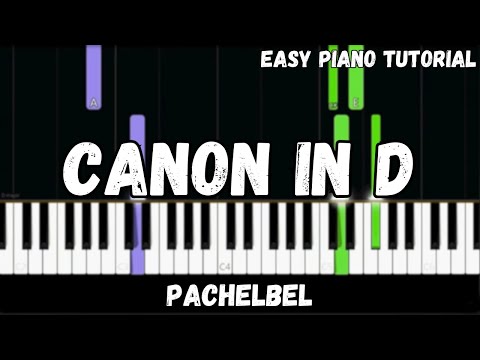
Pachelbel’s Canon follows a ground bass pattern — a repeating bass line that serves as the harmonic foundation over which the upper voices weave intricate melodies. The piece is structured in a canon form, meaning that three violins (or in a piano arrangement, the right-hand melody lines) play the same melodic material staggered in time, creating a layered, interwoven texture. Understanding this structure is critical when working through any Canon in D piano lesson because it reveals why certain patterns repeat and how the harmony evolves. The piece is in D major, uses a 4/4 time signature, and its chord progression — D major, A major, B minor, F-sharp minor, G major, E minor, and G major with an A major dominant — is famously versatile and has been reused in countless pop songs and contemporary compositions.
How to Play Canon in D on Piano: A Beginner’s Guide
Starting with a Canon in D piano tutorial for beginners means focusing on the core elements without getting overwhelmed by complexity. The following steps outline the essential approach for your first run-through of the piece.
- Learn the chord progression by ear and in written form. Familiarize yourself with the seven chords listed above. Practice transitioning between them slowly in the left hand, using blocked chords before moving to arpeggiated patterns.
- Start with the bass line. The ground bass is the backbone of Canon in D. Play it hands separately, focusing on even rhythm and consistent tone. A beginner Canon in D piano lesson will often isolate this pattern first.
- Add the right-hand melody in simplified form. Many beginner sheet music versions reduce the melodic line to single notes within comfortable hand positions, avoiding large stretches or fast runs.
- Practice hands together at a slow tempo. Use a metronome set to 60 BPM or slower. Coordination between the repeating left-hand pattern and the moving right-hand melody is the biggest challenge for new pianists.
- Introduce the sustain pedal gradually. Press the pedal on each chord change rather than holding it continuously, which can muddy the sound.
A quality Canon in D piano tutorial for beginners also emphasizes proper hand posture and relaxed wrist movement, since the repetitive nature of the piece can lead to tension if technique is neglected early on.
Intermediate Canon in D Piano Tutorial: Adding Technique and Expression
Once you have the basic structure memorized and comfortable, an intermediate Canon in D piano lesson introduces techniques that elevate the performance from a simple arrangement to a compelling musical interpretation.
Understanding the Chord Progression in Depth
The harmonic foundation of Canon in D is what makes it so endlessly adaptable. At the intermediate level, students learn to arpeggiate the chords in the left hand instead of playing them as block chords. This creates a flowing, harp-like texture that adds movement and sophistication. Practice each chord in broken patterns — for example, D major as D-F-sharp-A-D, ascending and then descending — until the motion becomes fluid. Many intermediate Canon in D piano tutorials also introduce slight variations in the bass line, such as walking bass notes between chord changes, which adds a jazzy or classical nuance depending on interpretation.
Right-hand technique at this stage shifts from single-note melodies to incorporating double stops (playing two notes simultaneously) and gentle ornamentation like grace notes and appoggiaturas. These small additions transform the sound and demonstrate a deeper understanding of Baroque performance practice.
| Skill Level | Left Hand Approach | Right Hand Approach | Pedal Technique |
|---|---|---|---|
| Beginner | Block chords, whole notes | Single-note melody | Chord-change pedaling |
| Intermediate | Arpeggiated patterns | Double stops, light ornaments | Legato pedal with syncopation |
| Advanced | Complex broken patterns, counter-melodies | Full ornamentation, imitative passages | Sustained and layered pedaling |
Advanced Techniques for Canon in D Piano Arrangement
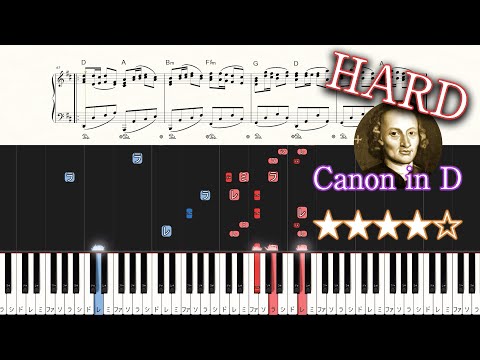
For advanced pianists, a Canon in D piano tutorial pushes into expressive territory. Consider the following elements:
- Voicing and dynamics: Shape each phrase by varying volume and tone color, bringing out the top melodic note while softening the accompanying voices.
- Tempo rubato: Use slight expressive timing — slowing down at phrase endings and accelerating through transitional passages — to add emotional depth without losing the underlying pulse.
- Contrapuntal awareness: Since Canon in D is a true canon, listen for and articulate each voice independently, especially when playing arrangements that include both the canon melody and a countermelody.
- Pedal refinement: Advanced players use half-pedaling and flutter pedaling to maintain harmonic clarity while adding warmth and resonance.
Canon in D Piano Sheet Music: Where to Find the Best Resources
Finding appropriate sheet music is one of the most important steps in any Canon in D piano lesson. The right arrangement matches your current skill level and provides a roadmap for practice. Below is a comparison of popular sources and what they offer:
| Source | Difficulty Level | Features | Cost Range |
|---|---|---|---|
| International Music Score Library Project (IMSLP) | Original orchestral / various arr. | Free public domain scores | Free |
| Musicnotes.com | Beginner to Advanced | Digital downloads, playback feature | $5–$15 |
| Sheet Music Plus | Multiple levels | Wide selection of arranged versions | $4–$12 |
| YouTube Canon in D piano tutorial channels | All levels | Free video walkthroughs, visual guidance | Free |
| Piano Marvel / Flowkey | Beginner to Intermediate | Interactive learning with feedback | Subscription-based |
When selecting sheet music for your Canon in D piano tutorial journey, look for arrangements that include clear notation of the bass line, chord symbols above the staff for reference, and fingerings where applicable. These markings save significant practice time and help you internalize the piece more efficiently.
Expert Tips for Mastering Canon in D on Piano

Drawing from decades of piano pedagogy and performance experience, here are expert recommendations that separate a good Canon in D performance from an exceptional one:
- Master the left hand first. The repeating bass pattern must become automatic before you can focus on the right-hand melody and musical expression.
- Practice in small sections. Break the piece into four- or eight-measure phrases and perfect each one before linking them together.
- Record yourself regularly. Listening back reveals timing inconsistencies, uneven dynamics, and pedal issues that are invisible during active playing.
- Study recordings by professional pianists. Listening to different interpretations of Canon in D piano arrangements builds your musical vocabulary and inspires your own expressive choices.
- Use a slow practice tempo with rhythmic variations. Practice the pattern as dotted rhythms and then reversed rhythms to build technical confidence and internalize the groove.
- Perform for others early and often. Playing Canon in D for friends, family, or even recording a video builds performance confidence and highlights areas that need further refinement.
Frequently Asked Questions
How long does it take to learn Canon in D on piano? For a complete beginner with consistent daily practice of 20 to 30 minutes, a simplified arrangement of Canon in D can typically be learned within two to four weeks. An intermediate or full arrangement may take one to three months depending on your prior experience with classical repertoire and hand coordination skills.
Is Canon in D difficult for piano beginners? The core chord progression and bass line of Canon in D are accessible to early beginners, especially in simplified arrangements. The main challenge lies in coordinating both hands simultaneously and maintaining a steady pulse through the repeating patterns. A step-by-step Canon in D piano tutorial designed for beginners will address these challenges methodically.
What key is Canon in D in, and does it transpose easily for different instruments? Canon in D is written in the key of D major. It transposes well for other instruments, and piano arrangements are commonly available in different keys to accommodate vocal ranges or instrumental compatibility. On piano, staying in D major is standard and recommended for learning purposes.
Can I play Canon in D on a digital piano or keyboard? Absolutely. A Canon in D piano tutorial applies equally to acoustic pianos, digital pianos, and keyboard instruments. Digital pianos with weighted keys and pedal inputs provide the closest experience to an acoustic instrument, but the techniques, chord patterns, and musical concepts remain identical regardless of the keyboard type.
What is the easiest way to find a Canon in D piano tutorial for free? YouTube hosts thousands of high-quality free Canon in D piano tutorials ranging from absolute beginner walkthroughs to advanced performances. Search for specific terms like “Canon in D easy piano tutorial” or “Canon in D piano lesson step by step” to find the level that matches yours. Websites like IMSLP also offer free public domain sheet music to pair with your tutorial.
Conclusion
Mastering Canon in D on piano is more than learning a beautiful piece of music — it is a journey through Baroque harmony, contrapuntal technique, and expressive performance practice. From your first beginner Canon in D piano tutorial to an advanced, fully ornamented concert-level arrangement, this piece offers something valuable at every stage of your musical development. The key is patience, consistent practice, and a willingness to explore the rich harmonic landscape that Pachelbel composed over three centuries ago. Whether you are playing for a wedding, a recital, or simply the joy of making music, a well-prepared Canon in D performance on piano is one of the most rewarding accomplishments a pianist can achieve. Start with the fundamentals, build your skills layer by layer, and let this timeless masterpiece become a permanent and proud part of your piano repertoire.