


Whether you are strumming your first chord or staring at sheet music, understanding basic music theory can feel like learning a new language. Yet, this universal language is the backbone of every song you have ever loved. At its core, the fundamentals of music theory provide the framework that explains why certain notes sound harmonious together, why a melody evokes a specific emotion, and how rhythm keeps a band in sync. Many aspiring musicians believe they need a formal degree to grasp these concepts, but the reality is far more accessible. Learning music theory basics is not about memorizing rigid rules; it is about unlocking the logic behind the art. When you understand the building blocks of music—from the musical alphabet to chord progressions—you gain the freedom to communicate with other musicians, improvise confidently, and create your own sonic landscapes. This guide walks you through essential concepts, bridging beginner curiosity and intermediate mastery.
Understanding the Musical Alphabet and Notes
The Foundation: Notes and the Musical Alphabet
The very first step in learning music theory basics is mastering the musical alphabet. Just as written language uses letters to form words, music uses notes to construct melodies and harmonies. These notes are A, B, C, D, E, F, and G. Once you reach G, the cycle simply repeats itself. On a piano, these correspond to the white keys, forming the foundation of what we call the musical alphabet. Each note represents a specific pitch, which is the highness or lowness of a sound. When you learn to recognize these pitches on an instrument or in written form, you are building the vocabulary necessary to understand more complex musical ideas. Without this foundational knowledge, reading sheet music or communicating with fellow musicians becomes an impossible task.
Sharps, Flats, and the Chromatic Scale
While the seven natural notes form the basis, the complete set includes sharps and flats. A sharp raises a note by a half step, while a flat lowers it by the same distance. This half step represents the smallest distance between two notes in Western music. When you look at a piano keyboard, every key—both white and black—represents one of these half steps. The sequence of all these notes is known as the chromatic scale. Understanding sharps and flats is crucial because they fill the gaps between certain natural notes. For instance, there is a black key between A and B, which can be called A-sharp or B-flat. Recognizing these micro-adjustments in pitch allows you to navigate the fretboard of a guitar or the keys of a piano with precision, transforming a limited palette into a rich spectrum of twelve distinct sounds.
Rhythm and Time Signature: The Pulse of Music
Beats, Measures, and Tempo
If melody is the horizontal line of music, rhythm is the vertical structure that gives it life. At the heart of rhythm lies the beat, the steady pulse you feel when tapping your foot to a song. Music theory basics teaches us to organize these beats into groups called measures, separated by vertical lines on the staff. The speed of these beats is dictated by the tempo, measured in beats per minute (BPM). A slow ballad might sit around 60 BPM, while an upbeat pop track could exceed 120 BPM. Learning to feel and internalize tempo is an essential skill for any musician. It is the difference between a rigid, mechanical performance and a fluid, expressive one. When you practice counting rhythms, you are training your brain to subdivide time, allowing you to play complex patterns with ease and confidence.
Common Time Signatures Explained
A time signature tells you exactly how many beats are in each measure and which note value gets the beat. You will encounter time signatures constantly when reading sheet music. The most common time signature in popular music is 4/4, also known as common time. This means four beats per measure, with the quarter note getting one beat. Another frequent time signature is 3/4, which gives you three beats per measure, creating the classic waltz feel. 6/8 time provides a rolling, compound feel often found in folk and rock music. Understanding time signatures is critical for learning how to count music correctly. It dictates the rhythmic groove and dictates how musicians interact within an ensemble. Mastering these rhythmic structures ensures that everyone is playing on the same page, literally and figuratively.
Scales: Building Blocks of Melody and Harmony
Major vs. Minor Scales
Once you understand notes and rhythm, the next leap in your musical journey is learning scales. A scale is simply a sequence of notes arranged in ascending or descending order, following a specific pattern of whole steps and half steps. The two most fundamental scales are the major and minor scales. The major scale is often associated with bright, happy, or triumphant emotions. Its pattern of whole and half steps creates a stable, consonant sound. Conversely, the minor scale tends to evoke darker, sadder, or more mysterious moods. The pattern of intervals in a minor scale creates a distinct emotional weight that contrasts sharply with its major counterpart. When you practice scales daily, you are not just warming up your fingers; you are training your ear to recognize the fundamental tonalities that make up the vast majority of Western music.
How Scales Create Emotional Landscapes

The power of scales extends far beyond simple happy or sad dichotomies. Different modes derived from the major scale—such as Dorian or Mixolydian—offer unique flavor profiles spanning cultures and genres. For example, the Dorian mode has a jazzy, slightly mysterious vibe, while the Mixolydian scale gives a bluesy, rock-and-roll feel. By altering the starting point of the major scale pattern, you change the sequence of intervals, thereby shifting the emotional center of gravity. This concept is a staple of advanced music theory basics but remains accessible to beginners exploring beyond standard major and minor keys. Experimenting with different scales helps you understand why certain genres sound the way they do, giving you the tools to evoke very specific moods in your own compositions.
Chords and Harmony: Combining Notes
Triads and Seventh Chords
Harmony occurs when multiple notes are played simultaneously, creating chords. The most fundamental building block of harmony is the triad, which consists of three notes: the root, the third, and the fifth. By changing the distance between these notes—the intervals—you can build major chords (which sound bright) or minor chords (which sound somber). As you delve deeper into music theory basics, you will encounter seventh chords, which add a fourth note to the triad. Dominant seventh chords are the workhorses of blues and jazz, creating a tension that yearns to resolve to the tonic chord. Understanding how chords are constructed from scales is a game-changer. It transforms chord progressions from mere shapes to memorize into logical, mathematical relationships that you can derive on the fly.
Chord Progressions and Their Impact
A chord progression is simply a sequence of chords played in a specific order. Certain progressions define entire genres. The I-IV-V progression is the backbone of countless rock, pop, and blues songs. The ii-V-I progression is the undisputed king of jazz harmony. When you learn music theory basics, you start to see that these progressions are not just random collections of chords; they are stories of tension and resolution. The dominant chord naturally wants to resolve to the tonic chord, creating a satisfying sense of arrival. By studying how chords interact, you can predict where a song is going, transpose music to different keys effortlessly, and write your own compelling harmonic narratives.
Intervals and Reading Music
What Are Music Intervals?
An interval is the distance between two notes. Intervals are the microscopic building blocks of both scales and chords. Understanding intervals is perhaps the most powerful secret in music theory basics. A major second interval sounds familiar because it forms the first two notes of “Happy Birthday,” while a perfect fifth is the backbone of power chords in rock music. Intervals can be melodic, meaning the notes are played one after the other, or harmonic, meaning they are played simultaneously. Training your ear to recognize these distances by sound is an invaluable skill. It allows you to transcribe songs by ear, improvise solos over chord changes, and sing in tune with other vocalists. Ear training and interval recognition go hand in hand, bridging the gap between theoretical knowledge and practical musicianship.
The Treble and Bass Clefs
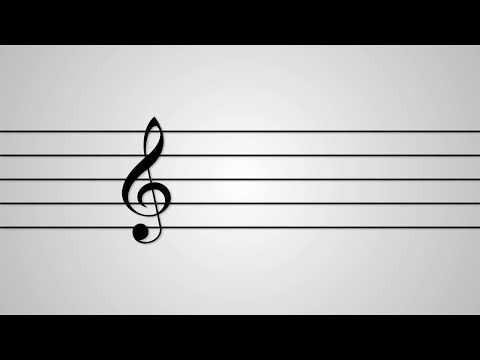
To read written music, you must understand the grand staff, which is split into the treble and bass clefs. The treble clef, also known as the G clef, wraps around the second line from the bottom, indicating that line is the note G4. It is typically used for higher-pitched instruments like the violin, flute, or right hand of the piano. The bass clef, or F clef, places the F note on the fourth line from the bottom. It is used for lower-pitched instruments like the cello, bass guitar, or left hand of the piano. Together, these two clefs encompass the vast majority of written music. Learning to read the treble and bass clefs fluently allows you to access a massive library of existing repertoire and communicate your musical ideas on paper with precision.
Major vs. Minor Keys: A Quick Comparison
Understanding the core difference between major and minor keys is essential for any musician. Here is a quick breakdown of how these two fundamental tonalities compare.
| Characteristic | Major Key | Minor Key |
| Tonal Quality | Bright, happy, triumphant | Dark, sad, introspective |
| Third Interval | Major third (4 semitones) | Minor third (3 semitones) |
| Associated Mood | Joyful, upbeat, heroic | Melancholic, dramatic, mysterious |
Practical Tips for Mastering Music Theory
Theoretical knowledge is only valuable if applied practically. Avoid getting stuck in the “theory trap,” learning concepts but never using them. Here are some expert tips to integrate these basics into your daily routine:
- Apply theory to your instrument immediately. If you learn about the C major scale, play it on your guitar or piano right away.
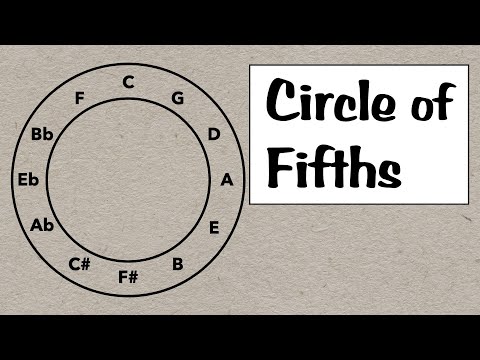
- Use the circle of fifths. This visual tool maps out the relationships between all 12 keys, making it easier to understand sharps, flats, and chord relationships.
- Transcribe your favorite songs. Try to figure out the chord progression and scale used in a song by ear, then verify it with theory.
- Sing what you play. Connecting your voice to your instrument reinforces the connection between pitch, melody, and theory.
Conclusion
Mastering basic music theory is a journey that rewards patience and curiosity. It does not require you to become a scholar; rather, it asks you to become a keen observer of sounds around you. From the simple musical alphabet to the complex emotional nuances of chord progressions, the fundamentals of music theory provide the keys to musical freedom. Whether you are a beginner just learning your first notes or an intermediate player looking to break out of creative ruts, these core concepts remain your greatest assets. Embrace the learning process, practice consistently, and remember that every master was once a beginner. The language of music is waiting for you to speak it fluently.

Frequently Asked Questions
What are the basics of music theory for absolute beginners?
The basics of music theory for absolute beginners start with understanding the musical alphabet (A through G), recognizing the difference between whole steps and half steps, and learning to read basic rhythm and time signatures like 4/4. It also involves familiarizing yourself with the treble and bass clefs and understanding how major and minor scales are constructed.
How can I learn music theory basics on my own?
You can learn music theory basics on your own by using online resources, ear training apps, and your primary instrument. Start by memorizing the notes on the staff, practice identifying intervals by ear, and apply scales and chords to your instrument daily. Consistency is more important than speed when self-teaching fundamental concepts.
Why is understanding music theory basics important for songwriters?
Understanding music theory basics is important for songwriters because it gives you a vocabulary to communicate your ideas and a framework to overcome writer’s block. Knowing how chord progressions work allows you to write in any key, transpose songs for different vocal ranges, and create specific emotional atmospheres intentionally rather than by accident.
What is the easiest way to remember sharps and flats in music theory?
The easiest way to remember sharps and flats is to use mnemonic devices. For the order of sharps (F, C, G, D, A, E, B), remember “Father Charles Goes Down And Ends Battle.” For the order of flats (B, E, A, D, G, C, F), simply reverse it: “Battle Ends And Down Goes Charles’ Father.”
How do rhythm basics differ from reading sheet music?
Rhythm basics focus specifically on the duration and timing of notes, including beats, measures, and tempo, while reading sheet music encompasses both pitch and rhythm. A strong grasp of rhythm is a prerequisite for fluently reading sheet music, as it teaches you the timing and subdivision necessary to perform any written piece accurately.