


Learning basic guitar chords is the single most important milestone every guitarist will ever face, whether you are picking up the instrument for the first time or returning after a long hiatus. These foundational chord shapes serve as the building blocks of virtually every song you will ever play, from folk and country to pop, rock, and blues. Understanding how chords are constructed, how your fingers should position on the fretboard, and how to transition smoothly between them transforms you from a curious beginner into a genuine musician. In this comprehensive guide, we will walk through the essential open chords, explore the theory behind them, compare chord types, and provide expert tips that accelerate your progress far beyond what most beginners expect. Whether your goal is to strum along to your favorite songs or eventually compose your own music, mastering these core chord shapes is where it all begins.
What Are Basic Guitar Chords and Why They Matter
A chord is a combination of three or more notes played simultaneously, and on the guitar, these notes are formed by pressing strings against the frets while strumming or picking. Basic guitar chords typically fall into two main categories: open chords, where at least one string rings unfretted, and barre chords, where the index finger presses down multiple strings across a single fret. Open chords are the starting point for nearly every guitar method book, online course, and instructor because they are physically easier to press and sound full and resonant right away. Without a solid foundation in these chord shapes, progressing to barre chords, seventh chords, and extended harmonies becomes unnecessarily difficult. Think of basic open chords as the alphabet of music on guitar — once you know them, you can “read” and play hundreds of songs immediately.
Essential Open Chords Every Beginner Should Learn
The Core Major Open Chords: C, A, G, E, and D
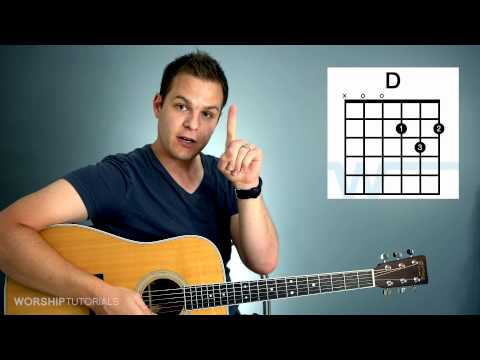
The five major open chords form the backbone of modern guitar playing. These five shapes — C major, A major, G major, E major, and D major — are sometimes called the “CAGED” system’s foundation, and they unlock an enormous portion of the guitar fretboard. The C major chord uses your first, second, and third fingers to fret the B string at the first fret, the D string at the second fret, and the A string at the third fret while letting the high E string ring open. A major is played by barring the second fret with your index finger across the B, G, and high E strings while pressing the D, G, and low E strings with your remaining fingers. G major is one of the most recognizable shapes, requiring your fingers to stretch across three frets in a wide formation. E major is arguably the easiest chord for beginners because it uses all six strings and places fingers on the first and second frets. D major creates a compact triangle shape between the second and third frets and produces a bright, punchy tone that is perfect for singer-songwriter styles.
How to Properly Finger Each Open Chord
Finger placement makes or breaks your chord sound, so paying close attention to technique from day one saves you from developing bad habits. Always press the strings with the tips of your fingers, as close to the fret wire as possible without sitting directly on the metal bar. Your thumb should rest behind the neck, providing counter-pressure that helps your fingers press cleanly. When you first form a chord shape, pick each string individually to check for buzzing or muted notes. If the low E string sounds dead in an A major chord, your thumb is likely too high on the back of the neck. Consistent daily practice of just five to ten minutes per chord creates muscle memory faster than hour-long sessions once a week. Most players find that the transition between G and C, or between E and D, becomes second nature within two to three weeks of regular practice.
Understanding Minor Chords: Am, Dm, and Em
Minor chords introduce emotional depth and contrast into your playing, and the good news is that the three most common minor open chords — A minor, D minor, and E minor — are incredibly easy to learn. A minor differs from A major by lifting just one finger, making it one of the simplest chord changes a beginner can practice. E minor requires only two fingers on the fifth and fourth strings at the second fret, leaving the remaining strings open for a warm, melancholic sound. D minor uses a similar triangular shape to D major but shifts one finger down by one fret. Together, these minor chords pair beautifully with their major counterparts, allowing you to create progressions that sound happy, sad, hopeful, or introspective. The I–vi–IV–V progression, which uses combinations of major and minor chords from the key of G or C, is one of the most universally recognized patterns in popular music and relies entirely on the chords you are learning right now.
Comparison Table: Open Chords vs. Barre Chords
| Feature | Open Chords | Barre Chords |
| Finger Positioning | Fingers press individual strings at different frets | Index finger bars across all six strings at one fret |
| Physical Difficulty | Beginner-friendly, minimal finger strength needed | Requires significant finger strength and endurance |
| Sound and Resonance | Open strings ring freely, full and rich tone | Uniform shape produces consistent tonal quality |
| Mobility on the Fretboard | Limited to specific fret positions | Movable shape allows chords anywhere on the neck |
| Learning Curve | Typically mastered within the first 1–3 months | Usually takes 3–6 months of dedicated practice |
| Common Use Cases | Acoustic strumming, folk, pop, beginner songs | Rock, jazz, blues, and advanced chord vocabulary |
While open chords are where every guitarist starts, barre chords are the gateway to intermediate and advanced playing. The E-shape barre chord, for example, takes the open E major shape and moves it up the neck using a barre, while the A-shape barre chord does the same with the open A form. Practicing the transition between an open G chord and a barre chord at the third fret builds the finger strength and dexterity you need for more complex music.

Moving from Basic to Intermediate: Expanding Your Chord Vocabulary
Once you are comfortable with the open major and minor chords, the next logical step is introducing seventh chords and suspended chords into your repertoire. A G7 chord adds a flat seventh interval to the G major triad, creating a tension that resolves beautifully in blues and jazz progressions. Cmaj7 and Dm7 are other excellent extensions that add sophistication to simple chord progressions without requiring new finger positions that are dramatically harder. Suspended chords, such as Csus4 and Dsus2, replace the third of the chord with either the fourth or second scale degree, producing an open, ambiguous sound that is widely used in modern pop, indie, and alternative music. These chords are not difficult to learn if you already have the open major and minor shapes memorized — they simply involve lifting or adding one finger within the same chord shape. Practicing chord progressions that mix major, minor, seventh, and suspended chords trains your ear to hear harmonic movement and prepares you for more advanced music theory concepts.
Expert Tips for Practicing Guitar Chords Effectively
Effective chord practice is not about the quantity of time you spend but the quality and intention behind your sessions. Use these proven strategies to maximize your progress:
- Practice chord transitions slowly. Pick two chords and switch between them at a tempo where every note sounds clean, then gradually increase speed over days and weeks rather than minutes.
- Use a metronome. Setting a metronome to 60 beats per minute and changing chords on each click builds rhythmic precision that translates directly to playing with other musicians or along with recordings.
- Focus on one new chord per week. Adding too many shapes at once leads to confusion and sloppy technique. Master C major, then A major, then G major, and so on in a deliberate sequence.
- Apply chords to real songs immediately. Playing “Knockin’ on Heaven’s Door” with just G, D, and Am, or “Let It Be” with C, G, Am, and F gives you a real-world context that makes practice feel purposeful and enjoyable.
- Record yourself regularly. Listening back to your chord changes reveals buzzes, timing inconsistencies, and finger placement issues that are invisible while you are playing.
Frequently Asked Questions
How long does it take to learn basic guitar chords?
Most dedicated beginners can learn the five essential open major chords and their minor counterparts within two to four weeks of consistent daily practice. However, achieving clean, buzz-free transitions between all of these chords typically takes closer to two to three months. The timeline depends heavily on how often you practice, the quality of your technique, and whether you use a structured learning method.
Which basic guitar chord is the easiest for absolute beginners?

E major is widely considered the easiest open chord because it uses a natural, comfortable finger position across the first and second frets and utilizes all six strings, making it forgiving of small finger placement errors. E minor is even simpler, requiring only two fingers, and is an excellent first chord for children or players with limited finger dexterity.
Should I learn open chords or barre chords first?
Open chords should always come first. They build the fundamental finger strength, coordination, and muscle memory that barre chords require. Attempting barre chords too early without open chord experience often leads to frustration and poor technique. Once you can comfortably switch between open chords at a steady tempo, introducing barre shapes becomes a natural and rewarding next step.
What is the best way to practice chord changes smoothly?
The most effective method is isolation practice: choose just two chords, set a slow metronome, and focus exclusively on the movement between those two shapes. Minimize the distance your fingers travel, and try to find common fingers that can stay in place or move as little as possible. Over time, gradually increase the metronome speed by only five beats per minute at a time.
Do I need to learn music theory to play basic guitar chords?
No, you do not need formal music theory to start playing and enjoying the guitar. Many successful guitarists learn chord shapes by visual pattern and ear before ever studying intervals or scales. However, a basic understanding of chord construction — knowing that a major chord is built from the root, major third, and perfect fifth — enhances your ability to learn new chords faster and communicate with other musicians effectively.
Conclusion
Basic guitar chords are far more than simple shapes on a fretboard — they are the foundation of musical expression on the instrument. The open major and minor chords you learn in your earliest lessons will follow you throughout your entire guitar journey, appearing in countless songs, progressions, and improvisational contexts. By approaching your chord practice with intention, using proper technique, and applying your new shapes to real music as quickly as possible, you build skills that compound over time in powerful ways. Stay patient with the process, trust that consistent daily effort produces results, and remember that every professional guitarist once struggled to press a clean C major chord. Your journey starts with the next chord change you make, so pick up your guitar, press those strings down firmly, and start playing.