


Understanding a guitar chord is one of the most transformative moments in any musician’s journey. Whether you are picking up the instrument for the very first time or you have been strumming for years, chords form the backbone of virtually every song you will ever play. A guitar chord is not just a collection of notes pressed together — it is a building block of emotion, rhythm, and storytelling. In this comprehensive guide, we will explore everything from the most basic open positions to advanced extended voicings, giving you the knowledge to expand your harmonic vocabulary and play with confidence.
What Exactly Is a Guitar Chord?
At its core, a guitar chord is the simultaneous sounding of three or more notes on the instrument. These notes are derived from specific intervals within a musical scale, and when combined, they create a harmonic sound that evokes a particular feeling or mood. The word “chord” itself comes from the Latin chorda, meaning string, which is fitting given that every guitar chord relies on the vibration of the instrument’s strings.
When you press your fingers against the fretboard in a particular configuration and strum the strings, you are forming a chord shape. Each shape corresponds to a specific chord name — like C major, G minor, or E seventh — and each one produces a unique tonal quality. The beauty of guitar chords lies in their versatility. A single open position chord can be moved, inverted, or altered to produce dozens of variations, giving players an enormous range of creative expression.
For many beginners, the concept of a chord diagram can feel overwhelming. Those grids with little dots and numbers look like a foreign language at first glance. But once you understand the anatomy of these diagrams, everything clicks into place, and reading chord charts becomes second nature.
Types of Guitar Chords: From Beginner to Advanced
Open Chords for Beginners
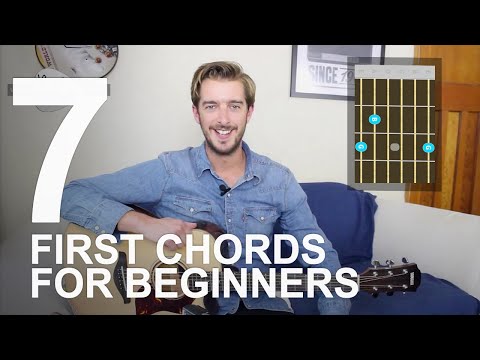
If you are just starting out, open chords are your best friend. These are the first shapes most guitar instructors teach because they involve one or more unfretted (open) strings, making them easier to finger and produce clean sounds. The most common open chords include major and minor triads like C major, A minor, G major, E minor, and D major.
Here is why open chords matter so much:
- They are easier to press down cleanly, reducing finger frustration for new players.
- They sound bright, full, and resonant thanks to the open strings ringing out.
- They appear in thousands of popular songs across every genre.
- They build finger strength and dexterity gradually over time.
Mastering these five or six open shapes will unlock an enormous catalog of songs and give you the confidence to tackle more complex voicings later on.
Barre Chords and Movable Shapes
Once you are comfortable with open chords, the next major milestone is learning barre chords. A barre chord uses your index finger to press down all (or most) of the strings across a single fret, essentially creating a movable nut. This technique allows you to play any major or minor chord anywhere on the neck by simply shifting the shape up or down the fretboard.
Barre chords are notoriously challenging for beginners because they demand significant finger strength and precise hand positioning. However, they are absolutely essential for any serious guitarist. Without barre chords, your playing is limited to only a few frets of the instrument, which severely restricts the songs and keys you can play in.
Pro tip: focus on the index finger first. Make sure it is pressing firmly and evenly across all six strings. A small gap or weak spot will cause buzzing or muted notes, which can be incredibly frustrating to troubleshoot.
Extended and Altered Chords
For intermediate and advanced players, extended chords open up a whole new world of harmonic color. These chords go beyond the basic triad (root, third, fifth) and add additional intervals like the seventh, ninth, eleventh, or thirteenth. A dominant seventh chord (such as G7 or A7) adds a note that creates tension and resolution, which is why it is so prevalent in blues, jazz, and soul music.
Altered chords take this even further by modifying the fifth, ninth, or eleventh with sharps or flats. These voicings are staples in jazz guitar and sophisticated pop arrangements. While they may look intimidating on paper, understanding the theory behind them makes learning them much more approachable.
Anatomy of a Guitar Chord Diagram
Every guitarist should be fluent in reading chord diagrams, as they are the universal language of chord shapes. A standard diagram is a grid representing the guitar neck. Vertical lines represent strings (from low E on the left to high e on the right), and horizontal lines represent frets.
- Dots indicate where to place your fingers on the fretboard.
- Numbers inside the dots tell you which finger to use (index = 1, middle = 2, ring = 3, pinky = 4).
- An “X” above a string means do not strum that string.
- An “O” above a string means play that string open (unfretted).
- A thick bar at the top indicates a barre chord shape.
Reading these diagrams quickly will dramatically speed up your learning process and allow you to pick up new chord shapes from any resource, whether it is a tab book, an online lesson, or a chord chart.
How to Practice Guitar Chords Effectively
Simply knowing chord shapes is not enough. You need to practice them with intention and consistency to build muscle memory and clean execution. Here are some expert-backed strategies that work:
- Use a metronome. Start at a slow tempo (around 60 BPM) and switch between two chords on every beat. Gradually increase the speed only when you can play cleanly.
- Focus on one change at a time. If you are struggling with a C to G transition, isolate that movement and repeat it until it feels natural before adding more changes.
- Check each string individually. After forming a chord, pick each string one at a time to identify any buzzing or muted notes, then adjust your finger placement accordingly.
- Practice chord transitions in context. Play simple chord progressions rather than isolated shapes. This trains your brain and hands to work together in real musical situations.
- Keep your thumb positioned correctly. A thumb placed roughly behind the neck’s center provides the leverage and support needed for clean chord formation.
Essential Chord Progressions Every Guitarist Should Know

Chord progressions are sequences of chords played in a specific order. They are the harmonic foundation of virtually every song ever written. Learning the most common progressions will give you an incredible head start in both playing and understanding music.
The I-IV-V progression (one, four, five) is the backbone of rock, country, blues, and pop music. In the key of C, this means playing C, F, and G. The ii-V-I progression is the workhorse of jazz and appears in countless standards. The vi-IV-I-V progression (also known as the “four-chord pop progression”) can be heard in songs from the past several decades across multiple genres.
| Progression | Chord Degrees | Key of C Example | Common Genres |
| I-IV-V | 1 – 4 – 5 | C – F – G | Rock, Country, Blues |
| ii-V-I | 2 – 5 – 1 | Dm – G – C | Jazz, Funk, R&B |
| I-V-vi-IV | 1 – 5 – 6 – 4 | C – G – Am – F | Pop, Pop Rock, Folk |
| vi-IV-I-V | 6 – 4 – 1 – 5 | Am – F – C – G | Pop, Anthem Rock |
| I-vi-IV-V | 1 – 6 – 4 – 5 | C – Am – F – G | Classic Rock, Blues |
FAQ: Common Questions About Guitar Chords
How long does it take to learn basic guitar chords?
Most dedicated beginners can learn their first open chords within two to four weeks of consistent daily practice, usually 15 to 30 minutes per session. However, playing them cleanly and transitioning smoothly between shapes can take several months. The key factor is regular, focused practice rather than long, infrequent sessions.
What is the easiest guitar chord for beginners to learn?
E minor (Em) is widely regarded as the easiest guitar chord for absolute beginners because it only requires two fingers and uses open strings that ring out beautifully. A minor (Am) is another excellent starting point. These two chords alone allow you to play hundreds of beginner-friendly songs, which provides immediate motivation and a sense of accomplishment.
Why does my guitar chord sound buzzing or muted?
Buzzing or muted guitar chords typically result from one of three issues: insufficient finger pressure, improper finger placement too close to the fret wire rather than just behind it, or accidental contact with adjacent strings. Carefully checking each string individually and adjusting your finger angle usually resolves the problem quickly.
Should I learn chord charts or tabs first?
Chord charts should be learned first because they teach you harmonic vocabulary and how to form shapes on the fretboard. Tabs are better suited for learning melodies, riffs, and single-note lines. Both are valuable skills, but understanding chord charts gives you the foundational knowledge needed to play songs and understand music theory.
How many guitar chords do I need to know to play songs?
You can play a vast number of popular songs by knowing as few as 10 to 15 open chords and a few basic barre chord shapes. The real skill is not in knowing hundreds of chords but in transitioning between them smoothly and rhythmically. Quality of execution matters far more than quantity of shapes memorized.
Conclusion
A guitar chord is far more than a technical exercise — it is a gateway to expression, creativity, and connection. Whether you are strumming your first open C major chord or navigating complex jazz voicings, each new chord you learn adds another color to your musical palette. The journey from beginner to advanced player is built on consistent practice, curiosity, and a genuine love for the instrument.
Start with the fundamentals, be patient with yourself during the frustrating early stages, and remember that every professional guitarist once struggled with the same barre chord shapes you are working on today. The key is to keep showing up, keep practicing with purpose, and most importantly, keep enjoying the process of making music. Your chord vocabulary will grow naturally as you do, and one day you will look back and marvel at how far your playing has come.