If you have ever picked up a guitar, sat at a piano, or simply wondered why certain chord progressions give you chills, you already understand that music speaks a language of its own. Books on music theory are the textbooks for that language, offering structured pathways from basic note recognition to advanced compositional techniques that professional composers and musicians use every day. Whether you are a curious beginner trying to understand what a Nashville number is or an experienced player wanting to deconstruct jazz harmony, the right book can transform the way you hear, play, and create music. In this guide, we break down the best music theory books across every skill level, compare top picks side by side, and give you practical strategies for choosing the resource that fits your goals.
Why Music Theory Books Still Matter in the Digital Age
You might think YouTube tutorials and apps can replace a good book, but there is a reason music schools, conservatories, and university programs still assign textbooks. A well-written music theory book provides a sequential learning framework that builds knowledge logically rather than jumping between random concepts. When you study from a structured resource, you gain:
- A solid foundation in reading notation and understanding rhythm
- The ability to analyze chord progressions and song structures
- Vocabulary to communicate musical ideas with other musicians
- Confidence to improvise, compose, and arrange with intention
- Transferable knowledge that applies across genres — from classical to pop to metal
Unlike scattered online content, a curated music theory textbook connects each lesson to the next, reinforcing previous knowledge while introducing new material at a manageable pace. This is especially critical for self-taught musicians who do not have an instructor guiding their practice sessions.
Best Music Theory Books for Beginners
Starting your journey into music theory can feel overwhelming if you do not know where to begin. The best beginner-friendly books focus on fundamental concepts like the musical alphabet, intervals, major and minor scales, and basic chord construction without drowning you in academic jargon. Here are the top recommendations for newcomers:
1. “Music Theory for Computer Musicians” by Michael Hewitt
Despite its title, this book works beautifully for any beginner who wants to understand music theory through practical, accessible language. Hewitt breaks down scales, chords, and song forms using examples from popular genres, making it feel less like a textbook and more like a conversation with a knowledgeable friend.
2. “Music Theory Made Easy” by David Harp
This is one of the most approachable introductions to music theory on the market. Harp uses a workbook-style format with exercises, visual diagrams, and ear-training activities that make abstract concepts tangible. It is ideal for complete novices who want to learn by doing rather than just reading.
3. “Alfred’s Essentials of Music Theory” (Complete Set)
A staple in music education classrooms for decades, Alfred’s series covers reading notation, rhythm training, scales, intervals, chords, and basic harmony in a progressive, lesson-by-lesson format. The inclusion of ear-training CDs and review tests makes it a comprehensive self-study package.
Intermediate Music Theory Books to Level Up Your Skills
Once you understand the basics, intermediate music theory books push you into deeper territory — harmonic analysis, key signatures, modulation, and voice leading. At this stage, you are learning not just what notes to play, but why they work together. Here are the standout options:
1. “Music Theory: From Beginner to Expert” by Nicolas Carter
This book bridges the gap between introductory material and intermediate concepts with exceptional clarity. Carter covers the circle of fifths in depth, chromatic harmony, and the relationship between scales and chords in a way that feels intuitive rather than dry.
2. “Tonal Harmony” by Stefan Kostka and Dorothy Payne
Widely used as a university-level textbook, this resource dives into harmonic analysis, part-writing, and 20th-century harmonic techniques. It is the gold standard for anyone preparing for music school or serious about understanding how Western tonal music functions from the inside out.
3. “The Jazz Theory Book” by Mark Levine
If your musical interests lean toward jazz, this book is indispensable. Levine covers chord-scale theory, reharmonization, modal interchange, and the vocabulary of jazz improvisation with real-world examples from legendary recordings.
Advanced Music Theory Texts for Serious Students
For composers, arrangers, and advanced performers, the best music theory books go beyond tonal harmony and explore post-tonal theory, atonal analysis, serialism, and contemporary compositional techniques. These texts require serious commitment but reward readers with a profound understanding of how music works at its most complex levels.
1. “The Complete Musician” by Steven G. Laitz
Spanning over 800 pages, this book is one of the most thorough resources available for advanced music theory. It covers tonal harmony, twentieth-century techniques, analytical procedures, and even introduces post-tonal thinking. The accompanying workbook and aural skills exercises make it an all-in-one learning system.
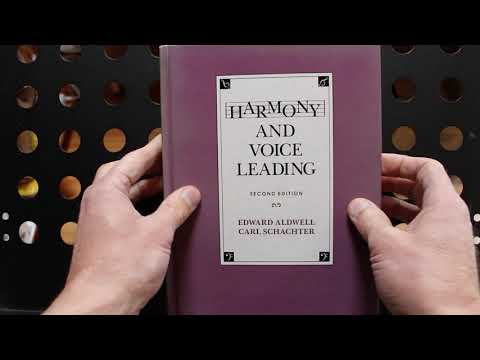
2. “Harmony and Voice Leading” by Edward Aldwell, Carl Schachter, and Allen Cadwallader
Considered a definitive text in voice leading and harmonic analysis, this book approaches music theory from the perspective of linear counterpoint and large-scale harmonic motion. It challenges readers to think beyond chord symbols and understand how individual melodic lines interact within a harmonic framework.
3. “Post-Tonal Theory” by Joseph N. Straus
For students exploring music beyond the common-practice era, Straus provides a rigorous yet accessible introduction to set theory, twelve-tone technique, serialism, and other modern analytical tools. This book is essential for graduate students and composers working in contemporary classical music.
Comparison: Top Music Theory Books at a Glance
| Book Title | Level | Best For | Format | Price Range |
| Music Theory for Computer Musicians | Beginner | Self-taught musicians, electronic producers | Textbook with examples | $20–$30 |
| Music Theory Made Easy | Beginner | Complete novices, visual learners | Workbook | $15–$25 |
| Alfred’s Essentials of Music Theory | Beginner to Intermediate | Structured self-study, classroom use | Book + audio + tests | $15–$35 |
| Music Theory: From Beginner to Expert | Beginner to Intermediate | Guitarists, self-motivated learners | Comprehensive text | $15–$25 |
| Tonal Harmony | Intermediate | Music students, aspiring composers | Academic textbook | $100–$150 |
| The Jazz Theory Book | Intermediate to Advanced | Jazz musicians, improvisers | Reference text | $30–$45 |
| The Complete Musician | Advanced | Music majors, serious analysts | Textbook + workbook + audio | $100–$160 |
| Harmony and Voice Leading | Advanced | Composition students, analysts | Academic textbook | $150–$200 |
| Post-Tonal Theory | Advanced | Graduate students, contemporary composers | Academic text | $60–$90 |
How to Choose the Right Music Theory Book for You
Selecting the best book on music theory depends on several factors, and honestly, the “perfect” book for someone else might be the wrong fit for your learning style. Consider these practical tips when making your choice:
- Assess your current level honestly. Starting with an advanced text like Laitz or Straus when you still struggle with basic intervals will only frustrate you. Start where you are, not where you think you should be.
- Match the book to your instrument or genre. A guitarist might prefer Carter’s practical approach, while a classical pianist may benefit more from Kostka and Payne’s analytical depth.
- Look for books with exercises and audio. Music theory is a performing art as much as an intellectual one. Books that include listening exercises, ear training, and written assignments will deepen your understanding far more than passive reading alone.
- Check for updated editions. Music theory pedagogy evolves, and newer editions often include improved explanations, modern examples, and better organization.
- Read reviews from real users. Amazon ratings, Reddit threads on r/musictheory, and musician forums can reveal whether a book actually delivers on its promises or just looks good on a shelf.
Expert Tips for Studying Music Theory Effectively
Even the best book on music theory will not help if you study it passively. Here is what experienced musicians and educators recommend:
- Practice every concept on your instrument. If you learn about dominant seventh chords, find them in real songs and play them. Theory without application fades quickly from memory.
- Study in short, consistent sessions. Thirty focused minutes daily beats a five-hour weekend cram session every time. Your brain consolidates musical concepts during rest.
- Use a pencil, not just your eyes. Writing out scales, drawing chord maps, and annotating scores engages motor memory and deepens comprehension.
- Analyze songs you love. Pick a favorite track and try to map its chord progression, key changes, and melodic structure. This contextualizes abstract theory in music you genuinely care about.
- Pair your book with a teacher or study group. Even occasional feedback from someone more experienced accelerates growth and helps you identify blind spots in your understanding.
Frequently Asked Questions About Books on Music Theory

What is the best music theory book for absolute beginners who have never read sheet music?
For complete newcomers, “Alfred’s Essentials of Music Theory” is widely regarded as the most beginner-friendly starting point. It introduces the musical alphabet, basic rhythm, and simple notation in small, digestible lessons with built-in review exercises and ear-training audio. Alternatively, “Music Theory Made Easy” by David Harp offers a workbook-style approach that prioritizes hands-on learning over heavy reading, making it ideal for visual and kinesthetic learners who want to start playing and understanding music immediately.
Can you teach yourself music theory from a book, or do you need a teacher?
Many successful musicians have developed strong theoretical knowledge through self-study using high-quality books. However, having even occasional guidance from a teacher or mentor helps you avoid developing incorrect habits and provides personalized feedback on your analysis and ear-training exercises. The best approach is to use a structured book as your primary resource and supplement it with online communities, forums, or periodic lessons with a qualified instructor.
What is the best music theory book for guitarists specifically?
While many music theory books apply universally, guitarists benefit from resources that connect theory to the fretboard. “Music Theory for Guitarists” by Tom Kolb is a popular choice that uses tab notation, fretboard diagrams, and practical examples drawn from real songs. Nicolas Carter’s “Music Theory: From Beginner to Expert” is also well-suited for guitarists because it explains concepts in a way that translates directly to understanding chord shapes, scale patterns, and improvisation on the instrument.
How long does it take to learn music theory from a book?
This depends entirely on your starting point, the time you dedicate, and the depth of material you are studying. A motivated beginner working through an introductory text for 30 minutes daily can expect to grasp fundamental concepts — scales, intervals, basic chords, and simple progressions — within three to six months. Reaching an intermediate level where you can analyze more complex harmonic structures typically takes one to two years of consistent study, while mastering advanced topics like post-tonal theory or complex voice leading can take several years of dedicated practice.
Are expensive music theory textbooks worth the investment?
Premium-priced academic texts like “The Complete Musician” or “Tonal Harmony” are worth the investment if you are pursuing formal music education or serious composition. However, many excellent resources exist at lower price points that cover 90 percent of what most musicians need. The key is choosing a book that matches your actual goals rather than buying the most expensive option simply because it has the most pages. A well-chosen $20 book used consistently will teach you more than an expensive $150 textbook that sits on your shelf.
Final Thoughts
The world of music theory books is rich with options, and the best choice ultimately depends on where you are in your musical journey and where you want to go. Start with a beginner-friendly resource if you are just getting started, then work your way toward intermediate and advanced texts as your understanding deepens. The most important step is simply to begin — pick up a book, open to the first chapter, and start building the knowledge that will unlock a deeper, more meaningful relationship with the music you love. Whether you dream of writing symphonies, producing hit records, or simply playing smarter with your band, the right music theory book is the bridge between where you are now and everything you are capable of becoming.