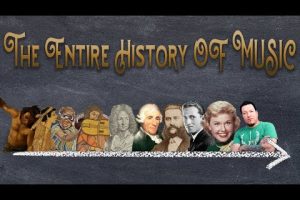
Music is one of the most powerful forces in human history, shaping cultures, movements, and identities across every civilization that has ever existed. But when we talk about the era of music, we are referring to something far more specific: the distinct periods in musical history that each brought revolutionary changes in style, instrumentation, composition, and cultural significance. Understanding these musical eras is not just an academic exercise — it is a gateway to appreciating how the songs you hear today were built on centuries of innovation, rebellion, and artistic evolution. Whether you are a budding musician trying to sharpen your craft, a curious listener exploring deeper into your favorite genre, or a student researching the timeline of Western and global music traditions, this guide breaks down every major era of music in a way that is practical, detailed, and genuinely useful.
The Evolution of Music Through Distinct Historical Eras
Why Do Musical Eras Matter?
Every era of music emerged from a unique combination of social, political, technological, and spiritual conditions. The Baroque era was fueled by the opulence of European courts and the Catholic Church’s desire for grandeur. The Romantic era exploded alongside industrialization and a growing emphasis on individual emotion. The modern era was transformed by recording technology, radio, and eventually digital production. When you understand the “why” behind each period, the music itself becomes richer and more meaningful. Recognizing the characteristics of different musical periods also helps musicians develop a broader stylistic vocabulary, making them more versatile and expressive performers or composers.
Early Roots: Prehistoric and Ancient Music
Before we get to the commonly discussed Western musical periods, it is important to acknowledge that the earliest eras of music history stretch back tens of thousands of years. Archaeological discoveries of bone flutes dating to around 40,000 BCE prove that early humans were creating melodic instruments long before written language existed. Ancient civilizations in Mesopotamia, Egypt, Greece, and China each developed their own systems of scales, rhythms, and musical theory. Greek philosophers like Pythagoras explored the mathematical relationships behind musical intervals, laying the theoretical groundwork that would influence Western music for millennia. These ancient foundations are the bedrock upon which every subsequent era was built.
Major Musical Eras and Their Defining Characteristics
Medieval Era (Approximately 500–1400)
The Medieval period is often called the Middle Ages of music, and it was dominated by the influence of the Christian Church. Sacred Gregorian chant, characterized by monophonic texture and Latin texts, was the primary form of musical expression. Over time, polyphony — the simultaneous combination of multiple independent melodic lines — emerged through the work of composers like Hildegard von Bingen and later Guillaume de Machaut. Key instruments of this era included the lute, recorder, hurdy-gurdy, and various percussion instruments. The Medieval era also gave rise to the first Western notation systems, which allowed music to be written down and preserved in ways never before possible.
Renaissance Era (Approximately 1400–1600)
The Renaissance period in music marked a dramatic shift toward humanism, complexity, and artistic expression inspired by the broader cultural rebirth sweeping through Europe. Composers explored richer harmonies, fuller textures, and more sophisticated polyphonic writing. Secular music gained prominence alongside sacred works, with madrigals — expressive vocal pieces set to poetry — becoming enormously popular in Italy and England. Instruments like the viol, viola da gamba, and early keyboard instruments such as the harpsichord became central to performance. The printing press also played a transformative role, making sheet music widely available and helping standardize musical practice across regions.
Baroque Era (Approximately 1600–1750)
The Baroque music era is defined by dramatic expression, ornate ornamentation, and bold contrast. Composers like Johann Sebastian Bach, George Frideric Handel, and Antonio Vivaldi pushed the boundaries of harmony, counterpoint, and form. This period saw the birth of opera, the development of the concerto and sonata forms, and the standardization of tonal harmony as a framework for composition. The basso continuo — a continuous bass line played by harpsichord and cello — became a hallmark of Baroque ensemble music. Baroque music also introduced the concept of dynamics as a deliberate expressive tool, moving away from the relatively flat dynamics of earlier periods. If you have ever been captivated by the intensity of a Bach fugue or the drama of a Handel oratorio, you are experiencing the emotional power of this era at its finest.
Classical Era (Approximately 1750–1820)
The Classical period brought a reaction against Baroque complexity, favoring clarity, balance, and structured form. Composers like Wolfgang Amadeus Mozart, Joseph Haydn, and the young Ludwig van Beethoven crafted symphonies, string quartets, and piano sonatas that remain cornerstones of the concert repertoire today. Sonata form, theme and variations, and the symphony became the dominant structural vehicles. The Classical era also saw the rise of the modern orchestra, with standardized instrument families and expanded ensembles. The music feels elegant, proportionate, and purposeful — a stark contrast to the emotional excess of what would come next.
Romantic Era (Approximately 1820–1900)
The Romantic era of music was all about emotion, individualism, and pushing boundaries. Composers like Frederic Chopin, Franz Liszt, Richard Wagner, Pyotr Tchaikovsky, and Johannes Brahms wrote music that was intensely personal, often drawing inspiration from literature, nature, nationalism, and the supernatural. Orchestras grew significantly larger, harmonic language became more adventurous, and program music — compositions that tell a story or depict a scene — flourished. The Romantic period also saw the piano reach its zenith as a solo instrument and opera evolve into grand spectacles of dramatic storytelling. For many listeners, this is the era that most immediately connects to the emotional intensity and expressive freedom we associate with great music today.
Modern and Contemporary Eras (1900–Present)
The 20th and 21st centuries shattered virtually every musical convention that came before. The Modern era introduced atonality, serialism, minimalism, and experimental forms through visionaries like Igor Stravinsky, Arnold Schoenberg, John Cage, and Philip Glass. Jazz, blues, rock and roll, hip-hop, electronic music, and countless subgenres emerged, each reshaping the landscape of popular culture. The invention of the phonograph, radio, electric instruments, synthesizers, and digital audio workstations fundamentally changed how music is created, distributed, and consumed. Today, we live in an era of unprecedented genre-blending, global collaboration, and democratized music production, where a bedroom producer can reach millions of listeners overnight.

Comparison of Major Musical Eras
| Era | Approximate Period | Key Characteristics | Notable Composers / Figures | Primary Instruments |
| Medieval | 500–1400 | Monophonic chant, early polyphony, church dominance | Hildegard von Bingen, Machaut | Lute, recorder, hurdy-gurdy |
| Renaissance | 1400–1600 | Rich polyphony, secular music growth, humanism | Palestrina, Byrd, Josquin | Viol, harpsichord, viola da gamba |
| Baroque | 1600–1750 | Ornamentation, contrast, opera birth, basso continuo | Bach, Handel, Vivaldi | Harpsichord, violin, organ, theorbo |
| Classical | 1750–1820 | Balance, clarity, sonata form, orchestral standardization | Mozart, Haydn, early Beethoven | Piano, modern orchestra |
| Romantic | 1820–1900 | Emotional depth, nationalism, expanded harmony, program music | Chopin, Liszt, Wagner, Tchaikovsky | Piano, large orchestra, organ |
| Modern / Contemporary | 1900–Present | Genre innovation, technology, atonality, electronic production | Stravinsky, Glass, jazz pioneers, pop artists | Synthesizers, electric guitars, DAWs |
How Understanding Musical Eras Benefits You
Practical Tips for Exploring Different Eras

Whether you are a musician or a devoted listener, actively engaging with the different eras of music can transform your understanding and enjoyment. Here are some practical strategies:
- Start with one era at a time rather than trying to absorb everything at once. Pick the Baroque or Classical period and listen to three or four landmark works per week.
- Read brief biographies of key composers to understand the historical context that shaped their writing.
- Compare recordings from different periods — a Baroque piece played on period instruments versus a modern orchestral arrangement reveals how interpretation evolves.
- Attend live performances or watch concert recordings featuring repertoire from specific eras.
- Use streaming playlists curated around musical periods to build a structured listening habit.
Building a Cross-Era Playlist
A powerful way to deepen your relationship with music is to create playlists that trace the evolution across eras. Start with a Gregorian chant from the Medieval period, move to a Palestrina mass from the Renaissance, follow with a Bach concerto from the Baroque, then a Mozart symphony from the Classical era, a Wagner operatic excerpt from the Romantic period, and finish with a contemporary piece by a living composer. This journey gives you a visceral sense of how musical language has transformed over centuries while also highlighting the threads of continuity that connect them all.
Common Questions About the Era of Music
What is the longest era in music history?
The Medieval era, spanning roughly from 500 to 1400 CE, is generally considered the longest era in Western music history. It lasted approximately nine hundred years, compared to the Classical era, which lasted only about seventy years. However, if we include prehistoric and ancient music traditions, the earliest roots of music stretch back tens of thousands of years, making the full arc of human musical history even more vast.
How did the Romantic era differ from the Classical era in music?
The Classical era emphasized balance, structure, clarity, and restraint, with composers adhering to established forms like sonata-allegro and symphony. The Romantic era broke away from these constraints, prioritizing intense personal expression, emotional depth, expanded harmonic vocabulary, larger orchestras, and narrative or programmatic content. Where Classical music feels elegant and proportionate, Romantic music feels passionate, dramatic, and often autobiographical.
Which era of music is best for beginners to study?
Most music educators recommend starting with the Classical and Baroque eras because their works are well-documented, widely available, and represent foundational principles of harmony, form, and orchestration. The clarity of Classical-era compositions makes it easier for beginners to hear individual musical lines and understand structural concepts. However, beginners should not overlook the Medieval and Renaissance eras, as early music offers a fascinating window into the simplest and most elemental forms of musical expression.
How has technology changed the modern era of music compared to previous periods?
Technology has had a more dramatic impact on music in the last century than in all of previous history combined. The invention of audio recording in the late 19th century allowed music to be preserved and distributed globally for the first time. Radio brought music into millions of homes. Electric instruments like the electric guitar and synthesizer created entirely new sonic palettes. Digital audio workstations and home recording software have democratized production, meaning that a single individual with a laptop can now produce studio-quality music without ever stepping into a professional recording studio. This technological acceleration continues to reshape genres, listening habits, and the economics of the music industry.
Is the era of music still evolving today?
Absolutely. We are currently living through one of the most rapidly transformative periods in music history. Genres are merging at an unprecedented rate, artificial intelligence is beginning to play a role in composition and production, and global streaming platforms expose listeners to musical traditions from every corner of the world. The boundaries between genres, cultures, and generations are dissolving, creating a musical landscape that is more diverse and interconnected than at any point in the past. The next major shift in the era of music may already be happening in a studio, a bedroom, or a community space somewhere in the world right now.
Final Thoughts on the Era of Music
The eras of music are not just historical categories — they are living chapters in humanity’s ongoing conversation with sound, emotion, and meaning. Each period built upon what came before, reacted against what was established, and opened doors that future generations would walk through. By deepening your knowledge of these musical eras, you gain not only a richer listening experience but also a profound appreciation for the creative genius and cultural forces that have shaped the music we cherish today. Whether you are studying music formally, performing in a group, or simply enjoying songs as part of your daily life, understanding the timeline and evolution of music transforms you from a passive listener into an informed, engaged participant in one of the greatest artistic traditions in human history.