Understanding classical music periods is like peeling back layers of history to discover how human emotion, culture, and artistic innovation evolved over nearly a thousand years. Whether you are a curious beginner dipping your toes into the world of orchestral music or an intermediate listener trying to sharpen your ear, knowing the different periods of classical music gives you a framework that transforms random pieces into a vivid, interconnected story. Each era brought its own rules, rebellious spirit, instrumentation breakthroughs, and philosophical underpinnings that shaped the sound we associate with Western art music today. In this deep dive, we will walk through every major classical music period, explore their defining characteristics, highlight landmark composers, and give you practical tips to train your ear so you can distinguish a Baroque fugue from a Romantic symphony at a glance.
What Are the Classical Music Periods?
The term “classical music periods” refers to the distinct stylistic eras in Western art music, each defined by particular compositional techniques, instrumentation preferences, aesthetic philosophies, and historical contexts. These periods are not rigid boxes but overlapping waves of influence. Scholars and musicologists typically recognize six primary eras, stretching from the Medieval period around the 9th century all the way to Contemporary music of the present day. Understanding these eras helps you appreciate why a piece from the 1700s sounds so different from one composed in the 1900s, even when both fall under the broad umbrella of “classical music.”
For beginners, think of these periods as chapters in a book. For advanced listeners, they represent nuanced shifts in harmonic language, rhythmic complexity, and emotional expression. The following sections break down each era in detail.
The Six Major Classical Music Eras Explained
1. Medieval Period (c. 500–1400)
The earliest period of Western classical music, the Medieval era, was dominated by sacred music. Gregorian chant, named after Pope Gregory I, is the most recognizable form. It features monophonic texture, meaning a single melodic line without harmonic accompaniment. Composers like Hildegard von Bingen and Léonin laid the groundwork for Western musical notation.
- Monophonic vocal music (single melodic line)
- Gregorian chant and plainchant
- Emergence of early musical notation
- Primarily religious and liturgical purposes
- Use of modes rather than major/minor scales
2. Renaissance Period (c. 1400–1600)
The Renaissance period saw a flourishing of polyphonic music, where multiple independent vocal lines intertwined. Composers like Josquin des Prez, Palestrina, and William Byrd pushed the boundaries of harmony and counterpoint. Secular music also gained prominence, with madrigals becoming a popular form across Europe.
- Rich polyphonic textures with multiple voice parts
- Increased use of instrumental music alongside vocal works
- Development of printed music through the printing press
- Broader range of modes and early tonal exploration
- Focus on balanced, smooth melodic lines
3. Baroque Period (c. 1600–1750)
The Baroque era introduced drama, ornamentation, and emotional intensity to music. This was the age of basso continuo, ornate melodies, and the birth of opera. Composers like Johann Sebastian Bach, George Frideric Handel, and Antonio Vivaldi defined the sound of this period with intricate counterpoint and bold harmonic progressions.
- Basso continuo and figured bass systems
- Ornamental melodic lines with dramatic expression
- Birth of opera, oratorio, and concerto grosso
- Major-minor tonality becomes dominant
- Contrast between loud and soft dynamics (terraced dynamics)
4. Classical Period (c. 1750–1820)
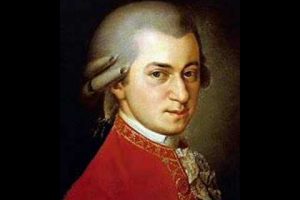
The Classical period streamlined Baroque complexity into elegant, balanced forms. Sonata-allegro form, symphony, and string quartet became standard structures. Vienna was the epicenter of this era, producing titans like Wolfgang Amadeus Mozart, Joseph Haydn, and the young Ludwig van Beethoven.
- Clear, balanced phrase structures and symmetrical forms
- Sonata-allegro, rondo, and theme-and-variation forms
- Orchestral standardization (strings, woodwinds, brass, percussion)
- Emphasis on melody, clarity, and logical development
- Shift from basso continuo to full orchestral writing
5. Romantic Period (c. 1820–1900)
Romantic music prioritized emotion, individualism, and narrative expression. Composers broke free from strict formal constraints, expanded orchestras dramatically, and explored chromatic harmonies that pushed tonality to its limits. This era produced some of the most beloved works in the repertoire.
- Extreme emotional expression and programmatic storytelling
- Expansion of orchestra to over 100 players
- Chromatic harmony and lush, rich textures
- Virtuosic solo writing for piano, violin, and voice
- Nationalist movements celebrating folk traditions
6. Modern and Contemporary Period (c. 1900–Present)
The 20th and 21st centuries shattered many classical conventions. Composers experimented with atonality, serialism, minimalism, electronic music, and fusion with popular styles. This period is defined by radical diversity and the breakdown of tonal hierarchy.
- Atonality, serialism, and twelve-tone technique
- Minimalism and repetitive structures (Philip Glass, Steve Reich)
- Electronic and electroacoustic music
- Neoclassicism returning to earlier forms with modern twists
- Genre-blending and global musical influences
Comparison Table of Classical Music Periods
| Period | Timeframe | Key Characteristics | Notable Composers |
| Medieval | 500–1400 | Monophonic chant, modal harmony, sacred focus | Hildegard von Bingen, Pérotin |
| Renaissance | 1400–1600 | Polyphony, balanced voices, secular madrigals | Josquin des Prez, Palestrina |
| Baroque | 1600–1750 | Ornamentation, basso continuo, dramatic expression | Bach, Handel, Vivaldi |
| Classical | 1750–1820 | Symmetrical forms, clarity, orchestral standardization | Mozart, Haydn, early Beethoven |
| Romantic | 1820–1900 | Emotional intensity, expanded orchestra, chromaticism | Chopin, Tchaikovsky, Wagner, Brahms |
| Modern/Contemporary | 1900–Present | Atonality, minimalism, electronic experimentation | Debussy, Stravinsky, John Cage, Arvo Pärt |
Key Composers and Their Period Signatures
When studying classical music periods, associating composers with their era is essential for building listening fluency. Each composer embodied the aesthetic ideals of their time while often pushing boundaries.
- Medieval: Hildegard von Bingen — her sacred vocal works are among the earliest notated compositions in Western music.
- Renaissance: Josquin des Prez — a master of imitative polyphony whose motets and masses influenced generations.
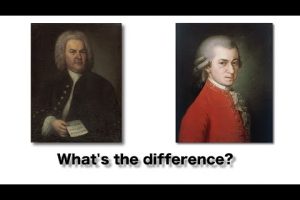
- Baroque: J.S. Bach — his fugues, cantatas, and Brandenburg Concertos represent the peak of contrapuntal mastery.
- Classical: Mozart — his symphonies and operas exemplify balance, elegance, and structural perfection.
- Romantic: Tchaikovsky — his ballets and symphonies overflow with emotional narrative and sweeping orchestral color.
- Modern: Igor Stravinsky — his ballets like The Rite of Spring shattered rhythmic and harmonic expectations.
How to Train Your Ear Across Classical Music Periods
One of the most practical skills any classical music enthusiast can develop is identifying the period of a piece by ear. Here are expert tips that bridge beginner and advanced listening.
Listen for Texture and Harmony
Medieval and Renaissance music sound transparent because they use fewer instruments and simpler harmonic language. Baroque music introduces rich ornamentation and basso continuo, giving it a layered, textured quality. Classical period music is cleaner and more balanced, while Romantic music is harmonically lush and emotionally charged. Contemporary works may sound dissonant, sparse, or rhythmically unpredictable.
Notice the Orchestra
The size and makeup of the ensemble is a dead giveaway. A Baroque orchestra uses harpsichord and strings without modern brass and woodwinds. A Romantic orchestra deploys massive brass sections, harps, and expanded percussion. A contemporary ensemble might include synthesizers, electric guitars, or unconventional instruments.
Track the Form
Classical period pieces often follow clear forms like sonata-allegro or theme-and-variations. Romantic pieces tend to be more free-form and narrative. Modern music may abandon traditional form entirely, favoring repetition or atonal structures.

Expert Tips for Deepening Your Understanding
Beyond passive listening, active engagement with classical music periods accelerates your growth as a listener and student of music.
- Attend live performances: Hearing a symphony orchestra perform a Romantic-era piece in a concert hall provides an immersive experience no recording can fully replicate.
- Use listening guides: Publications like The NPR Listener’s Encyclopedia of Classical Music provide period-by-period breakdowns with recommended recordings.
- Study one composer deeply: Instead of skimming many pieces, spend a month immersing yourself in Bach’s cantatas or Beethoven’s string quartets to absorb an era’s voice.
- Compare recordings: Listen to the same piece performed by different orchestras and conductors to hear how period interpretation styles vary.
- Read primary sources: Letters and diaries from composers like Mozart and Beethoven reveal how they understood their own music within their historical context.
FAQs About Classical Music Periods
What is the difference between the Classical period and “classical music” in general?
The Classical period is one specific era within the broader tradition of classical music. Classical music as a whole refers to all Western art music from the Medieval period to the present. The Classical period specifically spans roughly 1750 to 1820 and is characterized by clarity, balance, and formal structure.
Which classical music period is the easiest for beginners to appreciate?
Most beginners find the Romantic period the most immediately accessible because its emotional expressiveness and memorable melodies — think Tchaikovsky’s Swan Lake or Beethoven’s Moonlight Sonata — resonate intuitively. The Baroque period is also approachable once listeners become familiar with its ornamental style.
How long did each classical music period last?
The durations vary significantly. The Medieval period lasted roughly 900 years, while the Classical period spanned about 70 years. The Baroque period endured approximately 150 years, and the Romantic period stretched around 80 years. Contemporary music is ongoing, with no defined end date.
Can pieces from different classical music periods influence each other?
Absolutely. Many composers borrowed from earlier eras while innovating. Beethoven is often cited as a transitional figure who bridged the Classical and Romantic periods. Stravinsky’s neoclassical works deliberately referenced Baroque and Classical forms within a modern context.
Why is the Classical period so well-known despite being the shortest?
The Classical period’s music is often considered the most structurally perfect and balanced, making it highly appealing to new listeners. Its forms — symphony, concerto, string quartet — became the foundational templates for virtually all Western orchestral music that followed.
Final Thoughts
The classical music periods represent one of humanity’s most extraordinary artistic journeys. From the haunting simplicity of Medieval chant to the boundary-shattering experiments of today’s composers, each era contributed irreplaceable ideas that continue to inspire musicians and listeners worldwide. By understanding these periods, you gain more than historical knowledge — you gain a deeper, more meaningful relationship with the music itself. Start by listening to one era at a time, use the tips and comparisons above, and let your ear grow naturally. Over time, you will find that classical music is not a single genre but a living, breathing conversation across centuries.