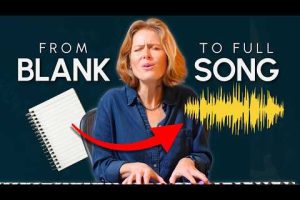
Have you ever listened to a song and thought, “I could write something like that”? The truth is, songwriting is a craft you can learn, no matter where you start. Whether you’ve never written a single line or you’ve scribbled a few verses in a notebook but don’t know what to do next, the path to becoming a songwriter is open to anyone willing to put in the work. This guide breaks down exactly how to become a songwriter — from building foundational skills to launching a career — with practical steps, expert tips, and the honest truth about what it takes to succeed in music.
What Does It Mean to Be a Songwriter?
A songwriter is someone who creates original musical compositions by combining lyrics, melody, harmony, and rhythm into a cohesive piece of music. But being a songwriter goes far beyond just writing words over chords. It means developing a unique creative voice, understanding how songs connect emotionally with listeners, and mastering the technical elements that make music work. Songwriters operate in every genre — pop, country, hip-hop, R&B, rock, electronic, and beyond. Some write for themselves, while others compose tracks for other artists, film, television, or advertising campaigns. Understanding the breadth of this career path is the first step in your own songwriting journey.
Core Skills Every Aspiring Songwriter Needs
Before you dive into writing, you need to understand the building blocks of songwriting. These skills form the foundation everything else is built on.
Understanding Song Structure
Most songs follow recognizable structures like verse-chorus-verse-chorus-bridge-chorus (VCVCBC), but there are countless variations. Learning these patterns helps you organize your ideas effectively:
- Verse — Tells the story or advances the narrative
- Chorus — The emotional hook and most memorable part
- Pre-Chorus — Builds tension before the chorus lands
- Bridge — Provides contrast and a fresh perspective mid-song
- Intro and Outro — Open and close the song with atmosphere
Study how your favorite songs are structured. Map them out section by section. You’ll start to notice patterns that you can adapt for your own writing.
Crafting Lyrics That Resonate
Great lyrics tell a story, evoke emotion, and feel authentic. Here’s what separates powerful lyrics from forgettable ones:
- Show, don’t tell — Use vivid imagery instead of generic statements
- Write about specific moments — “The coffee stain on her letter” hits harder than “I miss you”
- Use natural phrasing — If it doesn’t sound like something a real person would say, rethink it
- Employ literary devices — Metaphors, similes, alliteration, and internal rhyme add depth
- Edit ruthlessly — Your first draft is never your best draft
The goal is to make the listener feel something. Every word should earn its place in the song.
Melody and Chord Progressions
You don’t need to be a virtuoso pianist or guitarist to write songs, but understanding basic music theory gives you a massive advantage. Start by learning a handful of common chord progressions like I-V-vi-IV or vi-IV-I-V — these underpin countless hit songs. Experiment with humming or singing melodies over these progressions. Record everything, even the rough ideas. Some of the best songwriting moments come from fragments that seem insignificant at the time.
Step-by-Step: How to Start Your Songwriting Journey
If you’re wondering exactly where to begin, follow this actionable roadmap:
- Pick up an instrument or learn a DAW. Guitar, piano, or a digital audio workstation like GarageBand, FL Studio, or Ableton Live — any of these tools can unlock your songwriting potential.
- Study songs you love. Break them apart. Analyze the lyric structure, chord choices, melodic contours, and production techniques.
- Write consistently. Set a goal — even if it’s one verse or one hook per day. Consistency builds the creative muscle.
- Finish songs, not just start them. The biggest trap aspiring songwriters fall into is abandoning projects halfway. Push through and complete tracks.
- Seek feedback. Share your work with trusted musicians, online communities, or songwriting groups. Honest critique accelerates growth.
- Collaborate. Co-writing with other songwriters exposes you to new techniques, perspectives, and creative approaches you’d never discover alone.
Each of these steps compounds over time. The songwriters who improve fastest are the ones who write every single day, even when inspiration doesn’t feel present.
Tools and Resources for Songwriters
Having the right tools can streamline your creative process and help you produce professional-quality demos from day one.
| Tool / Resource | Best For | Cost |
| GarageBand | Beginner beat-making and recording | Free (Mac/iOS) |
| Ableton Live | Electronic songwriting and production | ~$99+ |
| Splice | Royalty-free samples and loops | ~$8/month |
| Hookpad | Visual chord and melody mapping | Free / Paid |
| RhymeZone | Lyric rhyming and word discovery | Free |
| Soundtrap | Collaborative online music production | Free / Paid |
Beyond tools, immerse yourself in songwriting communities. Platforms like Songwriting Reddit forums, Kompoz, and SoundBetter connect you with other creators, potential collaborators, and industry professionals. The more you surround yourself with other songwriters, the faster you’ll grow.
How to Improve as a Songwriter: From Beginner to Pro
Once you’ve built a foundation, the next phase is about refining your craft and developing your signature sound. Here’s what separates amateur songwriters from professionals.
1. Expand your musical vocabulary. Listen to genres you’ve never explored. If you write pop, try jazz, folk, or hip-hop. Cross-genre listening rewires your brain and introduces you to chord voicings, rhythmic patterns, and lyrical approaches you wouldn’t encounter otherwise.
2. Learn to co-write. The Nashville songwriting model — where multiple writers pitch ideas in a room — is the industry standard for a reason. Co-writing pushes you out of your comfort zone and often produces results neither writer could achieve alone. Songwriting camps, retreats, and online writing sessions are excellent places to find co-writers.
3. Study the business side. Understanding music publishing, copyright, royalties, and PRO registration (ASCAP, BMI, SESAC) is essential if you want to earn from your songs. Register as a songwriter and publisher to collect every dime you’re owed when your music gets played.
4. Build a songwriting portfolio. Treat your catalog like a product. Record professional demos, organize your best work, and keep building. Quality over quantity matters — ten great songs will take you further than fifty mediocre ones.
5. Pitch your music. Submit your songs to music supervisors, A&R reps, playlists, and sync licensing libraries. The digital age has opened countless avenues for independent songwriters to get their music heard without a record deal.
Common Songwriting Mistakes to Avoid
- Overwriting lyrics — Not every line needs to carry the full story. Leave room for the listener’s imagination.
- Ignoring melody — Even the best lyrics fall flat without a compelling melodic hook.
- Copying too closely — Influence is natural; plagiarism is not. Find your own angle.
- Skipping the editing process — First drafts are raw material. Revision is where the magic happens.
- Waiting for inspiration — Professionals write on schedule, not just when the muse strikes.
FAQs: How Can I Be a Songwriter?
1. Do I need to play an instrument to be a songwriter?
No, but having at least basic knowledge of an instrument — even just a few chords on guitar or piano — dramatically helps the songwriting process. Many successful songwriters use digital tools like FL Studio or Ableton to compose melodies and beats without traditional instrumental skills. What matters most is your ability to hear and arrange musical ideas.
2. How long does it take to become a good songwriter?
This varies widely based on how much time you dedicate and how consistently you practice. Most songwriters agree that it takes 2 to 5 years of regular writing to develop genuine proficiency. However, meaningful progress can happen within months if you write daily, study music actively, and seek constructive feedback from experienced songwriters.
3. Can I make a living as a songwriter without being a performer?
Absolutely. Pitch songwriting, session songwriting, and sync licensing are all career paths where the songwriter never performs publicly. Many professional songwriters work behind the scenes, crafting songs for other artists, TV shows, films, and advertisements. Registering with a performing rights organization ensures you get paid whenever your songs are used.
4. What is the best way to get feedback on my songwriting?
Join songwriting critique groups online or in your local music community. Platforms like SoundBetter, Kompoz, and various Facebook songwriter groups offer spaces to share your work honestly. You can also work with a songwriting coach or mentor who provides structured, expert-level feedback tailored to your development.
5. How do I protect my songwriting ideas from being stolen?
Register your songs with your country’s copyright office and a performing rights organization (PRO) like ASCAP or BMI. Also use Songtrust or similar publishing administration services. While ideas themselves aren’t copyrightable, your specific written lyrics and recorded melodies are automatically protected the moment you fix them in a tangible form — but formal registration strengthens your legal position significantly.
Conclusion
Becoming a songwriter is one of the most rewarding creative journeys you can undertake. It’s not about waiting for the perfect moment or the right equipment — it’s about showing up, writing consistently, and committing to growth. Start where you are with whatever tools you have. Study the songs that move you, break them apart, learn their mechanics, and then write your own. The skills you develop — lyrical storytelling, melodic intuition, harmonic understanding, and emotional communication — will serve you for a lifetime, whether you dream of chart-topping hits or simply want to express yourself through music. The only thing standing between you and being a songwriter is the decision to begin. Write your first song today, and keep writing every single day after that.