


Starting your journey with a beginning piano lesson is one of the most rewarding decisions you can make as a musician or a lifelong learner. Whether you picked up the piano because a favorite song inspired you, you want to improve cognitive skills, or you simply love the sound of the instrument, the foundation you build during those early sessions will shape your entire musical future. This comprehensive guide walks you through everything you need to know about starting piano instruction, from choosing the right program and understanding basic concepts to avoiding common pitfalls and accelerating your progress from the very first day.
What to Expect in Your First Beginning Piano Lesson

When you sit down for your first beginner piano lesson, you might wonder what actually happens during the session. Most instructors begin with a warm welcome and a brief assessment of your current experience level, even if that level is zero. Understanding what lies ahead helps reduce anxiety and sets realistic expectations so you can focus on learning rather than worrying about doing things perfectly.
Understanding Piano Keys and Layout
The very first thing your instructor will likely introduce you to is the piano keyboard layout. A standard 88-key piano contains 52 white keys and 36 black keys arranged in a repeating pattern of seven natural notes—A, B, C, D, E, F, and G. The black keys form groups of two and three, which serve as visual landmarks to help you orient yourself on the keyboard. During beginning piano lessons, you will spend significant time learning to identify these notes by sight and touch, because developing this spatial awareness early on saves you countless hours of confusion later.
Instructors often use the “middle C” as the starting reference point. Middle C sits roughly at the center of the keyboard and serves as the anchor for both left-hand and right-hand finger placement. Mastering the location of middle C is one of the most important early milestones in your piano journey.
Basic Hand Positioning and Posture
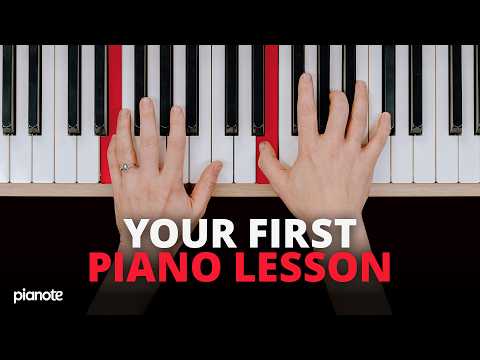
Proper hand position and posture are non-negotiable foundations taught in every quality beginning piano lesson program. Slouching over the keys or curling your fingers too tightly can lead to strain, fatigue, and even repetitive stress injuries over time. Here is what correct positioning looks like:
- Sit at the piano bench with your forearms parallel to the floor.
- Keep your wrists relaxed and slightly elevated, neither dropped nor rigid.
- Curve your fingers as if you are gently holding a small ball or bubble.
- Place your thumbs on the middle C key and let your other fingers rest naturally on the adjacent white keys.
- Keep your feet flat on the floor and your back straight but not stiff.
These fundamentals might seem simple, but they are the building blocks that separate students who progress steadily from those who hit frustrating plateaus early on.
How to Choose the Right Beginning Piano Lesson Program
Not all piano instruction is created equal, and selecting the right format for your learning style, budget, and schedule can make or break your consistency. The two most popular pathways are working with a private instructor and following structured online courses designed for beginners.
Private Instructor vs. Online Courses
Private piano teachers offer personalized feedback, real-time correction of mistakes, and the accountability that comes from scheduled weekly sessions. You benefit from a mentor who can adapt their teaching method to your pace, musical interests, and specific challenges. However, private lessons typically cost between $40 and $80 per hour depending on your location and the instructor’s qualifications.
Online piano courses, on the other hand, provide flexibility and affordability. Platforms like Simply Piano, Flowkey, and Pianote offer structured curriculums with video demonstrations, interactive feedback, and the ability to replay lessons as many times as you need. The trade-off is that you lack the personalized correction a human teacher provides in real time.
| Feature | Private Instructor | Online Course |
| Cost per Month | $160 – $320 | $10 – $30 |
| Personalized Feedback | Immediate and detailed | Limited or automated |
| Flexibility | Fixed schedule | Learn anytime |
| Accountability | High | Self-driven |
| Best For | Serious students seeking rapid improvement | Casual learners and hobbyists |
Many successful piano students combine both approaches, taking occasional private sessions while supplementing their practice with online resources. This hybrid model offers the best of both worlds and is especially effective for adult beginners managing busy schedules.
Essential Concepts You Will Learn in Early Piano Lessons
A well-structured beginning piano lesson curriculum covers several core areas that form the musical literacy every pianist needs. These include reading sheet music, understanding rhythm and timing, exploring basic scales, and playing simple melodies with both hands independently before coordinating them together.
- Music Notation Basics: You will learn the treble clef and bass clef, note values (whole, half, quarter, eighth), and time signatures. These are the visual language of piano music.
- Scales and Intervals: Major and minor scales introduce you to patterns of whole and half steps. Understanding intervals trains your ear to recognize melodic relationships.
- Simple Chords and Harmonies: Even in the earliest stages, you will start building triads and playing basic chord progressions, which unlock the ability to play accompaniments and understand how songs are structured.
- Sight-Reading Practice: Regular exposure to new, unseen pieces builds confidence and fluency in reading music at the piano.
These concepts may feel overwhelming at first, but a skilled instructor breaks them into manageable daily exercises that build on each other incrementally. Consistency in practicing these fundamentals matters far more than the duration of each practice session.
Tips for Maximizing Progress in Beginning Piano Lessons
How you practice matters just as much as how often you practice. Following these expert recommendations will help you extract maximum value from every minute at the keyboard.
- Practice for 15 to 20 minutes daily rather than cramming for two hours once a week. Spaced repetition builds stronger neural pathways.
- Use a metronome from day one. Developing a solid internal sense of timing prevents rushing and improves rhythmic accuracy dramatically.
- Slow down difficult passages and isolate problem measures instead of repeatedly playing through entire pieces with errors.
- Record your practice sessions occasionally. Listening back reveals issues with timing, dynamics, and hand position that you cannot hear in the moment.
- Play music you genuinely enjoy alongside technical exercises. Motivation sustains consistency, and enthusiasm fuels progress.
Expert piano pedagogy also emphasizes the importance of listening to recordings of the pieces you are learning. Familiarity with the melody and harmonic structure before you attempt to play accelerates the learning process significantly.
Common Mistakes Beginners Make and How to Avoid Them

Every pianist who has reached an advanced level once sat in the exact same position as you do now. Understanding the traps that trip up most beginners gives you a head start and saves precious practice time.
The most common mistake is neglecting proper hand position in favor of playing notes faster. Speed without control creates ingrained habits that are incredibly difficult to unlearn later. Another frequent error is skipping the bass clef entirely and focusing only on the right-hand melody. Both hands contribute equally to piano music, and balanced development from the start prevents one hand from lagging behind the other.
Additionally, many beginners avoid sight-reading because it feels tedious. However, the ability to read new music fluently is what separates a versatile pianist from someone who can only play pieces they have memorized. Dedicate at least five minutes of every practice session to reading unfamiliar material.
Finally, do not compare your progress to other people’s timelines. Some students grasp coordination quickly, while others need more repetition—and both paths lead to the same destination. Focus on your personal growth and celebrate small wins along the way.
Long-Tail Keyword FAQs
1. How long does it take to see progress in beginning piano lessons? Most students notice noticeable improvement within four to six weeks of consistent practice, especially if they are dedicating at least 15 minutes per day. Early progress is often measured by increased comfort with hand positioning, faster note recognition, and smoother coordination between both hands.
2. What is the best age to start beginning piano lessons? Children as young as four or five can begin introductory piano instruction, provided they can sit still for 15 to 20 minutes and show basic letter recognition. Adults can absolutely start learning piano at any age, and research shows that mature learners often progress faster in the early stages due to better discipline and focus.
3. Do I need a full 88-key weighted piano for beginning lessons? While an 88-key weighted digital piano or acoustic piano is ideal, you can absolutely start with a smaller 61-key or 76-key keyboard. The key factor is that the keys feel similar to an acoustic piano in terms of resistance, as this develops proper finger strength from the beginning.
4. Can I teach myself piano without a formal beginning piano lesson? Self-teaching is possible using apps, YouTube tutorials, and method books, but working with a qualified instructor dramatically reduces the risk of developing bad habits. A teacher provides personalized guidance, corrects technique in real time, and structures your learning path more effectively than any self-guided method.
5. What should I practice during my first month of beginning piano lessons? Focus on finger exercises, simple five-finger scales, single-note melodies using the right hand, and basic coordination exercises where each hand plays a separate note pattern. These foundational activities build the muscle memory and reading skills you will rely on as you advance.
Conclusion
A beginning piano lesson is more than just an introduction to an instrument—it is the gateway to a lifelong relationship with music, creativity, and self-expression. By choosing the right learning format, committing to consistent practice, mastering foundational techniques from day one, and staying patient with your progress, you set yourself up for success that extends far beyond the keyboard. Whether your goal is to play classical compositions, improvise jazz, or simply accompany yourself singing your favorite songs, the journey starts with that first lesson. Embrace the process, trust your instructor or your chosen curriculum, and enjoy every note along the way.