


If you have ever stared at a piece of sheet music and felt completely lost by the dots, lines, and symbols scattered across the page, you are not alone. Music notation can look like an alien language at first glance, but beneath the surface lies a beautifully logical system designed to communicate rhythm, pitch, and expression. Understanding basic rhythms counting music theory sheets is the single most important foundational skill any musician—whether a beginner picking up an instrument for the first time or a seasoned player brushing up on fundamentals—can develop. This guide dives deep into everything you need to know about reading and counting rhythms on music theory worksheets and sheets, from the simplest whole notes to complex subdivisions that challenge even advanced players.
Why Counting Basic Rhythms Matters More Than You Think
Rhythm is the backbone of all music. Even if you master every chord progression and melodic phrase, poor rhythmic control will make your playing sound sloppy, rushed, or disconnected from the ensemble. Basic rhythms counting music theory sheets provide a structured framework that trains your brain and your body to internalize timing. When you practice rhythm reading on a worksheet, you are building a mental metronome that stays with you during every performance.
Consider this: many young students learn to read pitches on the staff relatively quickly because they can visualize notes climbing up and down. Rhythm, however, is temporal—it exists in the dimension of time, which is far more abstract. Dedicated practice with music theory rhythm worksheets bridges that gap by converting invisible time values into concrete, countable patterns. The result is a musician who not only plays the right notes but plays them at the right time with confidence.

The Core Elements Found on Any Rhythm Counting Sheet
Before diving into complex exercises, you need to recognize the building blocks that appear on virtually every basic rhythms music theory sheet. These core elements form the vocabulary of rhythmic notation.
- Whole Note (semibreve): An open oval with no stem, lasting four beats in 4/4 time.
- Half Note (minim): An open oval with a stem, lasting two beats.
- Quarter Note (crotchet): A filled oval with a stem, lasting one beat—the most common unit of measurement in Western music.
- Eighth Note (quaver): A filled oval with a stem and a single flag, lasting half a beat.
- Sixteenth Note (semiquaver): A filled oval with a stem and two flags, lasting a quarter of a beat.
- Rest Symbols: Each note value has a corresponding rest symbol that represents silence for the same duration.
- Time Signature: The fraction at the beginning of a piece that tells you how many beats are in each measure and which note gets one beat.
When you encounter a music theory sheet rhythm counting exercise, these symbols are the letters of the alphabet you will use to construct rhythmic sentences. Mastering them individually before attempting combinations is the key to fast progress.
How to Count Basic Rhythms Step by Step
Counting rhythms out loud is a skill that separates self-taught players from those who have trained their internal clock deliberately. Here is a proven, step-by-step method you can apply the next time you sit down with a basic rhythms counting music theory sheet.
- Identify the time signature. Look at the top number. In 4/4 time (also called common time), there are four beats per measure. In 3/4 time, there are three. This sets your counting framework.
- Determine the beat unit. The bottom number tells you which note value equals one beat. A bottom number of 4 means the quarter note gets one beat. A bottom number of 8 means the eighth note gets one beat.
- Clap and speak the rhythm before playing. Use syllables like “ta” for quarter notes, “ti-ti” for eighth notes, and “tiki-tiki” for sixteenth notes. This vocalization creates a neurological link between reading and performing.
- Mark the downbeat and subdivisions. Physically point to each beat and subdivision on the sheet while counting. This visual tracking prevents rushing and improves accuracy.
- Use a metronome. Set the metronome to the tempo indicated or a slower practice tempo. Play or clap along, ensuring every subdivision aligns precisely with the click.
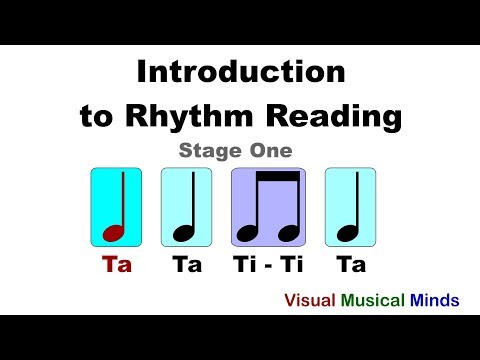
Consistent repetition of this five-step process transforms rhythmic reading from a frustrating chore into an automatic reflex. Many educators recommend dedicating at least five to ten minutes per practice session exclusively to rhythm counting worksheets before moving on to repertoire or technique exercises.
Comparison of Note Values and Their Counting Syllables
Understanding the relationship between different note durations is essential for fluency in reading music theory rhythm worksheets. The table below breaks down the hierarchy of common note values, their duration relative to a whole note, and the syllables typically used for verbal counting.
| Note Name | Beats in 4/4 Time | Fraction of Whole Note | Syllable System |
| Whole Note | 4 | 1 | “taaaa” |
| Half Note | 2 | 1/2 | “taa” |
| Quarter Note | 1 | 1/4 | “ta” |
| Eighth Note | 1/2 | 1/8 | “ti-ti” |
| Sixteenth Note | 1/4 | 1/16 | “tiki-tiki” |
| Dotted Quarter Note | 1.5 | 3/8 | “ta-ki-ti” |
| Triplet Quarter Notes | 1 (shared) | 1/3 each | “tri-pl-et” |
As you can see from this basic rhythms counting music theory sheet reference chart, each step up or down in duration represents a doubling or halving of the time value. This pattern is consistent across all standard Western notation and serves as a reliable framework when you encounter unfamiliar rhythms on a worksheet.
The dotted note concept is one of the most common stumbling blocks for beginners. When a dot is placed after a note, it adds half of the original note’s value. So a dotted quarter note equals one beat plus half of one beat, giving you one and a half beats total. Music theory sheets for rhythm often include dedicated exercises on dotted rhythms because they appear so frequently in real-world repertoire.

Intermediate Concepts: Ties, Beams, and Syncopation
Once you have mastered the basic note values and can count simple patterns accurately, it is time to tackle intermediate concepts that frequently appear on advanced rhythm counting music theory sheets.
Ties Across the Barline
A tie connects two notes of the same pitch, combining their durations into a single sustained note that spans across measure boundaries. Unlike a dot, which adds duration to a single note, a tie extends a note over two separate rhythmic units. On a music theory rhythm worksheet, ties are represented by a curved line connecting the noteheads rather than a straight beam or stem.
Beaming and Grouping
Beams connect eighth notes, sixteenth notes, and shorter values into single visual units that correspond to beat groupings. Proper beaming makes it significantly easier to identify where the beats fall within a measure. When you practice with music theory sheet rhythm counting exercises, pay close attention to how beams align with the beat structure dictated by the time signature.
Syncopation and Off-Beat Accents
Syncopation occurs when the rhythmic emphasis falls on normally weak beats or between beats. This is the rhythmic engine behind jazz, funk, reggae, and countless pop music styles. Counting syncopated rhythms requires you to internalize the “and” counts—the subdivisions between the main beats—as legitimate rhythmic destinations rather than mere transitions between beats. Basic rhythms music theory sheets introduce syncopation gradually, starting with simple off-beat eighth notes and progressing to complex patterns involving ties and rests on strong beats.
Expert Tips for Getting the Most from Rhythm Worksheets
Not all practice sessions with basic rhythms counting music theory sheets are created equal. The way you approach these exercises determines whether you build lasting rhythmic competence or simply go through the motions. Here are expert strategies that produce measurable results.
- Speak the rhythm before you play it. Verbalizing syllables activates the language centers of your brain and creates a stronger memory trace than silent reading alone.
- Start painfully slow. Set the metronome to a tempo where you can count every single subdivision without rushing. Speed comes from accuracy, not the other way around.
- Vary your counting system. Some educators use numbers (1, 2, 3, 4), others use solfège (ta, ti-ti), and some use a hybrid approach. Experiment with multiple systems to find what clicks for you.
- Practice with your eyes closed. After reading a rhythm pattern a few times, close your eyes and count it aloud. This tests whether you have internalized the rhythm or are merely decoding symbols visually.
- Combine rhythm practice with your instrument. Isolating rhythm on a worksheet is valuable, but the ultimate goal is transfer. Play each counted pattern on your instrument immediately after speaking it to build the connection between brain, voice, and fingers.
- Use blank worksheets to create your own exercises. Drawing your own rhythmic patterns reinforces note recognition and gives you creative ownership over your learning process.
These strategies work because they engage multiple learning modalities simultaneously—visual, auditory, kinesthetic, and verbal. When you combine rhythm counting worksheets with active vocalization and instrumental application, you create neural pathways that are far more durable than those formed by passive reading alone.
Common Mistakes to Avoid When Counting Rhythms from Music Theory Sheets
Even dedicated students fall into predictable traps when working with basic rhythms counting music theory sheets. Being aware of these mistakes helps you correct them before they become ingrained habits.
- Rushing the subdivisions. Eighth notes and sixteenth notes tend to compress toward the quarter notes when students feel pressure to keep up with the tempo. Always maintain the full value of every note.
- Ignoring rests. Silence is a rhythmic event just as much as sound is. Count the duration of rests aloud to maintain accurate internal pulse.
- Confusing dotted notes with tied notes. A dot extends the original note by half its value; a tie extends it by the full value of the second note. These produce entirely different durations.
- Counting without a beat anchor. Always establish where beat one falls before attempting complex patterns. Without a fixed reference point, your counting will drift and become unreliable.
- Skipping the subdivision counting. Even when a piece contains only quarter and half notes, mentally subdividing the beats into smaller units builds the precision needed for faster tempos later.
Conclusion: Building Lifelong Rhythmic Fluency
Mastering basic rhythms counting music theory sheets is not a quick task, but it is one of the most rewarding investments you can make as a musician. The foundational skills you build through consistent rhythm practice transfer to every genre, every instrument, and every level of complexity. Whether you are working through a simple music theory rhythm worksheet for the first time or tackling syncopated patterns on an advanced music theory sheet rhythm counting exercise, the principles remain the same: identify the beat, subdivide accurately, vocalize clearly, and practice with intention.
Remember that rhythm is a physical skill as much as a cognitive one. Your body needs to feel the pulse, not just your brain needs to understand it. Combine written exercises with clapping, conducting, and instrumental practice, and you will develop a rhythmic precision that sets you apart from musicians who rely solely on instinct or imitation.
Frequently Asked Questions
What is the best way to teach a child to count basic rhythms on a music theory sheet?
The most effective approach is to start with body percussion—clapping, stomping, and patting knees—before introducing an instrument. Use the “ta” and “ti-ti” syllable system for quarter and eighth notes, and keep the time signature simple (2/4 or 4/4). Children retain rhythm concepts more effectively when they associate sounds with physical movement. Reinforce learning with colorful music theory rhythm worksheets that use visual cues like animals or shapes to represent different note values.
How long does it take to become proficient at counting rhythms from a music theory sheet?
With consistent daily practice of 10 to 15 minutes, most students develop solid rhythmic reading skills within four to six weeks. Proficiency—meaning the ability to sight-read unfamiliar basic rhythms counting music theory sheets accurately at performance tempo—typically takes three to six months of dedicated work. The timeline varies significantly based on prior musical experience, the complexity of the worksheets used, and the frequency of practice sessions.
Can I learn rhythm counting without knowing how to read sheet music pitches?
Absolutely. Rhythm and pitch are independent dimensions of musical notation. You can work entirely with music theory sheets focused on rhythm that present rhythmic patterns without any reference to the staff or pitch. Many educators isolate rhythm training for weeks before introducing note-reading on the staff, because a strong rhythmic foundation makes pitch-reading easier later on.
What is the difference between a beat and a subdivision when counting rhythms?
A beat is the primary unit of pulse defined by the time signature—it is the “one” you feel when tapping your foot. A subdivision is a smaller division of that beat that fills in the gaps between main beats. In 4/4 time, quarter notes are the beats, while eighth notes and sixteenth notes are subdivisions. Understanding this distinction is critical for reading any rhythm counting worksheet accurately and for developing the internal pulse that keeps ensemble playing tight and expressive.
Are dotted rhythms more common in certain musical genres than others?
Yes, dotted rhythms are particularly prevalent in classical music from the Baroque and Romantic periods, where they create the characteristic lilt of dance forms like the gavotte and the minuet. In jazz and swing music, dotted eighth-note followed by a sixteenth-note patterns form the basis of syncopated phrasing. Music theory sheets for rhythm counting that include dotted note exercises prepare students for these genre-specific rhythmic conventions and expand their overall fluency as rhythmic readers.