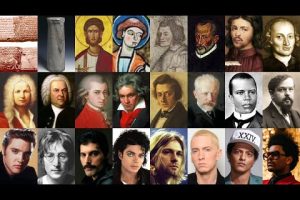
When you trace the thread of human creativity through the centuries, few phenomena reveal as much about our species as music. The story of evolution music is not just about sound—it is about how rhythm, melody, and harmony have adapted, mutated, and thrived across cultures, technologies, and generations. Whether you are a curious listener, an aspiring producer, or a seasoned composer, understanding the evolutionary arc of music opens up a richer, more nuanced way of hearing the world around you. This guide dives deep into what evolution music truly means, where it came from, how it works, and why it matters more than ever in today’s rapidly changing sonic landscape.
What Is Evolution Music?
Evolution music refers to the concept of how musical styles, forms, instruments, and listening habits have developed over time through a process of cultural adaptation and innovation. Much like biological evolution, musical evolution involves variation, selection, and retention—ideas that resonate with audiences tend to persist, while those that do not fade into obscurity. This framework applies across every genre, from ancient choral traditions to modern algorithmic composition. The term also intersects with generative and evolutionary music, a computational approach where algorithms simulate natural selection to create novel musical pieces. Whether you are exploring the lineage of Western classical music or the rise of Afrobeat and electronic dance music, the evolutionary lens gives you a powerful way to understand change over time.
The History and Origins of Music Evolution

The roots of evolution music stretch back tens of thousands of years. Early humans used rhythmic patterns, vocalizations, and simple percussion instruments made from bones, stones, and hollow logs. These primal sounds served social, spiritual, and communicative functions—bonding communities and marking significant life events.
Prehistoric and Ancient Music
Archaeological discoveries, such as the Divje Babe flute carved from a cave bear femur, suggest that music predates recorded history. In ancient civilizations like Mesopotamia, Egypt, Greece, and China, music evolved alongside writing systems and religious practices. The Greeks formalized scales, modes, and the mathematical relationships between pitches—laying the groundwork for Western music theory.
Medieval, Renaissance, and Baroque Periods
During the Medieval era, Gregorian chant dominated sacred spaces, and polyphony began to emerge as multiple independent melodic lines intertwined. The Renaissance brought richer harmonies and secular themes, while the Baroque period introduced complex counterpoint, ornate ornamentation, and the birth of opera. Each era was a branching path in the evolutionary tree of music.
The Classical and Romantic Eras
The Classical period refined structure and form—think Mozart and Haydn—while the Romantic era exploded with emotional intensity and harmonic experimentation led by Beethoven, Wagner, and Chopin. These shifts were not random; they were driven by cultural upheaval, technological advances in instrument manufacturing, and the tastes of patronage systems.
Key Characteristics of Evolution Music
What makes evolution music distinct from static musical traditions? Several defining characteristics set it apart:
- Adaptation: Musical forms respond to the cultural and technological environments they inhabit, evolving to suit new contexts.
- Variation: Innovation happens through experimentation—new scales, rhythms, timbres, and production techniques constantly emerge.
- Selection Pressure: Audiences, critics, and market forces act as selectors, determining which innovations survive and spread.
- Mutation: Cross-genre pollination—such as jazz influencing hip-hop or electronic music reshaping rock—creates entirely new branches.
- Retention: Core elements like rhythm and tonal harmony persist even as surface-level styles change dramatically.
Evolution Music Genres and Their Lineages
Understanding the genealogy of popular genres reveals just how interconnected musical evolution truly is. Every genre you love today is a descendant of earlier forms that adapted to new social realities.
From Blues to Rock to Metal
The blues emerged from African American spirituals and work songs in the Deep South. Electric blues electrified the sound and gave rise to rock and roll in the 1950s. Rock then splintered into countless subgenres, including heavy metal, punk, and alternative rock—each one pushing the boundaries of distortion, tempo, and lyrical content.
From Jazz to Hip-Hop to Electronic Dance Music
Jazz introduced improvisation and complex harmonies to popular music. Funk and soul carried those innovations forward, and hip-hop emerged from block parties in the Bronx, layering spoken word over breakbeats. Meanwhile, electronic dance music evolved from synthesizer experiments in the 1970s and 1980s into a global phenomenon with genres like techno, house, drum and bass, and ambient.
World Music Traditions in Flux
Music evolution is not limited to the West. Afrobeat blended West African rhythms with jazz and funk. Reggae emerged from ska and rocksteady in Jamaica. K-pop absorbed pop, hip-hop, R&B, and EDM influences from around the globe. Each tradition represents an evolutionary response to cultural exchange, migration, and technological change.
Evolution Music vs Traditional Music: A Comparison
Comparing traditional music with evolutionary music practices highlights how the creative process has changed while honoring foundational principles.
| Aspect | Traditional Music | Evolution Music |
| Creation Method | Composed by hand, performed by trained musicians | Often involves algorithmic generation, digital tools, and iterative design |
| Instrumentation | Acoustic and organic instruments | Electronic, hybrid, and software-based instruments |
| Audience Role | Passive listening in concert settings | Interactive, participatory, and algorithmically curated experiences |
| Innovation Pace | Gradual, spanning decades or centuries | Rapid, driven by technology and global connectivity |
| Accessibility | Limited by training, geography, and resources | Highly accessible through digital platforms and AI tools |
| Preservation | Oral traditions, notation, archival recordings | Digital archives, cloud storage, streaming platforms |
How Evolution Music Is Created: Tools and Techniques
Modern creators have at their disposal an extraordinary toolkit for advancing evolution music. Whether you are a beginner experimenting with loops or an advanced composer building generative systems, the following tools and techniques are essential.
Digital Audio Workstations (DAWs)
Platforms like Ableton Live, Logic Pro, and FL Studio allow producers to layer sounds, manipulate samples, and experiment with arrangement in ways that were impossible a generation ago. These DAWs serve as the modern workshop for musical evolution.
Algorithmic and Generative Composition
Evolutionary music algorithms use principles inspired by Darwinian natural selection. A population of musical phrases is generated, “fitness” criteria evaluate their appeal, and the best candidates are combined and mutated to produce new compositions. Tools like Evomusic and Sonic Pi make this accessible to curious learners.
AI-Assisted Music Creation
Artificial intelligence models trained on vast datasets can generate melodies, harmonies, and full arrangements. While AI does not replace human creativity, it accelerates the evolutionary process by suggesting unexpected combinations and variations that a human composer might not consider.
Sampling and Remixing Culture
Sampling is itself a form of musical evolution—taking existing fragments of sound and recontextualizing them into something entirely new. Hip-hop, plunderphonics, and mashup culture all thrive on this principle of adaptive reuse.
Practical Tips for Exploring Evolution Music
If you want to deepen your engagement with how music evolves, here are actionable strategies that work for every skill level.
- Study music history systematically. Read about each major period and genre, paying attention to what changed and why. Understanding the causes of musical shifts gives you predictive insight into future trends.
- Listen across genres intentionally. Set aside time to explore music outside your comfort zone. Cross-genre listening trains your ear to recognize the evolutionary threads that connect seemingly disparate styles.
- Experiment with production tools. Even if you do not become a full-time producer, learning to use a DAW or a generative music tool gives you firsthand appreciation for how modern music evolves at the studio level.
- Attend live events and festivals. Music evolution is most visible in real-time at festivals where genres collide and new subcultures form. Watching how audiences respond to novel sounds is a masterclass in musical selection pressure.
- Join communities of practice. Online forums, local jam sessions, and producer collectives accelerate your learning by exposing you to diverse approaches and feedback loops.
- Document your own creative experiments. Keep a journal or archive of your musical ideas. Tracking your own evolution as a creator mirrors the broader evolutionary process at a personal scale.
Expert Tip: The Role of Technology in Accelerating Musical Evolution
Technology has always been a catalyst for change in music—the printing press spread notation, the phonograph preserved performances, and the synthesizer opened entirely new timbral territories. Today, machine learning, spatial audio, and immersive formats like VR concerts are the next frontier. Staying informed about these developments keeps you at the forefront of evolution music rather than passively consuming it.
Why Evolution Music Matters Today
The pace of musical evolution has never been faster. Streaming platforms expose listeners to global sounds instantly. Social media allows niche genres to find audiences worldwide within weeks. AI tools lower barriers to entry, enabling anyone with a laptop to produce professional-quality music. At the same time, questions about originality, authorship, and cultural appropriation become more urgent as evolution music blurs traditional boundaries.
Understanding evolution music is not just an academic exercise—it is a practical necessity for anyone who creates, curates, or consumes music in the 21st century. It helps you appreciate why certain sounds feel familiar, why others feel revolutionary, and how the sounds of tomorrow are already being shaped by the innovations of today.
Conclusion

Evolution music is a living, breathing process that connects ancient human rituals to cutting-edge algorithmic composition. From the first bone flutes in prehistoric caves to AI-generated symphonies in modern studios, the story of musical evolution is the story of human creativity itself—constantly adapting, branching, and reaching for new expression. By studying this evolution, engaging with diverse genres, and embracing new tools and techniques, you become an active participant in the ongoing story of how music changes and endures. The next chapter of this evolutionary journey is being written right now, and the most exciting sounds are the ones we have not yet heard.
Frequently Asked Questions About Evolution Music
1. What is evolutionary music theory and how does it differ from traditional music theory?
Evolutionary music theory applies principles from evolutionary biology—such as variation, mutation, selection, and fitness—to the study and creation of music. While traditional music theory focuses on harmony, counterpoint, form, and notation, evolutionary music theory examines how musical ideas change over time, how they compete for listener attention, and how successful patterns propagate across cultures and generations.
2. Can AI truly create evolution music, or is it just mimicking existing patterns?
AI can generate novel musical outputs by learning statistical patterns from large datasets, but it currently lacks intentionality and emotional lived experience. The best results come from human-AI collaboration, where the algorithm provides unexpected variations and the human artist makes creative decisions about which directions to pursue. AI is a powerful tool in the evolution music toolkit, but it works best as a collaborator, not a replacement.
3. How has streaming technology changed the evolution of music genres?
Streaming platforms like Spotify, Apple Music, and Bandcamp have dramatically accelerated genre evolution by making it easy for listeners to discover niche sounds from around the world. This democratization of access has led to faster cross-pollination between genres, the rise of micro-genres, and shorter innovation cycles. An emerging subgenre can now build a global audience in months rather than decades.
4. What role does cultural exchange play in the evolution of world music?
Cultural exchange is one of the most powerful drivers of music evolution. When musicians from different traditions collaborate, they blend scales, rhythms, timbres, and compositional techniques that would never have met in isolation. This cross-cultural fusion has produced genres like Afrobeat, bossa nova, reggaeton, and fusion jazz—each representing a unique evolutionary branch born from global dialogue.
5. How can a beginner start exploring evolutionary music creation?
Start by familiarizing yourself with a digital audio workstation such as Ableton Live or GarageBand. Experiment with loops, samples, and generative plugins to understand how sounds combine and evolve. Read about music history to understand the lineage of genres you enjoy. Join online communities like r/WeAreTheMusicMakers or producer forums to share work and receive feedback. The key is consistent, curious experimentation.