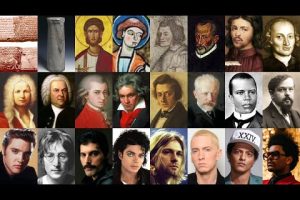
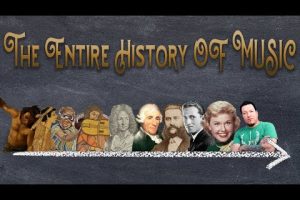
The journey through the eras of classical music is one of the most rewarding paths any music enthusiast can explore. From the haunting chant of medieval monks to the electrifying experimentalism of the twentieth century, Western classical music spans over a thousand years of human creativity, cultural revolution, and artistic genius. Whether you are a curious beginner wondering where to start or an intermediate listener looking to deepen your understanding, this guide walks you through every major classical music period with the detail and context you need. Understanding these musical periods isn’t just about memorizing dates — it’s about learning to hear the world through the ears of composers who lived in vastly different times, places, and philosophical landscapes.
The Medieval Era (c. 500–1400)
The earliest chapter in the history of classical music begins in the Medieval period, a time when the Catholic Church served as the primary patron of musical composition and performance. Music during this era was almost entirely vocal, monophonic, and deeply rooted in sacred liturgy. If you are exploring classical music periods for the first time, this is where the foundation was laid.
Key Characteristics of Medieval Music
- Monophonic texture: Music consisted of a single melodic line without harmonic accompaniment
- Gregorian Chant: The most iconic form, featuring free-flowing, sacred Latin melodies sung in unison
- Modal system: Composers used church modes (Dorian, Lydian, Mixolydian, and others) rather than modern major and minor scales
- Oral tradition: Much music was passed down through performance rather than written notation
- Rhythmic freedom: Unlike later eras, medieval music often followed the natural rhythm of the text

Notable figures from this period include Hildegard von Bingen, whose visionary compositions pushed the boundaries of medieval sacred music, and Guillaume de Machaut, a French composer who bridged the medieval and early Renaissance worlds. The development of musical notation during this time — particularly the work of Guido d’Arezzo in the eleventh century — was arguably one of the most important breakthroughs in music history, allowing compositions to be preserved and shared across generations.
The Renaissance Era (c. 1400–1600)
The Renaissance period marked a dramatic transformation in European art and culture, and classical music was no exception. As wealth grew and the printing press emerged, music became more accessible, more complex, and increasingly secular. This era saw the flowering of polyphony — the art of weaving multiple independent melodic lines together into rich, interlocking textures.
What Defines Renaissance Music?
- Polyphonic complexity: Composers like Palestrina and Josquin des Prez mastered intricate counterpoint, where each voice moved with independence and purpose
- Greater use of secular forms: Madrigals, chansons, and secular songs flourished alongside sacred works
- Expansion of vocal ranges: Music began to explore a wider palette of vocal timbres and combinations
- Printed music: The invention of the printing press by Gutenberg enabled widespread distribution of compositions
- Text painting: Composers began using musical gestures to reflect the emotional content of the lyrics
The Renaissance is often considered a golden age of a cappella choral music, but it also laid the groundwork for instrumental development that would accelerate in the centuries to come. If you want to experience the beauty of this era, start with Josquin des Prez’s “Ave Maria” or Palestrina’s Pope Marcellus Mass — both are masterclasses in balance and clarity.
The Baroque Era (c. 1600–1750)
The Baroque period is arguably the era where many modern listeners first encounter classical music in a recognizable form. This was the age of dramatic expression, ornate decoration, and bold innovation. The word “baroque” itself originally carried a negative connotation, suggesting something irregular or overly elaborate — but today, baroque music is celebrated for its emotional intensity and structural ingenuity.
Hallmarks of the Baroque Period
- Basso continuo: A continuous bass line played by harpsichord and cello or similar instruments, providing harmonic foundation
- Terraced dynamics: Sudden shifts between loud and soft volumes rather than gradual crescendos
- Ornamentation: Elaborate trills, mordents, and grace notes added expressive flair to melodies
- Opera emerges: Claudio Monteverdi and later Handel and Vivaldi helped establish opera as a major art form
- Concerto and fugue forms: These structural frameworks became central to baroque composition
The Baroque era produced some of the most iconic composers in history: Johann Sebastian Bach, whose intricate fugues and cantatas represent the pinnacle of contrapuntal writing; Antonio Vivaldi, famous for “The Four Seasons” and his virtuosic violin concertos; and George Frideric Handel, whose operas and oratorios — especially the Messiah — remain staples of concert halls worldwide.
The Classical Era (c. 1750–1820)
Following the ornate baroque period, the Classical era brought a renewed emphasis on clarity, balance, and structural elegance. Think of this as the moment when classical music shifted from complex polyphony to cleaner, more transparent textures. Sonata form became the dominant structural framework, and the symphony, string quartet, and piano sonata emerged as key genres.
What Sets Classical Era Music Apart?
- Clear melodic lines: Themes were memorable, singable, and easily distinguished from accompaniment
- Homophonic texture: A melody over chordal accompaniment replaced the dense polyphony of earlier periods
- Formal clarity: Sonata-allegro, rondo, and theme-and-variations forms provided predictable yet elegant structures
- Orchestral standardization: The modern orchestra began to take shape with standardized instrument families
- Emotional restraint: Compared to what came later, classical era music prized elegance over raw emotional intensity

The towering figures of this period are Wolfgang Amadeus Mozart, whose prolific output and genius for melody remain virtually unmatched, and Ludwig van Beethoven, who began in the classical tradition but pushed its boundaries so forcefully that he effectively heralded the Romantic era. Joseph Haydn, often called the “Father of the Symphony” and “Father of the String Quartet,” also deserves enormous credit for shaping the formal language of the period.
The Romantic Era (c. 1820–1900)
If the Classical era valued balance and restraint, the Romantic era embraced passion, individualism, and emotional extremes. This was the period when composers became cultural celebrities, when national identity fueled musical styles, and when orchestras grew dramatically in size and power. For many listeners, Romantic-era music is the emotional heart of the entire classical tradition.
Defining Features of Romantic Music
- Expressive dynamics: Sweeping crescendos, sudden pianissimos, and dramatic contrasts became standard tools
- Expanded harmony: Composers pushed tonal boundaries with chromaticism, unexpected modulations, and richer chord vocabulary
- Nationalism: Composers like Dvořák, Grieg, and Bartók wove folk melodies and national identities into symphonic works
- Program music: Instrumental pieces told stories or depicted scenes — think of tone poems and symphonic narratives
- Virtuoso performance: Soloists like Franz Liszt and Niccolò Paganini became rock-star-like figures in their time
The Romantic era gave us some of the most beloved works in the entire repertoire: Brahms’ symphonies, Tchaikovsky’s ballets, Wagner’s monumental operas, Chopin’s poetic piano pieces, and Mahler’s vast, soul-searching symphonies. This period also saw the rise of the virtuoso performer as a central figure, forever changing the relationship between composers and audiences.
The Modern and Contemporary Era (c. 1900–Present)
The twentieth century shattered many of the conventions that had defined Western classical music for centuries. Composers experimented with atonality, serialism, minimalism, electronic sounds, and cross-cultural influences. The modern era is remarkably diverse, encompassing everything from the brooding intensity of late Romanticism’s final echoes to the radical innovations of contemporary avant-garde music.
Key Movements Within the Modern Era
- Impressionism: Claude Debussy and Maurice Ravel created atmospheric, color-driven music that blurred traditional harmonic boundaries
- Atonality and Serialism: Arnold Schoenberg and his followers abandoned traditional tonality entirely, creating twelve-tone and serial compositions
- Neoclassicism: Igor Stravinsky and others returned to classical forms and clear textures while employing modern harmonic language
- Minimalism: Composers like Philip Glass, Steve Reich, and Terry Riley built music from repetitive, slowly evolving patterns
- Contemporary and experimental music: Living composers continue to push boundaries with electronic music, multimedia, spectralism, and global fusion
Modern classical music can feel challenging, but it rewards deep listening. Start with Debussy’s “Clair de Lune” for accessible impressionism, Stravinsky’s “The Rite of Spring” for a shock of rhythmic and harmonic energy, or John Adams’ “Short Ride in a Fast Machine” for a taste of minimalist excitement.
Comparison of Classical Music Eras
Understanding how each period differs from the others is one of the best ways to build your listening vocabulary. Here is a quick-reference comparison:
| Era | Time Period | Key Texture | Dominant Forms | Signature Emotion |
| Medieval | 500–1400 | Monophonic | Gregorian chant, motet | Sacred reverence |
| Renaissance | 1400–1600 | Polyphonic | Madrigal, mass, motet | Elegant balance |
| Baroque | 1600–1750 | Homophonic & polyphonic | Opera, concerto, fugue | Dramatic grandeur |
| Classical | 1750–1820 | Homophonic | Symphony, sonata, quartet | Clarity and elegance |
| Romantic | 1820–1900 | Homophonic & textural | Symphony, tone poem, art song | Passion and expressiveness |
| Modern/Contemporary | 1900–Present | Varied | Tone poem, minimalism, experimental | Innovation and exploration |
Tips for Exploring Classical Music Eras
Whether you are just beginning your journey or looking to refine your listening habits, these expert recommendations can help you get the most from each period:
- Start with landmark works: Instead of trying to listen to everything, begin with two or three defining pieces from each era and expand outward
- Listen actively: Spend at least one full listen per piece without distractions — try to identify the elements described in this guide
- Use quality recordings: Different interpretations reveal different facets of the same composition; compare versions by different orchestras and conductors
- Read program notes: Most concert halls and streaming platforms provide background information that deepens your understanding
- Attend live performances: The energy and acoustics of a live symphony orchestra provide an experience that recordings cannot fully replicate
Conclusion
The eras of classical music offer an inexhaustible well of beauty, complexity, and human expression. From the austere chant of the medieval monks to the radical experimentation of contemporary composers, each period reflects the values, struggles, and aspirations of its time. By understanding these classical music periods not as isolated chapters but as interconnected chapters in a single, evolving story, you develop a richer, more nuanced listening experience. The best approach is always the same: start where curiosity leads you, listen with patience, and let the music speak on its own terms. The more you explore, the more you will discover that every era offers something irreplaceable — and that the best era of classical music is always the next one waiting for you to press play.
Frequently Asked Questions
What are the six main eras of classical music?
The six widely recognized classical music periods are the Medieval era (500–1400), Renaissance (1400–1600), Baroque (1600–1750), Classical (1750–1820), Romantic (1820–1900), and Modern/Contemporary (1900–present). Each period brought distinct stylistic developments, compositional techniques, and cultural influences that shaped the evolution of Western art music.
Which classical music era is the easiest for beginners to understand?
Most educators recommend starting with the Classical and Romantic eras because their music features clear melodies, structured forms, and emotionally accessible themes. Composers like Mozart, Beethoven, and Tchaikovsky are excellent entry points, and their works frequently appear in film, television, and popular culture, making them familiar even to newcomers.
How can I tell the difference between Baroque and Classical music?
Baroque music tends to be more ornate, complex, and rhythmically driven, with heavy use of basso continuo and polyphonic textures. Classical music, by contrast, emphasizes clarity, balanced phrases, and homophonic textures where a single melody sits above chordal accompaniment. If the music sounds heavily decorated and contrapuntal, it is likely Baroque; if it sounds structured, elegant, and transparent, it is likely Classical.
Why did Romantic-era composers write longer and more emotionally intense music?
The Romantic era coincided with sweeping cultural shifts toward individualism, nationalism, and emotional expression. Industrialization expanded orchestras, the middle class grew as concert audiences, and composers increasingly viewed themselves as visionary artists rather than servants of the church or court. These factors combined to produce works of unprecedented scale, emotional depth, and personal expression.
Is contemporary classical music really that different from Romantic music?
Yes, contemporary and Romantic music differ fundamentally in philosophy and technique. While Romantic composers worked within and pushed the boundaries of tonal harmony, many contemporary composers have moved beyond tonality entirely, embracing atonality, minimalism, aleatoric techniques, and electronic sound. That said, some modern composers like John Williams and Arvo Pärt maintain tonal traditions while incorporating new ideas, showing that the boundaries are often more porous than strict categorization suggests.