


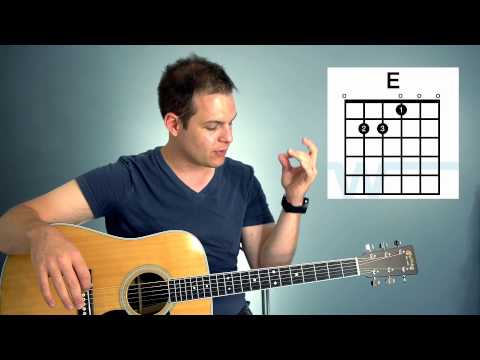
If you are learning guitar, piano, ukulele, or any fretted or keyboard instrument, understanding A chords is one of the most foundational skills you can develop. The letter “A” represents a root note that anchors a wide family of chords, each carrying its own unique emotional color, tension, and harmonic function. Whether you are strumming your first open-position A major chord on a Friday evening or diving into extended jazz voicings on a grand piano, the A chord family is everywhere in modern music — from pop and rock to blues, country, and R&B. This guide breaks down everything you need to know about A chords, starting with the simplest triads and advancing all the way to sophisticated altered and extended voicings that professional musicians use every day.
What Exactly Is an A Chord?
At its core, a chord is a group of three or more notes played simultaneously. An A chord is any chord built on the root pitch A, which sits at the second-lowest key on a standard piano and corresponds to the second fret on the bottom string of a guitar in standard tuning. The most basic form of an A chord is a triad — a three-note structure made up of the root, a third, and a fifth. From that simple framework, musicians build an enormous range of sounds by altering intervals, adding extensions, and rearranging voicing positions.
What makes the A root so versatile is its position across the musical spectrum. It sits comfortably in both the bass and mid-range registers, which means it sounds warm and full on most instruments. It also sits at a natural resonance point on stringed instruments, where open strings and fretted notes blend cleanly without excessive buzzing or muting — a huge advantage for beginners working on their first chord shapes.
A Major Chord — The Foundation
The A major chord (often written simply as A or Amaj) is the entry point for most guitar and piano students. It contains three notes: A (root), C# (major third), and E (perfect fifth). The interval between A and C# is four semitones, giving the chord its bright, uplifting character that defines the major quality.
Here is how the A major chord is commonly played across different instruments:
- Guitar (open position): Place your index finger on the 2nd fret of the D string, your middle finger on the 2nd fret of the G string, and your ring finger on the 2nd fret of the B string. Strum from the A string downward.
- Piano: Play the A key, the C# key, and the E key simultaneously with the right hand.
- Ukulele: Barre across the top four strings at the second fret, or use the open A shape with a barre on the G and C strings at the second fret.
The open-position A major chord is one of the first chords most players memorize because it requires minimal finger stretching and aligns naturally with standard tuning. From an SEO and search perspective, this is exactly what beginners type into Google when they search for “how to play A chord guitar” — making it the most commercially relevant variation of the A chord.
Common Mistakes When Learning A Major
Even though the A major chord looks simple on paper, beginners often run into specific issues:
- Muting the high E string: The index finger on the D string can accidentally touch the thin high E string, dulling the sound.
- Pressing too hard: Excessive finger pressure causes hand fatigue and can bend the strings sharp, throwing off intonation.
- Landing between frets: Fingers must press directly behind the metal fret wire for a clean, buzz-free tone.
A Minor Chord — The Emotional Counterpart

When you lower the third of the A major chord by one semitone, you get the A minor chord (Am). The notes are A, C (minor third), and E (perfect fifth). That single note change — C# becoming C natural — transforms the chord from bright and triumphant to somber and introspective. The A minor chord is the relative minor of C major, which means they share the same key signature (no sharps or flats). This relationship is one of the most commonly tested topics in music theory exams and ear-training exercises.
| Chord | Root | Third | Fifth | Quality | Sound |
| A Major | A | C# | E | Major | Bright, uplifting |
| A Minor | A | C | E | Minor | Dark, melancholic |
The A minor chord appears in iconic songs across virtually every genre. Think of “Comfortably Numb” by Pink Floyd, “House of the Rising Sun” by The Animals, or “No Woman, No Cry” by Bob Marley. Mastering the Am shape unlocks hundreds of songs and gives players access to one of the most emotionally resonant chord qualities in Western music.
A Chord Variations for Intermediate Players
Once you have the major and minor triads under your fingers, it is time to explore richer, more textured voicings. These intermediate A chord variations add harmonic complexity without demanding advanced technique, making them ideal for singer-songwriters and self-taught players looking to elevate their sound.
A7 — The Bluesy Dominant
The A dominant seventh chord (A7) adds a flat seventh interval to the A major triad. The notes are A, C#, E, and G. The addition of the G natural creates a tension that naturally resolves to a D major or D minor chord, which is why A7 is a staple in blues progressions, twelve-bar blues forms, and classic rock riffs.
Am7 — The Jazzy Minor Seventh
The A minor seventh chord (Am7) stacks a minor third, perfect fifth, and minor seventh above the root. Its notes are A, C, E, and G. Am7 is one of the most frequently used chords in neo-soul, R&B, and contemporary jazz because it sounds smooth and sophisticated without the dissonance of a dominant seventh.
Amaj7 — The Lush Major Seventh
For a dreamy, cinematic quality, try the A major seventh chord (Amaj7), which contains A, C#, E, and G#. The major seventh interval (G#) sits only a half step below the root A, creating a warm, almost fragile sound that is beloved in bossa nova, soft rock, and ambient music.
A Chord Progressions That Sound Great
Knowing individual chords is only half the equation. The real magic happens when you connect them into A chord progressions — sequences that create a sense of motion, resolution, and emotional arc. Here are some of the most widely used progressions built around the A root:
- I – IV – V – I in A major: A → D → E → A. This is the backbone of countless rock, country, and pop songs.
- I – V – vi – IV in A major: A → E → F#m → D. Known as the “four-chord progression,” it appears in hits ranging from Taylor Swift to Ed Sheeran.
- i – VII – VI – VII in A minor: Am → G → F → G. A dramatic, cinematic progression favored in film scores and alternative rock.
- ii – V – I in A major (jazz context): Bm7 → E7 → Amaj7. This turnaround is the foundation of jazz harmony and reharmonization.
Expert Tip: Voice Leading Matters
Professional musicians pay close attention to voice leading — the smooth movement of individual notes between chords. When transitioning from A major to D major, for example, the C# on the third of the A chord can slide up to D, the root of the next chord, creating a seamless connection. This small detail is what separates a competent-sounding strum from a polished, studio-quality performance.
Advanced A Chord Voicings for Seasoned Players
For intermediate-to-advanced musicians, the A chord family opens the door to extended and altered chords that add professional-level sophistication to your playing:
- A9: A, C#, E, G, B — adds the ninth (B) for a rich, jazzy texture.
- A11: A, C#, E, G, B, D — the full extended minor voicing used in funk and jazz.
- Amaj9: A, C#, E, G#, B — the major ninth voicing that sounds lush and modern.
- A7#9 (“Hendrix chord”): A, C#, E, G, C## — the famous dominant sharp-ninth chord that Jimi Hendrix made iconic.
- Asus2 and Asus4: Suspended variations that replace the third with either the second (B) or fourth (D), creating tension that resolves back into A major or A minor.
These advanced voicings are especially useful for chord melody arrangements, where a solo guitarist plays both the melody and harmonic accompaniment simultaneously. Learning to voice the A root in different positions across the fretboard — rather than relying solely on open-position shapes — is a critical step toward fretboard mastery and improvisational fluency.
A Chords on Different Instruments
The A chord family translates across a wide range of instruments, each offering a unique timbre and physical approach:
- Guitar: Open and barre chord shapes dominate; the A root sits naturally on the 5th string (5th fret) and the open 5th string.
- Piano: A chords are played with the right hand in triads or four-note voicings, while the left hand anchors the root or plays root-fifth-octave bass patterns.
- Ukulele: The smaller fretboard makes A chords especially accessible; the open A major shape is one of the first chords beginners learn.
- Mandolin and Banjo: Open A shapes leverage the double-string tuning, producing a bright, ringing tone perfect for bluegrass and folk music.
- Bass Guitar: A root notes on the open A string or first fret (A#/Bb) establish the harmonic foundation for entire bands and ensembles.

Practical Recommendations for Daily Practice
To build lasting fluency with A chords, consistency matters more than marathon sessions. Here are practical recommendations that experienced instructors give to their students:
- Use a metronome at 60 BPM. Switch between A major and A minor on every click. Focus on clean transitions, not speed.
- Practice chord changes in context. Play A → D → E → A in a loop until it feels automatic, then add a simple bass note pattern with your left hand on piano.
- Record yourself. Listening back reveals muting issues, uneven dynamics, and timing inconsistencies that are invisible in the moment.
- Learn songs, not just chords. Applying A chords to real music — like “Wonderwall” by Oasis (Em, G, D, A) or “Sweet Home Alabama” (D, C, G, D with an A at the end) — reinforces muscle memory far more effectively than isolated drills.
- Explore inversions. Play A/C# (first inversion) and A/E (second inversion) to understand how bass movement affects the emotional weight of a progression.
Conclusion
The A chord is far more than a single shape on a fretboard or a set of keys on a piano. It is a gateway into harmonic understanding, creative expression, and musical fluency. From the bright, open simplicity of A major to the lush complexity of Amaj9 and the raw blues energy of A7, this root note offers something for every skill level and musical style. By systematically working through the major and minor triads, exploring seventh and extended voicings, practicing meaningful progressions, and applying A chords to real songs, you will build a deep, practical understanding that serves you for years of playing and performing.
The key is to stay curious, practice with intention, and remember that every professional musician once started exactly where you are now — pressing their first A chord and wondering where the magic would take them.
Frequently Asked Questions
What is the easiest way to play an A chord on guitar for beginners?
The simplest A chord for beginners is the open-position A major chord. Place your index, middle, and ring fingers on the 2nd fret of the D, G, and B strings respectively, then strum from the A string downward. This shape requires only three fingers and avoids the high and low E strings, making it forgiving for new players who are still developing finger strength and precision.
What is the difference between A major and A minor?
The difference comes down to a single note: the third. A major contains C# (a major third above the root), while A minor contains C natural (a minor third). This one-semitone change completely alters the emotional quality of the chord, shifting it from bright and happy to dark and introspective.
Can I play A chords on a ukulele, and is it difficult?
Yes, A chords translate beautifully to the ukulele. The open A major shape is one of the easiest ukulele chords because the instrument’s four strings and nylon tuning make chord shapes compact and comfortable. Most beginners can play A and Am on a ukulele within their first practice session.
What songs use A chords prominently?
Many popular songs rely heavily on A chord progressions. “Wonderwall” by Oasis uses Em–G–D–A, “House of the Rising Sun” centers on Am, and “Sweet Home Alabama” features A as a resolution chord. Countless beginner guitar songs use A major as their primary chord, making it one of the most practical keys to learn first.
Do I need to learn barre chords to play A chords everywhere on the fretboard?
While open-position A chords are essential, barre chord shapes allow you to play A major, A minor, A7, and all other variations at any position on the fretboard. The A barre chord (root on the 6th string, 5th fret) is one of the most important shapes for intermediate guitarists because it unlocks the entire fretboard and enables smooth voice leading across all twelve keys.