


The AP Music Theory curriculum is one of the most rigorous and rewarding academic pathways available to high school students passionate about music. Whether you are a budding composer, an aspiring performer, or simply someone who wants to understand the inner workings of the music you love, this program offers a comprehensive framework that bridges the gap between casual listening and deep musicianship. In this guide, we will walk through every major component of the AP Music Theory course, explore how it is structured, discuss practical strategies for success, and answer the most frequently asked questions from students and educators alike.
What Is the AP Music Theory Curriculum?
The AP Music Theory curriculum, administered by the College Board, is a college-level course designed to develop students’ understanding of music theory fundamentals, harmonic practices, and analytical listening skills. It mirrors a first-semester college music theory course and covers everything from basic notation to advanced chromatic harmony. The curriculum is organized around several interconnected content areas that build on each other progressively throughout the academic year.
The course emphasizes musical fluency across multiple dimensions — written theory, aural skills, sight-singing, and analytical writing — ensuring students leave the program with a well-rounded skill set. This holistic approach is what distinguishes AP Music Theory from standard high school music electives or general music appreciation courses.
Core Content Areas of the AP Music Theory Course
The curriculum is divided into several thematic units that guide instruction and assessment. Each unit targets specific competencies that students must master.

1. Music Fundamentals and Notation
This foundational unit introduces students to the building blocks of written music. Topics include:
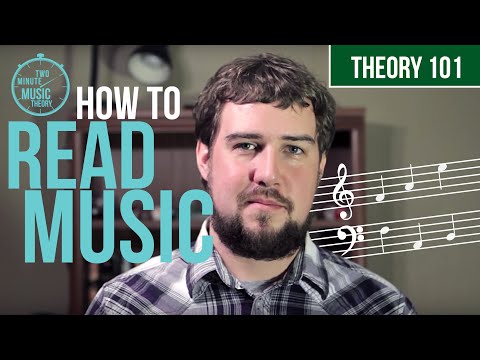
- Pitch notation on the treble and bass clefs
- Rhythmic values, time signatures, and meter
- Major and minor scales (including all forms of minor: natural, harmonic, and melodic)
- Interval identification by ear and in written form
- Key signatures and enharmonic equivalents
Students learn to read, write, and hear these elements with fluency, which serves as the scaffolding for everything that follows.
2. Harmony and Chord Progressions
Once fundamentals are solid, the curriculum moves into tonal harmony — arguably the most demanding and rewarding portion of the course. Students study:
- Triads and seventh chords in root position and inversions
- Diatonic chord functions in major and minor keys
- Common-practice voice leading rules
- Cadence types (authentic, plagal, half, deceptive)
- Chromatic harmony, including secondary dominants and modal mixture
The goal is not just memorization but genuine understanding of why certain chord progressions sound the way they do and how composers use harmonic motion to shape musical meaning.
3. Aural Skills and Ear Training
A significant portion of the AP Music Theory curriculum is devoted to developing auditory skills. Students practice:
- Melodic and harmonic dictation (writing down what they hear)
- Sight-singing from written notation
- Interval and chord recognition by ear
- Identifying rhythmic patterns and metric accents
These skills are tested extensively on the AP exam and are essential for any musician who wants to perform, compose, or arrange music at a high level.
4. Melody Writing and Composition
The curriculum also challenges students to create original music within established stylistic constraints. Students compose short melodies using specific melodic contour guidelines, rhythmic variety, and appropriate phrase structure. This compositional exercise reinforces theoretical knowledge by requiring students to apply it creatively rather than simply analyze existing works.
5. Music Analysis and Context
Students examine real musical scores from a variety of style periods, including Baroque, Classical, Romantic, and 20th-century works. They learn to identify harmonic techniques, formal structures, and stylistic characteristics. This analytical dimension connects theory to music history and develops critical listening skills that extend far beyond the classroom.
AP Music Theory Exam Format and Structure
Understanding the exam is crucial for any student preparing for the AP Music Theory curriculum. The exam is divided into two main sections:
| Section | Format | Weight |
| Section I | Multiple-choice questions (aural and non-aural) | 45% |
| Section II | Free-response: written theory, dictation, sight-singing | 55% |
The free-response section requires students to complete melodic dictation, harmonic dictation, figured bass realization, and composition of a melody given specific parameters. This makes the exam uniquely challenging compared to other AP subjects because it tests both conceptual knowledge and applied performance ability.
AP Music Theory vs. Other Music Courses
Many students and parents wonder how AP Music Theory compares to other available music courses in high school. Below is a brief comparison:
| Course | Focus | College-Level Equivalent | Exam Component |
| AP Music Theory | Theory, harmony, aural skills, analysis | First-semester college music theory | AP exam in May |
| General Music Appreciation | Survey of genres, listening, history | Music Humanities or Survey course | No standardized exam |
| Music Performance (Band/Orchestra/Chorus) | Performance technique, ensemble skills | Applied lessons or ensemble participation | Portfolio or performance-based (varies) |
| IB Music | Composition, analysis, performance, history | Introductory college music survey | IB written and performance exams |
The AP Music Theory curriculum stands out for its concentrated focus on theoretical and analytical skills. While performance-based courses develop technical and expressive abilities, AP Music Theory develops the intellectual framework that underpins all musical activity.
Tips for Success in AP Music Theory
Success in this course requires consistent effort and strategic practice. Here are some expert recommendations:
- Practice ear training daily. Even 10 to 15 minutes of interval recognition or dictation exercises can dramatically accelerate your progress. Apps like Tenuto, EarMaster, or functional ear trainer are excellent resources.
- Learn to sing. Sight-singing ability is not optional — it is a core component of both instruction and assessment. If you cannot sing confidently, start practicing now.
- Write out everything by hand. Copying musical examples, completing exercises on manuscript paper, and notating chord progressions by hand reinforces learning more effectively than digital input alone.
- Analyze scores actively. When you listen to a piece you enjoy, try to identify the key, the chord progression, and the phrase structure. This habit turns passive listening into active musicianship.
- Seek feedback on compositions. Share your written melodies and harmonic exercises with your teacher or a knowledgeable peer. Constructive critique is invaluable for growth.
Who Should Take AP Music Theory?
The AP Music Theory curriculum is ideal for students who:
- Plan to major in music, composition, or music education at the college level
- Want to place out of introductory music theory courses in college
- Are serious songwriters, arrangers, or composers
- Have a strong interest in understanding how music is constructed
- Want to deepen their listening and analytical skills for any musical context
While prior musical experience — such as playing an instrument or singing — is helpful, it is not strictly required. Students with a genuine curiosity about music and a willingness to work hard can succeed in this course. However, those with no prior musical background should be prepared for a steep learning curve, particularly in the aural skills component.
Resources and Study Materials
Several high-quality resources can supplement classroom instruction:
- Barron’s AP Music Theory — comprehensive review with practice exams
- The Musician’s Guide to Theory and Analysis — widely used college textbook aligned with AP content
- Khan Academy — free instructional videos on music fundamentals
- College Board AP Music Theory Course and Exam Description — the official curricular framework
- Musictheory.net — interactive exercises for notation, intervals, chords, and ear training
Conclusion
The AP Music Theory curriculum is a transformative educational experience that equips students with the knowledge, skills, and analytical mindset to engage with music on a profound level. From foundational notation to advanced chromatic harmony, from ear training to original composition, the course builds competencies that serve musicians throughout their lives — whether they pursue professional careers in music or simply become more informed and expressive listeners. For students willing to invest the time and effort, the rewards are substantial: a deeper connection to music, stronger college readiness, and a skill set that enriches every aspect of musical life.
Frequently Asked Questions
1. What are the prerequisites for enrolling in AP Music Theory?
Most schools recommend that students have basic familiarity with reading music notation and either perform on an instrument or sing. However, the College Board does not mandate formal prerequisites. Students who can identify pitches on a staff, understand simple rhythms, and are eager to learn are generally well-positioned to succeed.
2. How hard is the AP Music Theory exam compared to other AP exams?
The AP Music Theory exam is widely considered one of the more challenging AP subjects because it combines written analytical tasks with aural performance skills. Students must demonstrate proficiency in both theoretical knowledge and real-time listening, which requires dedicated practice throughout the course. However, motivated students who practice consistently often find it very manageable.
3. Can AP Music Theory credits replace college music requirements?
Many colleges and universities accept a qualifying AP Music Theory score (typically 4 or 5) for placement into second-semester music theory or to fulfill general music requirements. However, credit policies vary by institution, so students should always check with their target colleges before assuming credit transfer.
4. Is sight-singing really tested on the AP Music Theory exam?
Yes. Sight-singing is a critical component of the free-response section of the AP Music Theory exam. Students are given a melodic excerpt in written notation and must sing it accurately on solfège syllables or a neutral syllable within a limited preparation time. This skill is integrated into daily classroom practice throughout the curriculum.
5. Does AP Music Theory cover music from non-Western traditions?
The AP Music Theory curriculum is primarily rooted in Western tonal music of the Common Practice period (roughly 1600–1900). While some exposure to non-Western musical systems may appear in the course, the exam focuses on tonal harmony, voice leading, and analytical techniques derived from European art music traditions. Students interested in non-Western music theory may need to pursue additional study outside the AP framework.
6. How many hours of study are recommended for the AP Music Theory exam?
The College Board recommends approximately 90 to 120 hours of instruction for the AP Music Theory curriculum, which aligns with a full academic-year course. Students preparing independently should plan for at least 2 to 3 months of focused daily study that includes theory exercises, ear training, and practice exams.