


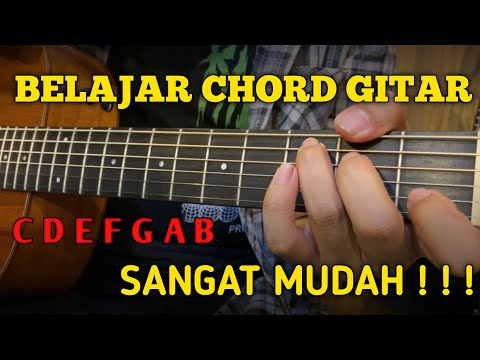
Whether you are picking up a guitar for the first time or sitting down at a piano keyboard wondering where to start, basic chords are the absolute foundation of your musical journey. Understanding how chords work—and how to play them fluently—opens up an entire universe of songs, creative expression, and musical confidence. In this comprehensive guide, we are going to go deep into what basic chords are, how they are constructed, which ones matter most, and how you can practice them effectively to build real, lasting skill. If you have ever wondered what the simplest way to start playing songs is, the answer almost always comes down to mastering a handful of essential chord shapes.
What Are Basic Chords, Exactly?
At their core, basic chords are groups of three or more notes played simultaneously that create a harmonic sound. Think of a chord as a mini-ecosystem of sound—each note inside it has a specific relationship to the others, and together they produce an emotional feeling that a single note alone never could. The word “chord” comes from the Latin chorda, meaning string, and that origin makes perfect sense when you consider how chords are built from the notes of a musical scale.
Most beginner chord theory revolves around triads, which are the simplest chord type. A triad consists of three notes: the root, the third, and the fifth. These three intervals define whether a chord sounds bright and happy (major) or dark and melancholic (minor). From there, you can add extensions like sevenths, ninths, and sixths, but we will get to those later. For now, let us focus on the building blocks.
How Chords Relate to Scales
Every basic chord is derived from a scale. If you take a major scale—say, C major—and stack thirds on top of each note, you generate a family of chords that belong to that key. This is called diatonic harmony, and it is one of the most important concepts in music theory. Understanding this relationship helps you figure out why certain chords sound good together and why others clash. It is not magic; it is mathematics and physics working in beautiful harmony.

The Most Essential Basic Chords You Need to Learn

Not all chords are created equal when you are starting out. Some beginner-friendly chords appear in thousands of songs across every genre, from pop and rock to country, folk, and R&B. Here are the ones that will give you the most bang for your buck.
- C Major — bright, open, and incredibly versatile
- G Major — a driving, energetic chord that anchors countless progressions
- D Major — warm and full, perfect for strumming patterns
- E Major — rich and resonant on guitar, a staple of rock and blues
- A Major — a go-to chord that works beautifully in vocal-driven songs
- F Major — slightly more challenging for guitarists but essential for many songs

On piano, the equivalent open chords using both hands follow the same harmonic principles. Whether you are learning on a six-string guitar, a digital keyboard, or a ukulele, these foundational chord shapes transfer across instruments with only minor adjustments.
Major Chords vs Minor Chords
The difference between a major chord and a minor chord comes down to one single interval: the third. In a major triad, the distance between the root and the third is four semitones (a major third). In a minor triad, that distance shrinks to three semitones (a minor third). This tiny change creates an enormous emotional shift. Major chords sound triumphant and uplifting; minor chords sound introspective and emotional.
| Chord Type | Intervals | Emotional Quality | Common Songs |
| Major Triad | Root, Major Third, Perfect Fifth | Happy, bright, confident | “Let It Be,” “Wonderwall” |
| Minor Triad | Root, Minor Third, Perfect Fifth | Sad, reflective, emotional | “Nothing Else Matters,” “Fix You” |
| Suspended (Sus2/Sus4) | Root, Second or Fourth, Fifth | Open, unresolved, dreamy | “Pinball Wizard,” “Clocks” |
| Dominant Seventh | Root, Major Third, Fifth, Minor Seventh | Bluesy, tense, wanting resolution | “Layla,” most blues progressions |
How to Build Basic Chords from Scratch
One of the most empowering things you can do as a musician is learn to build chords on your own rather than simply memorizing shapes. When you understand the formula behind chord construction, you can create any chord in any key without needing a chord chart.
Here is the step-by-step process for building a basic major triad:
- Start with the root note of your desired chord (for example, A)
- Count up four semitones (half steps) to find the major third (C♯ in the case of A)
- Count up three more semitones from the third to find the perfect fifth (E in the case of A)
- Play those three notes together, and you have your A major chord
For a minor chord, simply lower the third by one semitone. That is it. This simplicity is exactly why chords are so accessible, yet so powerful. Once you internalize this process, you can figure out the chord tones for any song you hear on the radio or in a practice session.
The Formula for Every Major and Minor Chord
To make this even more practical, remember the universal formulas:
- Major triad formula: Root + 4 semitones + 3 semitones (4-3 pattern)
- Minor triad formula: Root + 3 semitones + 4 semitones (3-4 pattern)
Apply this to any starting note, and you will have the chord spelled out in seconds. This is an exercise that accelerates your understanding of music theory for beginners far beyond what rote memorization ever could.
Common Chord Progressions Every Musician Should Know
Knowing individual chords is only half the battle. The real art—and the real magic—happens when you connect them in meaningful sequences called chord progressions. These are the DNA of songs. Some progressions have been used for centuries and continue to dominate modern music because they simply work.
The most important progressions to internalize include:
- I – V – vi – IV — This four-chord progression appears in an astonishing number of pop hits, from Green Day’s “Basket Case” to Adele’s “Someone Like You”
- I – IV – V – I — The classic blues and gospel progression that drives countless rock anthems
- vi – IV – I – V — Often called the “sensitive female chord progression,” it has powered ballads and pop songs for decades
- I – V – vi – iii – IV – I – IV – V — A more complex but incredibly satisfying progression heard in film scores and modern pop
Practice these progressions slowly at first. Focus on making each chord change clean and precise before increasing your tempo. Clean transitions matter far more than speed when you are developing your chord vocabulary.
Tips for Transitioning Between Chords Smoothly
One of the biggest frustrations beginners face is chord changes that sound clunky or rushed. Here are expert-tested strategies to eliminate that problem:
- Practice transitions in isolation. Do not just strum through songs—spend dedicated time switching between two specific chords on repeat, slowly and deliberately.
- Use a metronome. Set it to a slow tempo (around 60 BPM) and change chords on every click. Gradually increase the speed only when you feel confident.
- Identify common fingers. Many chord shapes share finger placements. Train your brain to recognize which fingers stay put and which need to move.
- Keep your fingers close to the fretboard (on guitar) or keyboard to minimize unnecessary movement.
- Focus on the bass note. Landing the lowest note of the chord first gives your ear a sense of resolution before the rest of the chord settles.
Taking Your Basic Chord Knowledge to the Next Level
Once you have solidified your grip on open-position chords and can play through common progressions without hesitation, it is time to expand your toolkit. Intermediate players start exploring barre chords, which use a single finger to press down multiple strings across the fretboard. Barre chords unlock every chord quality in every key, which is why they are considered a critical milestone for guitarists.
On the piano side, learning chord inversions—playing the same chord with a different note in the bass—gives your playing a smoother, more professional sound. Instead of jumping up and down the keyboard to find the root position every time, inversions let you stay within a comfortable range while maintaining harmonic richness.
Advanced players eventually incorporate extended chords such as seventh chords (C7, Am7), ninth chords (D9), and slash chords (C/G, where the bass note differs from the root). These add color, tension, and sophistication to your harmonic palette. But none of this matters without a rock-solid foundation in basic chords first.
How to Practice Basic Chords Effectively
Smart practice habits separate hobbyists from musicians who grow rapidly. Here are strategies that work:
- Dedicate at least 15–20 minutes per day purely to chord switching drills
- Learn chords in families (all the chords in the key of C major, then G major, then D major)
- Apply every new chord you learn to an actual song immediately—context reinforces memory
- Record yourself playing progressions and listen back critically
- Use a chord diagram app or physical chord wall chart to visualize shapes
Conclusion
Basic chords are far more than simple finger positions on an instrument—they are the vocabulary of musical expression. Every song you have ever loved, every melody that has moved you, and every piece of music that has shaped your identity was built on the foundation of chords just like the ones covered in this guide. Invest your time in understanding how they are constructed, how they relate to each other, and how to transition between them smoothly. The payoff is immeasurable: the ability to play thousands of songs, write your own music, and connect with other musicians on a deep, harmonic level. Start with the essentials, be patient with yourself, and trust that consistent, mindful practice will carry you further than any shortcut ever could.
Frequently Asked Questions
What are the 5 basic chords every beginner should learn first?
The five most essential beginner chords are C major, A major, G major, E major, and D major. Together they are often called the “open chord family” because they use open strings on guitar and form the backbone of countless beginner-friendly songs across genres.
How long does it take to learn basic chords?
With consistent daily practice, most learners can play clean versions of all five essential open chords within two to four weeks. Full comfort with transitions between them typically develops within one to two months. However, achieving smooth, musical chord changes takes ongoing practice even after you can technically form the shapes.
What is the easiest basic chord for guitar beginners?
The E major chord is widely considered the easiest guitar chord for beginners because all six strings are fretted or played open in a very natural hand position. The A major chord is also extremely beginner-friendly since your three fingers sit right next to each other on the same fret.
Do I need to learn music theory to play basic chords?
No, you can absolutely start playing songs with basic chords without any formal theory knowledge. However, even a basic understanding of how chords are built—such as knowing that a major chord has a root, major third, and perfect fifth—will dramatically accelerate your learning and help you make sense of chord charts and song sheets faster.
What is the difference between a basic chord and a barre chord?
A basic open chord uses one or more open strings and typically involves fewer fingers, making it easier to play. A barre chord requires one finger (usually the index) to press down multiple strings across a single fret, acting as a movable nut. Barre chords are harder to play initially but unlock the entire fretboard and every key signature.