


Learning to play guitar is a journey that begins with one fundamental skill: understanding and mastering basic chords. Whether you dream of strumming your favorite campfire songs, performing on stage, or simply impressing friends at a gathering, chords are the building blocks of every melody you will ever play. A chord is essentially a group of notes played together to create harmony, and on the guitar, there are hundreds of possible chord shapes and voicings. However, you do not need to learn them all at once. In fact, by focusing on the most essential guitar chord shapes first, you can unlock the ability to play thousands of songs. This comprehensive guide walks you through everything from the foundational open chords every beginner should learn, to intermediate barre chords, and even advanced extended chords that add color and emotion to your playing. If you have ever searched for a clear, structured roadmap to understanding guitar chords from scratch, you are in the right place.

What Are Basic Guitar Chords and Why They Matter
Before diving into specific chord diagrams and finger placements, it is important to understand what a chord actually is and why it serves as the backbone of guitar music. A guitar chord is formed when you press down two or more strings on the fretboard simultaneously, producing a harmonious blend of notes. These notes are typically derived from a specific scale, and the combination determines whether the chord sounds major, minor, diminished, or augmented.
Understanding basic guitar chords is crucial because they are the primary mechanism through which songs are constructed. Most popular music relies on a handful of common chord progressions — sequences of chords played in a specific order that create the emotional arc of a song. For instance, the iconic progression I-V-vi-IV (think of songs like “Let It Be” or “No Woman, No Cry”) uses just four chords to create an entire musical experience. Without solid knowledge of fundamental chord shapes, progressing to more complex techniques like fingerpicking, strumming patterns, and soloing becomes significantly harder.
Why Start With Open Chords
Open chords are chords that utilize open (unfretted) strings along with fretted notes. They are called “open” because at least one string rings out freely. These chords are the ideal starting point for beginners because:
- They are easier to finger and require less hand strength than barre chords.
- They produce a bright, resonant tone that sounds great on acoustic and electric guitars alike.
- They form the foundation of the CAGED system, which maps the entire fretboard.
- Most popular songs in genres like folk, pop, country, and rock rely heavily on open chord shapes.
The Five Essential Open Chords Every Beginner Must Know
Experienced guitarists and music educators almost universally agree that five open chords form the absolute core of beginner guitar education: C major, A major, G major, E major, and D major. Together, these five chord shapes are so foundational that they are often referred to as the “big five” or the CAGED system anchor points. Let us break down each one in detail.
C Major Chord
The C major chord is typically the first chord taught to new guitarists. It uses three fingers — the index, middle, and ring fingers — to fret the first, second, and third frets across the A, D, and B strings respectively. The open strings (high E, G, and low E) ring freely. The result is a bright, cheerful sound that is a staple in countless songs.
A Major Chord
The A major chord requires placing your fingers on the second fret of the D, G, and B strings. There are several valid fingerings for this chord, but the most common involves using three fingers stacked closely together. A major has a warm, full quality and pairs beautifully with other open chords.
G Major Chord
G major is one of the most versatile chords in guitar music. It can be played with multiple fingerings — the most popular involves fretting the low E string at the third fret with your ring finger, the A string at the second fret with your middle finger, and the high e string at the third fret with your index finger. Some players prefer an alternate fingering that uses all three fingers on adjacent frets. Either way, G major delivers a powerful, uplifting sound.
E Major Chord
The E major chord is arguably the most fundamental chord on the guitar. Its finger placement covers the first, second, and third frets of the G, A, and low E strings respectively. Because it uses all six strings, E major produces a rich, full-bodied tone that serves as a strong foundation for strumming. Many beginner songs are built around E major and its relative minor, E minor.
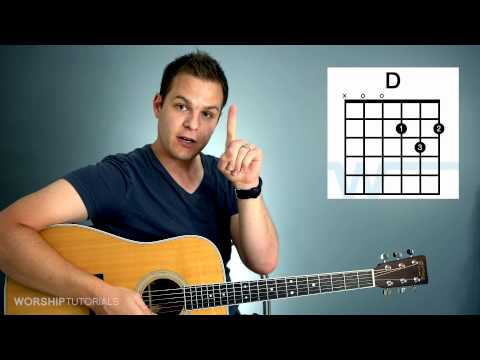
D Major Chord
D major is a compact chord that uses only four strings — the D, G, B, and high e strings. Your fingers press down on the second fret of the G and high e strings and the third fret of the B string. D major has a lighter, more delicate quality and is a key component of many strumming patterns and chord progressions.
Comparison of Essential Open Chords
| Chord | Key Frets Used | Strings Played | Difficulty Level | Common Genres |
| C Major | 1st, 2nd, 3rd | All 6 strings | Beginner | Pop, Folk, Country |
| A Major | 2nd fret (x3) | 5 strings (mute low E) | Beginner | Rock, Pop, Blues |
| G Major | 2nd, 3rd fret | All 6 strings | Beginner-Intermediate | Rock, Country, Folk |
| E Major | 1st, 2nd, 3rd | All 6 strings | Beginner | Rock, Blues, Pop |
| D Major | 2nd, 3rd fret | 4 strings | Beginner | Folk, Country, Pop |
One of the biggest hurdles for new guitarists is interpreting chord diagrams — those visual grids that show exactly where to place your fingers. A standard guitar chord diagram represents the guitar neck vertically, with horizontal lines representing frets and vertical lines representing strings. Dots or numbers on the grid indicate which fret to press and which finger to use. The “x” symbol above a string means you should not play it, while an “o” means the string rings open.
Understanding fretboard notes is equally important. Once you know the note names at each fret on the low E and A strings, you can theoretically find any chord shape anywhere on the neck. This knowledge also helps you understand chord intervals, which are the distances between notes within a chord. For example, a major chord consists of the root note, a major third interval, and a perfect fifth interval. Training your ear to recognize these intervals by sounding them on the guitar will accelerate your progress dramatically.
Intermediate Guitar Chords: Mastering Barre Chords
Once you have comfortable command of open chords, the next major milestone is learning barre chords. A barre chord uses one finger (usually the index finger) to press down across multiple strings on a single fret, effectively creating a movable “capo” effect. This allows you to shift any chord shape up and down the fretboard, unlocking the entire neck.
The two most important barre chord shapes are derived from the E major and A major open chords:
- E-shape barre chord: Based on the E major open chord, this shape moves up the fretboard using your index barre. For example, barring the first fret and maintaining the E major shape gives you an F major chord. Barring the fifth fret yields an A major chord.
- A-shape barre chord: Based on the A major open chord, this shape requires barring the fret where the root note sits. For instance, barring the fifth fret with the A-shape produces a D major chord.
Barre chords demand significant finger strength and endurance, which is why many players struggle with them initially. However, consistent practice — even just ten minutes per day focused on barre chord transitions — will build the necessary muscle memory within a few weeks. It is also worth noting that not every barre chord requires pressing all six strings. Some stripped-down versions omit the highest or lowest strings, which can make them easier to play without sacrificing the harmonic essence of the chord.
Common Barre Chord Progressions
Barre chords become essential when playing in keys that do not align with open chord positions. For example, playing in the key of B major requires barre chords because there are no standard open chord shapes for B. Popular progressions using barre chords include:
- I-IV-V progression in any key (e.g., B major to E major to F-sharp major)
- vi-IV-I-V progression (commonly found in pop and R&B)
- ii-V-I jazz progressions using barre chord voicings
Advanced Chord Concepts: Extended Chords and Chord Substitutions
For players who have moved beyond basic and intermediate chord work, extended chords open an entirely new world of musical expression. Extended chords add notes beyond the standard triad (root, third, fifth) to create richer, more complex sounds. These are frequently used in jazz, R&B, neo-soul, progressive rock, and film scoring.
Types of Extended Chords
- Seventh chords (7th): Add a seventh interval to a triad. Examples include C major 7 (Cmaj7), D dominant 7 (D7), and B minor 7 (Bm7).
- Ninth chords (9th): Add both the seventh and ninth intervals. C9 and Gmaj9 are staples in funk and blues.
- Eleventh and thirteenth chords: Further extensions used extensively in jazz. These chords can contain five or six notes, requiring specific voicings to avoid muddiness.
Chord Substitution
Chord substitution is the practice of replacing one chord with another that shares common tones or functions within a key. For instance, in the key of C major, you might substitute a C major chord with an A minor 7 chord because they share the notes C and E. This technique adds sophistication to your playing and is a hallmark of advanced guitarists who understand the relationships between chords on the fretboard.
Practical Tips for Mastering Guitar Chords Effectively
Knowing chord shapes is only half the battle. The real skill lies in transitioning between chords smoothly, applying correct strumming techniques, and internalizing chord progressions through deliberate practice. Here are expert tips that will set you on the fast track:
- Practice chord transitions slowly first. Pick two chords — such as G to C — and alternate between them at a very slow tempo. Focus on clean finger placement rather than speed. Gradually increase the tempo as your muscle memory improves.
- Use a metronome religiously. Timing is just as important as accuracy. A metronome helps you develop a strong internal clock, which translates to better rhythm and confidence when playing with others.
- Learn songs immediately after learning chords. Applying new chord knowledge to real songs reinforces retention and makes practice feel rewarding. Choose songs that use only two or three new chords to avoid overwhelm.
- Focus on the transition finger. When changing between chords, identify which finger moves last and place it down first. This “anchor finger” technique dramatically smooths out chord changes.
- Record yourself regularly. Listening back to recordings reveals timing issues, buzzing strings, and uneven transitions that you might not notice while playing.
- Explore different strumming patterns. The same chord progression can sound completely different with varied strumming. Experiment with downstrokes, upstrokes, syncopation, and fingerpicking to expand your musical vocabulary.

Conclusion
Mastering the basic chords of guitar is far more than memorizing finger positions — it is about building a deep, functional understanding of how harmony works on the instrument. From the essential open chords that form the backbone of popular music, through the challenging but rewarding world of barre chords, to the lush complexity of extended chord voicings, each level of knowledge opens new creative doors. The key is consistent, intentional practice combined with a genuine love for the music you are creating. Start with the CAGED open chords, drill your transitions until they feel effortless, and then progressively challenge yourself with barre chords and beyond. The guitar is one of the most rewarding instruments in the world, and chords are the gateway to unlocking its full potential.
Frequently Asked Questions About Basic Guitar Chords
What are the hardest basic guitar chords for beginners to learn?
The F major chord and B minor chord are often considered the most challenging beginner chords because they require barre techniques or awkward finger stretches. The F major chord, in particular, demands pressing the first fret across multiple strings with your index finger while maintaining clean finger placement on higher frets. However, simplified versions of these chords exist and can serve as stepping stones to the full barre chord versions.
How long does it take to learn basic guitar chords confidently?
With consistent daily practice of 20 to 30 minutes, most beginners can play basic open chords cleanly within two to four weeks. Achieving smooth chord transitions — switching between chords without hesitation or buzzing — typically takes one to three months depending on your prior musical experience, hand strength, and quality of practice.
Should I learn guitar chords with a pick or my fingers?
Both methods are valid and widely used. A pick produces a brighter, more consistent attack and is preferred in rock, country, and pop styles. Fingerpicking allows for greater control over individual string volumes and is common in folk, classical, and fingerstyle genres. Many experienced guitarists recommend learning with a pick first for simplicity, then gradually incorporating fingerstyle techniques.
What is the CAGED system and how does it help with guitar chords?
The CAGED system is a fretboard organization method based on five open chord shapes: C, A, G, E, and D. Each shape can be moved up the neck as a barre chord, allowing you to play the same chord in multiple positions across the fretboard. Understanding CAGED transforms your relationship with the guitar neck, making it easier to navigate chord progressions, solo, and improvise with confidence.
Can I teach myself guitar chords without a teacher?
Absolutely. The abundance of high-quality online resources — including video tutorials, chord apps, interactive fretboard tools, and structured courses — makes self-teaching more accessible than ever. However, self-directed learners benefit greatly from setting clear goals, practicing with a schedule, and seeking feedback through recording or online communities. A teacher can accelerate progress by providing personalized corrections and accountability.
What chord progressions should beginners start with?
The best beginner chord progressions use two to four simple open chords that appear in hundreds of real songs. Start with I-V-vi-IV (C-G-Am-F in the key of C), I-IV-V (C-F-G), and I-vi-IV-V (C-Am-F-G). These progressions are the foundation of pop, rock, folk, and country music, and mastering them will give you immediate access to a vast catalog of songs you can learn and perform.