


When you need fast, accurate temperature measurements without touching the surface, an infrared laser thermometer becomes one of the most valuable tools in your kit. AMES Instruments infrared laser thermometers have built a solid reputation among professionals and hobbyists alike, offering a blend of precision engineering and practical design. If you are searching for honest AMES instruments infrared laser thermometer reviews, you are in the right place. This deep-dive guide covers the top models, key features, real-world performance, and expert insights to help you choose the right device for your needs.
Why AMES Instruments Infrared Thermometers Deserve Your Attention
AMES Instruments has established itself as a trusted name in the test and measurement industry, particularly within industrial and commercial settings. Their infrared laser thermometer lineup addresses a wide spectrum of applications, from basic home use to demanding manufacturing environments. What sets AMES apart from competing brands is the combination of reliable optical resolution, durable build quality, and competitive pricing that does not sacrifice performance.
When evaluating any infrared thermometer brand, several factors come into play: distance-to-spot ratio, temperature range, emissivity adjustment, response time, and build durability. AMES instruments consistently deliver on these metrics across their product range, making them a compelling option for anyone serious about accurate non-contact temperature readings.
Top AMES Infrared Laser Thermometer Models Reviewed
AMES IR-100 Series: The Reliable Workhorse
The IR-100 series is widely regarded as the entry-level flagship for AMES Instruments. These units offer a temperature range spanning from -50°C to 550°C with a distance-to-spot ratio of 12:1. The laser targeting system provides clear aiming, and the single-button operation makes it accessible even for beginners. Users frequently praise the quick response time of under 500 milliseconds, which is ideal for scanning surfaces during quality control inspections.
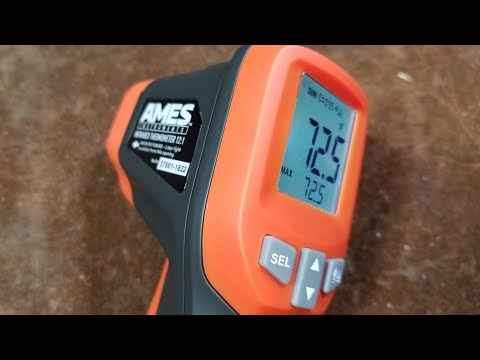
Key highlights:
- Compact and lightweight design
- Digital LCD display with backlight
- Adjustable emissivity settings
- Automatic power-off to conserve battery life
AMES IR-350 Pro: Mid-Range Precision for Professionals

The IR-350 Pro steps up the game with an expanded temperature range of -50°C to 1050°C and an improved 20:1 distance-to-spot ratio. This model is designed for professionals who need reliable readings in challenging environments such as HVAC systems, electrical panels, and food processing facilities. The IR-350 Pro also includes a data hold function and a backlit display that remains legible in low-light conditions.
Standout features include:
- Enhanced optical lens for sharper targeting accuracy
- Dual laser pointer for better spot indication
- Built-in LED flashlight for dark environments
- K-type thermocouple port for supplementary probe measurements
AMES IR-600 Industrial Grade: Heavy-Duty Performance
For users operating in extreme conditions, the IR-600 is the top-tier option. With a measurement range reaching up to 1800°C and a rugged IP54-rated housing, this thermometer is built to withstand factory floors, foundries, and kiln monitoring applications. The IR-600 features a high-resolution color display, configurable alarm thresholds, and advanced emissivity calibration for reflective surfaces like polished metals.
Key Features to Evaluate in AMES Infrared Laser Thermometers
Understanding the technical specifications behind any infrared thermometer helps you make informed purchasing decisions. Here are the critical parameters every buyer should examine when reviewing AMES models:
| Feature | Why It Matters |
| Distance-to-Spot Ratio | Determines measurement accuracy at varying distances; higher ratios allow safer measurements of small targets |
| Emissivity Adjustment | Allows calibration for different surface materials, preventing false readings on reflective or coated surfaces |
| Response Time | Faster response means more efficient scanning during inspections or process monitoring |
| Temperature Range | Matches the device to your specific application, whether cooking, electrical, or industrial |
| Laser Class | Class II lasers are eye-safe for general use; critical for compliance and user safety |
| Battery Life & Type | Long-lasting batteries reduce downtime and operational costs |
AMES Infrared Thermometer Comparison at a Glance
The table below summarizes the core specifications of the three primary AMES instrument models discussed in this review:
| Model | Temp Range | D:S Ratio | Response Time | Display | Best For |
| IR-100 | -50°C to 550°C | 12:1 | <500ms | LCD, backlit | Home use, basic inspections |
| IR-350 Pro | -50°C to 1050°C | 20:1 | <300ms | LCD, backlit, LED light | HVAC, electrical, food service |
| IR-600 Industrial | -50°C to 1800°C | 50:1 | <200ms | Color LCD, alarms | Foundry, kiln, heavy manufacturing |
Real-World Applications for AMES Infrared Laser Thermometers
One of the reasons AMES instruments infrared laser thermometers earn consistently positive reviews is their versatility. Here are the most common real-world use cases where these devices prove indispensable:
- HVAC and Refrigeration: Technicians use AMES thermometers to quickly identify hot spots in compressors, check duct temperatures, and diagnose refrigerant issues without dismantling equipment.
- Electrical Maintenance: Electricians rely on non-contact infrared readings to detect overheating connections, faulty circuit breakers, and overloaded panels before they become safety hazards.
- Food Safety and Processing: Restaurant managers and food safety inspectors use AMES models to verify surface temperatures of cooking equipment, storage units, and delivery shipments.
- Automotive Diagnostics: Mechanics scan brake rotors, exhaust components, and engine blocks to pinpoint thermal anomalies that signal mechanical wear or failure.
- Building Inspection: Energy auditors use infrared thermometers to detect heat loss through windows, insulation gaps, and structural bridges during energy audits.
Expert Tips for Accurate Infrared Measurements
Even the best infrared laser thermometer will produce unreliable results if used incorrectly. Here are proven techniques shared by experienced AMES instrument users:
- Know the emissivity of your target surface. Shiny metals like aluminum and copper have low emissivity and require adjustment or surface treatment for accurate readings.
- Maintain the correct distance. Stay within the recommended distance-to-spot ratio for each model. Standing too far away means you are measuring the surrounding environment rather than the target itself.
- Avoid steam, dust, and smoke in the measurement path. These particles scatter the infrared energy and distort readings significantly.
- Allow the device to acclimate. Moving an AMES thermometer from a cold car to a hot industrial environment requires a few minutes for internal sensors to stabilize.
- Use the laser only for aiming, not for measurement. The laser dot simply indicates where you are pointing; the actual measurement is taken by the infrared sensor lens.
Pros and Cons of AMES Instruments Infrared Thermometers
Pros:
- Excellent accuracy across all price tiers
- Durable construction built for long-term field use
- Wider temperature ranges than many competitors at similar price points
- Responsive customer support and accessible replacement parts
- Intuitive menus that reduce the learning curve for new users
Cons:

- Some entry-level models lack advanced data logging features
- Accessories such as tripod mounts and protective cases are sold separately
- Limited availability in certain retail markets compared to larger brands
Final Verdict and Recommendations
After thoroughly reviewing AMES Instruments infrared laser thermometers across multiple models and use cases, the consensus is clear: these devices deliver outstanding value for the price. Whether you are a homeowner looking for a quick way to check your HVAC system, a professional electrician scanning panels, or an industrial operator monitoring kilns and furnaces, there is an AMES model tailored to your requirements.
For most users, the IR-350 Pro strikes the best balance between capability and cost. It offers the temperature range and optical quality needed for professional work without the premium price tag of the industrial IR-600. Beginners and casual users will find the IR-100 series more than sufficient for everyday tasks.
Frequently Asked Questions
What is the measurement accuracy of AMES infrared laser thermometers?
AMES Instruments specifies an accuracy of ±1.5% or ±1.5°C (whichever is greater) across their product line. This level of precision is well-suited for industrial, commercial, and home applications. Proper emissivity settings and correct distance-to-spot ratios are essential for achieving stated accuracy.
Can AMES infrared thermometers measure through glass or transparent surfaces?
No. Infrared laser thermometers, including all AMES models, cannot measure the temperature of objects behind glass or transparent barriers. The infrared energy reflects off the glass surface instead of passing through, resulting in inaccurate readings of the glass temperature rather than the object behind it.
How long does the battery last in an AMES infrared thermometer?
Most AMES models use a standard 9V battery or two AA batteries and deliver approximately 2000 to 3000 hours of continuous use. The automatic power-off feature, which activates after a period of inactivity, significantly extends battery life during field work.
Is the AMES IR-600 suitable for measuring molten metal temperatures?
Yes. The IR-600 industrial-grade model is specifically rated for temperatures up to 1800°C, making it suitable for molten metal applications in foundries and metalworking facilities. Users should ensure proper eye protection and follow all safety guidelines when operating near extreme heat sources.
What warranty does AMES Instruments provide for their infrared thermometers?
AMES Instruments typically offers a one-year limited warranty on their infrared thermometer products, covering manufacturing defects and component failures. Extended warranty options and calibration services are often available through authorized distributors.