Songwriting is one of the most rewarding creative pursuits a person can undertake, yet the idea of writing your first song can feel overwhelming. Whether you have a melody stuck in your head or a handful of raw lyrics scribbled on a napkin, the journey from idea to finished song is more accessible than most people think. This comprehensive guide walks you through how to begin songwriting from the ground up, covering foundational techniques, practical exercises, and expert strategies that work for complete beginners and seasoned musicians alike. If you have ever wondered how to write a song from scratch, you are in the right place.
Understanding the Songwriting Process for Beginners
The songwriting process is not a rigid formula—it is a creative workflow that evolves with practice. However, having a structured approach dramatically shortens the learning curve. At its core, beginner songwriting tips revolve around three pillars: inspiration, structure, and refinement. Professional songwriters from every genre use variations of these same pillars, which means you are learning the same foundational methods the experts rely on every day.
How to start songwriting begins with understanding that every great song starts with a single idea. That idea might be a two-word phrase, a chord progression that feels emotionally charged, or a rhythm that makes you want to move. The key is to capture it immediately before it fades. Keep a voice memo app open on your phone, carry a small notebook, or use a dedicated notes folder on your laptop. The medium matters far less than the habit of recording your ideas the moment they arrive.
Why Songwriting Skills Develop Over Time
One of the biggest misconceptions about how to compose a song is that talented songwriters wake up with finished masterpieces. The truth is that songwriting is a skill built through repetition, experimentation, and honest self-reflection. Early songs will feel imperfect, and that is entirely normal. Even award-winning songwriters regularly produce songs that never make the final cut. What separates professionals from hobbyists is the commitment to practice consistently and treat every writing session as a learning opportunity.
The Core Elements of Songwriting
Before diving into your first composition, it helps to understand the building blocks that every song shares. These elements interact in different ways depending on your genre, but they remain constant across pop, country, rock, hip-hop, and beyond.
Melody and Lyric Writing Tips
Melody writing is often the most intuitive starting point for new songwriters. A melody is the sequence of notes that carries the emotional weight of a song. When you are learning how to begin songwriting through melody, try humming or singing over a simple chord progression without worrying about words. Capture whatever comes out, even if it sounds silly. Lyrics, on the other hand, give your song its story and identity. Lyric writing tips include focusing on vivid imagery, using specific details instead of vague statements, and writing from a genuine emotional place.
Here are practical melody and lyric techniques that work immediately:
- Record a 30-second melodic idea before you forget it
- Write lyrics about a specific moment rather than a broad emotion
- Use conversational language to make lyrics feel authentic
- Repeat key phrases to create a memorable hook
- Experiment with rhyming schemes but avoid forcing every line to rhyme perfectly
Chord Progressions and Harmony
Chord progressions provide the harmonic foundation that supports your melody. Many iconic songs use surprisingly simple progressions. For example, the I–V–vi–IV progression appears across countless hit songs in multiple genres. If you play an instrument, even basic knowledge of open chords on guitar or piano can unlock dozens of songwriting possibilities. For those without instrumental experience, digital tools like chord generators and loop stations can serve as excellent starting points for writing songs for beginners.
Song Structure Essentials
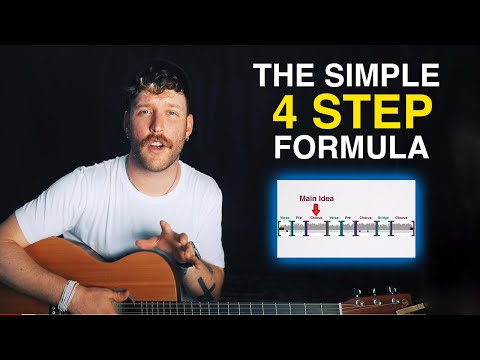
Understanding song structure is one of the most impactful songwriting techniques you can learn early. Structure gives your song a sense of direction and keeps the listener engaged from the first note to the last. While experimentation is encouraged, having a working knowledge of common song forms provides a reliable framework to build from.
Common Song Forms Compared
Different genres and eras favor different structural approaches. Below is a comparison of the most widely used song forms to help you choose the right one for your next composition.
| Song Form | Typical Sections | Best For | Complexity Level |
| Verse-Chorus | Verse, Chorus, Verse, Chorus, Bridge, Chorus | Pop, Country, Rock | Beginner |
| AABA | Verse, Verse, Bridge, Verse | Jazz, Classic Standards | Intermediate |
| Through-Composed | Continuous new material throughout | Art Music, Progressive Rock | Advanced |
| ABABCB | Verse, Chorus, Verse, Chorus, Bridge, Chorus | Modern Pop, Folk | Beginner |
The verse-chorus structure is by far the most popular choice for beginners. It provides a natural contrast between the narrative verses and the emotionally resonant chorus. The bridge introduces variety and prevents the song from feeling repetitive, which is especially important for tracks longer than three minutes.
Practical Exercises to Kickstart Your Songwriting
Theoretical knowledge alone will not make you a songwriter—you need to write consistently. The following exercises are designed to build momentum and confidence, whether you are working on your first song or your hundredth.
- The Ten-Minute Sprint: Set a timer for ten minutes and write a complete song, no matter how rough. The constraint of time forces creative decisions and eliminates overthinking.
- The One-Phrase Method: Start with a single compelling phrase and build the entire song around it. This phrase becomes your hook, and every section connects back to it.
- The Cover Remix: Take the chord progression of an existing song and write entirely new lyrics and a melody over it. This exercise trains your ear and strengthens your understanding of how chords and melodies interact.
- The Object Exercise: Pick a random object in the room and write a song about it as if it were deeply meaningful. This builds your storytelling muscles and encourages creative problem-solving.
- The Collaboration Session: Write with another songwriter, even if their skill level differs from yours. Fresh perspectives often unlock ideas you would never discover alone.
Consistency is the single most important factor in improving as a songwriter. Even fifteen minutes of daily practice produces noticeable results within weeks. Many professional songwriters recommend keeping a songwriting journal where you log ideas, unfinished drafts, and reflective notes about what worked and what did not.
Common Mistakes Beginners Should Avoid
Learning what not to do is just as valuable as learning the right techniques. Here are the most common pitfalls that derail new songwriters:
- Overcomplicating the song: A simple, emotionally honest song will always outperform a technically complex one that lacks feeling.
- Waiting for inspiration: Inspiration is unreliable. Discipline and routine are what produce finished songs.
- Editing while writing: Trying to perfect every line during the initial draft kills momentum. Write first, revise later.
- Ignoring feedback: Sharing your work with trusted listeners provides perspective you cannot see on your own.
- Comparing your first drafts to polished hits: Every professional song went through dozens of iterations before reaching its final form.
Advanced Strategies to Level Up Your Songwriting
Once you have a few songs under your belt, you can start incorporating more sophisticated techniques into your workflow. Advanced songwriting strategies include experimenting with modulation, using unexpected chord substitutions, varying your melodic contour between sections, and studying the arrangement choices of songs you admire. Another powerful approach is analyzing the lyrics of songs you love—break them down line by line and identify how the writer builds tension, delivers the hook, and resolves the emotional arc.
Recording your songs, even on a basic smartphone setup, transforms them from abstract ideas into tangible pieces of music. Listening back with fresh ears reveals weaknesses in melody, lyrics, and structure that you simply cannot hear in the moment of creation. Many songwriters also benefit from studying music theory not as a set of rigid rules but as a toolkit for making informed creative decisions.
Frequently Asked Questions
What is the best way to start songwriting if I have no musical experience?
You do not need to play an instrument to begin songwriting. Start with a simple chord loop from a free online tool, hum a melody over it, and write lyrics about something that matters to you. Many successful songwriters began without formal training and developed their skills through consistent practice and experimentation.
How long does it take to write a good song?
The timeline varies enormously. Some songwriters finish a strong song in a single hour-long session, while others refine a single track over several weeks. The quality of a song is not determined by how quickly it is written but by the intentionality behind every creative choice. Give yourself permission to take as much time as the song requires.
Do I need to know music theory to write songs?
Music theory is helpful but not mandatory. Many celebrated songwriters operate with limited theoretical knowledge yet produce deeply compelling music. Understanding basic concepts like chords, scales, and rhythm accelerates growth, but emotional authenticity and storytelling matter far more than technical expertise when you are starting out.
What should I write my first song about?
Write about something you genuinely feel—joy, heartbreak, frustration, nostalgia, or even a vivid memory. The most relatable songs come from specific, personal experiences rather than generic topics. Your first song does not need to be profound; it needs to be honest and finished.
No song is ever truly “finished” or “perfect.” A useful benchmark is whether the song communicates the emotion or idea you intended. If it does, it is ready to share. Receiving feedback from a small group of trusted listeners will help you grow faster than waiting for self-doubt to disappear.
Final Thoughts on Beginning Your Songwriting Journey
How to begin songwriting is a question with no single answer, because the right path depends on your musical background, creative instincts, and personal goals. What remains constant is this: the act of writing itself is the teacher. Every song you write, even the imperfect ones, builds the skills, instincts, and confidence that will carry you forward. Start today with the simplest exercise—a melody, a phrase, a chord—and commit to returning to your craft regularly. The world needs the stories only you can tell through music, and your first song might be the one that changes everything.