Music has an extraordinary power to shape moods, fuel productivity, and transform ordinary moments into unforgettable experiences. Whether you are building a playlist for a road trip, a workout session, a dinner party, or simply for personal enjoyment, the process of creating a music playlist is both an art and a science. A well-crafted playlist is more than a random collection of songs—it is a carefully curated journey that tells a story, maintains emotional momentum, and keeps listeners engaged from the first track to the last. In this comprehensive guide, we will walk you through everything you need to know about building the perfect playlist, from foundational principles for beginners to advanced curation strategies that professional DJs and music curators swear by.
Understanding the Art of Creating a Music Playlist
Before you dive into selecting tracks, it helps to understand what separates a forgettable playlist from one that people actually want to listen to again and again. At its core, playlist creation is about intentional sequencing, thematic coherence, and emotional pacing. Think of your playlist as a musical narrative with a beginning, middle, and end.

What Makes a Great Playlist?
A standout playlist is defined by several key elements that work together seamlessly:
- Thematic unity: Every song should feel connected, whether by genre, mood, tempo, or a shared lyrical theme.
- Dynamic flow: Great playlists avoid jarring transitions by grouping tracks with complementary energy levels and similar sonic textures.
- Emotional arc: The best playlists take listeners on a journey, building tension, releasing it, and creating satisfying climaxes.
- Personal authenticity: A playlist that reflects your genuine taste feels infinitely more engaging than one assembled purely by algorithm.
- Strategic length: Whether you are building a 20-minute focused mix or a 2-hour deep dive, the duration should match the intended listening context.
Step-by-Step Guide to Building Your First Playlist
If you are new to playlist creation, following a structured approach will save you time and dramatically improve the final result. Here is a proven framework that works across every skill level.
Step 1: Define Your Purpose and Audience
Start by asking yourself a simple question: who is this playlist for, and what is the context? A workout playlist demands high-energy tracks with aggressive beats per minute (BPM), while a chill evening playlist calls for mellow, atmospheric sounds. Defining the purpose early on eliminates decision fatigue later and keeps your curation focused.
Step 2: Choose Your Core Theme
Decide on the central theme or mood. This could be as broad as “90s Alternative Rock” or as specific as “Late-Night Drives Through the City.” The tighter your theme, the more cohesive the listening experience will feel. Use keywords like mood descriptors, decade references, and genre labels to anchor your search.
Step 3: Gather Your Tracks
Now comes the fun part. Start adding songs that fit your theme. A solid starting point is to aim for 15 to 25 tracks, which gives you enough material to experiment with sequencing without becoming overwhelmed. Use streaming platform search filters, genre charts, and mood-based recommendations to expand your pool.
Step 4: Sequence and Arrange
Order matters enormously in playlist creation. Open with a track that immediately sets the tone—something universally appealing and tonally aligned with your theme. Build gradually toward your most impactful songs, placing the absolute favorites in the middle third where listener retention is strongest. Close with something that provides a natural resolution rather than an abrupt stop.
Step 5: Review and Refine
Listen to the entire playlist from start to finish at least once before publishing. Pay attention to transitions, volume consistency, and whether any tracks feel out of place. Remove songs that disrupt the flow and replace them with better alternatives. This refinement stage is where amateur playlists become professional-grade mixes.
Advanced Techniques for Curating Playlists
Once you have mastered the basics, it is time to elevate your craft with intermediate and advanced strategies that separate casual listeners from true playlist curators.
Master the Art of Transitional Mixing
Pay close attention to how songs connect. Complementary BPM ranges (within 10 to 15 BPM of each other) create smooth transitions. Key compatibility is another powerful tool—mixing songs in the same musical key or adjacent keys on the Camelot wheel produces seamless harmonic blends that listeners feel subconsciously but rarely notice consciously.

Leverage Metadata and Audio Features
Most modern streaming platforms analyze tracks for tempo, energy, danceability, valence (positivity), and acousticness. Learning to use these data points transforms playlist creation from guesswork into a precise science. Build playlists that maintain consistent energy curves or strategically contrast energy levels for dramatic effect.
Create Sub-Playlists and Mega-Lists
For longer listening sessions, consider structuring your music library into sub-playlists that feed into a larger mega-list. For example, a “Weekend Marathon” playlist might include sub-sections for morning coffee, afternoon work focus, evening dinner, and late-night wind-down. This modular approach makes curation manageable and listening more intentional.
Seasonal and Occasion-Based Curation
Some of the most memorable playlists tie into specific seasons, holidays, or life moments. A summer road trip playlist benefits from bright, open-sounding tracks with major keys and uptempo rhythms, while a rainy-day playlist leans into minor keys, slower tempos, and introspective lyrics. Matching music to context amplifies emotional resonance dramatically.
Best Tools and Platforms for Playlist Creation
The platform you use significantly impacts your playlist creation experience. Each streaming service offers unique features, discovery algorithms, and curation tools that cater to different styles of music listeners.
| Platform | Best For | Key Features |
| Spotify | Advanced curation and discovery | Collaborative playlists, AI DJ, Smart Delivery, mood-based filters |
| Apple Music | Deep catalog and editorial playlists | Lossless audio, personalized mixes, seamless Apple ecosystem integration |
| YouTube Music | Live versions and remixes | Access to live performances, remixes, covers, and user-generated content |
| Pandora | Algorithmic discovery | Music Genome Project, station-based creation, thumbs-up/thumbs-down feedback loop |
| Tidal | Audiophile-quality listening | Hi-Res audio, curated editorial playlists, artist exclusives |
Each platform has strengths depending on your goals. If you prioritize discovery and collaborative features, Spotify remains the industry leader. If audio fidelity matters most, Tidal’s lossless streaming provides a noticeable upgrade. Choose the tool that aligns with your primary use case.
Expert Tips to Level Up Your Playlist Game
- Start with your anchor track: Pick one song that perfectly represents the playlist’s vibe and build outward from it. This prevents scope creep and keeps your curation focused.
- Follow the 80/20 rule: Fill roughly 80 percent of your playlist with songs you are confident about, and leave 20 percent for experimentation. This balances reliability with freshness.
- Avoid playlist fatigue: Limit consecutive tracks by the same artist or from the same album. Over-representation of one artist can make even a great collection feel monotonous.
- Update regularly: Treat your playlists as living documents. Rotate out older tracks, add new discoveries, and refresh the sequence to keep the experience feeling current.
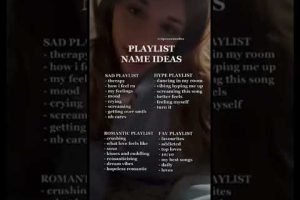
- Name and describe thoughtfully: A compelling playlist title and description improve discoverability and set listener expectations. Use descriptive keywords that reflect the mood and theme.
- Test on different devices: Listen on headphones, speakers, and car audio to ensure the mix translates well across different playback environments.
Frequently Asked Questions About Creating Music Playlists

How many songs should a playlist ideally have?
The ideal length depends entirely on the context. For focused listening sessions like workouts or study sessions, 15 to 25 songs (roughly 45 to 75 minutes) is optimal. For ambient background listening during a party or gathering, 50 to 100 songs provides enough variety to avoid repetition over several hours. There is no universal number—prioritize quality and flow over quantity.
What is the best way to organize songs within a playlist?
Organize by energy arc. Start with a moderate opener, gradually build intensity toward a mid-playlist peak, then gently taper off toward the end. Grouping songs by BPM and musical key within this framework ensures transitions feel natural and intentional rather than random.
Can I create a playlist with songs from different genres?
Absolutely. Cross-genre playlists can be incredibly powerful when curated around a shared mood or emotion rather than a strict genre label. For example, a “Melancholy Evening” playlist might blend indie folk, lo-fi hip-hop, ambient electronic, and slow jazz. The key is finding the connective tissue between seemingly disparate tracks.
How do algorithms influence playlist creation on streaming platforms?
Streaming algorithms analyze your listening habits, liked songs, and skipped tracks to generate personalized recommendations. While these tools are incredibly useful for discovery, relying entirely on algorithms can result in homogenized playlists that lack your personal fingerprint. The best approach combines algorithmic suggestions with your own intentional curation decisions.
What is the difference between a playlist and a mix?
A playlist is typically a straight sequence of full songs played back-to-back, while a mix involves blending, transitioning, or remixing tracks together into a continuous flow. DJ-style mixes require additional technical skills like beatmatching and harmonic mixing, but both formats serve the fundamental purpose of delivering a curated musical experience.
Conclusion
Creating a music playlist is one of the most rewarding forms of modern self-expression. It combines the analytical precision of music theory with the deeply personal intuition of taste and emotion. Whether you are just starting out with a handful of favorite songs or crafting elaborate multi-hour mixes for thousands of followers, the principles remain the same: know your purpose, sequence with intention, curate with care, and never stop refining. The playlists you build become a reflection of who you are—and that is what makes the art of playlist creation so uniquely meaningful. Start today, experiment fearlessly, and let your music tell your story.