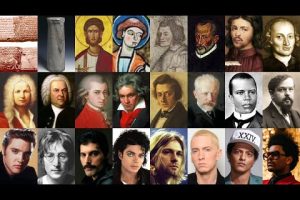
The evolution of music timeline stretches back tens of thousands of years, weaving together a rich tapestry of cultural shifts, technological breakthroughs, and artistic revolutions that have shaped human civilization as we know it. Understanding the history of music evolution isn’t just about memorizing dates and composers — it’s about tracing the heartbeat of humanity itself. From the earliest rhythmic percussion used in tribal rituals to the algorithm-driven playlists of today, the journey of music reflects our deepest desires for expression, connection, and meaning. Whether you’re a curious beginner exploring music history for the first time or an advanced enthusiast looking to map every major era and movement, this comprehensive guide walks you through every pivotal chapter of the music timeline through the ages. Let’s dive deep into how sound transformed from simple vocal chants into the multi-billion-dollar global industry we experience today.
Prehistoric and Ancient Origins: The Birth of Sound
Before written language existed, humans communicated through rhythm and sound. The earliest known musical instruments — bone flutes discovered in caves in Germany dating back over 40,000 years — prove that music was integral to human life long before civilization formalized. These primitive tools suggest that early humans used music for rituals, storytelling, and social bonding. The evolution of music genres didn’t happen overnight; it was a slow, organic process rooted in survival and community.

Key Instruments and Practices in Prehistoric Music
- Bone flutes made from bird and mammoth ivory
- Percussion using stones, logs, and hand claps
- Vocal chanting and call-and-response singing
- Rhythmic body percussion used in ceremonial dances
As societies grew more complex, so did their musical traditions. Ancient Mesopotamia, Egypt, India, and China each developed distinctive scales, modes, and instruments that would influence music for millennia.
Ancient Civilizations: Structured Sound and Spiritual Music
When we talk about the music history timeline, the ancient world marks a crucial turning point. The Greeks, for example, developed the mathematical foundations of Western music theory. Pythagoras discovered the relationship between string length and pitch, laying the groundwork for scales and harmony that still govern modern composition. Meanwhile, ancient Indian texts like the Natya Shastra codified ragas and rhythmic cycles (talas) that remain foundational to South Asian music today.
How Ancient Cultures Shaped Musical Systems
- Greece and Rome: Developed scales, modes, and the concept of musical intervals used in Western classical music.
- China: Created the pentatonic scale and developed instruments like the guqin and sheng.
- India: Established raga-based melodic frameworks and sophisticated rhythmic patterns.
- Africa: Developed polyrhythmic drumming traditions that would later influence jazz, blues, and funk.
The evolution of music through the centuries accelerated as trade routes connected civilizations, allowing instruments, scales, and styles to cross continents and evolve through cultural exchange.
Medieval and Renaissance Eras: Sacred Sounds and Polyphony
The medieval period, roughly spanning from the 5th to the 15th century, witnessed music becoming codified in religious contexts. Gregorian chant, a form of plainchant used in Catholic liturgy, dominated European musical life. Monophonic in nature — meaning a single melodic line without harmonic accompaniment — Gregorian chant created the spiritual atmosphere that defined worship for centuries.
The Renaissance brought a dramatic shift. Composers like Josquin des Prez and Palestrina explored polyphony, where multiple independent melodic lines intertwined simultaneously. This era also saw the development of music notation, making it possible to compose, preserve, and reproduce music across generations. The invention of the printing press further democratized sheet music, spreading musical ideas faster than ever before.
| Era | Key Characteristics | Notable Figures |
| Medieval (500–1400) | Monophonic chant, religious focus, modal scales | Hildegard von Bingen, Gregorian Chant tradition |
| Renaissance (1400–1600) | Polyphony, secular music emergence, improved notation | Josquin des Prez, Palestrina, Thomas Tallis |
Classical and Romantic Periods: Emotion and Structure
The Classical era (1750–1820) brought clarity, balance, and formal structure to music. Composers like Mozart, Haydn, and Beethoven refined the symphony, sonata, and concerto into precise artistic forms. The piano became the dominant keyboard instrument, replacing the harpsichord and giving performers dynamic range and expressive power previously unimaginable.

The Romantic era (1820–1900) pushed boundaries even further. Composers like Chopin, Liszt, Wagner, and Tchaikovsky prioritized emotional expression over strict structural rules. Orchestras grew larger, harmonic language became richer and more dissonant, and nationalistic themes emerged as composers drew inspiration from folk traditions of their homelands. The evolution of music genres accelerated during this period, with opera, art songs (lieder), and programmatic symphonies becoming major artistic vehicles.
Why These Eras Matter for Understanding Music Today
- Classical music established the harmonic and formal foundations of Western composition.
- Romantic music expanded the emotional and expressive range of instrumental and vocal works.
- Both eras directly influenced 20th-century jazz, film scores, and contemporary classical music.
- Modern producers and musicians still reference these structures in their work.
The 20th Century: A Revolution of Sound and Technology
No discussion of the music timeline through the ages is complete without addressing the seismic shifts of the 20th century. This period saw more musical innovation than all previous centuries combined. The invention of recorded music, radio, electric instruments, and digital technology fundamentally transformed how people created, distributed, and consumed music.
Key Movements and Their Impact
- Jazz and Blues (1900s–1940s): Born from African American communities in the American South, jazz introduced improvisation, syncopation, and complex harmony that revolutionized global music.
- Rock and Roll (1950s): Elvis Presley, Chuck Berry, and Little Richard fused blues, country, and gospel into a high-energy genre that defined youth culture worldwide.
- Pop and Soul (1960s–1970s): The Beatles, Motown artists, and Stevie Wonder brought pop music to new artistic heights while addressing social issues through song.
- Hip-Hop and Electronic Music (1980s–1990s): Sampling, drum machines, and turntablism gave birth to genres that would dominate global charts and reshape pop culture.
- Alternative, Grunge, and R&B Revival (1990s–2000s): Nirvana, D’Angelo, and OutKast pushed boundaries and diversified mainstream sound.
Technology played an equally transformative role. The phonograph, cassette tape, CD, MP3, and streaming platforms each revolutionized music distribution, changing the economics of the entire industry and giving artists unprecedented access to global audiences.
The Digital Age: How Music Changed Forever
The 21st century brought the evolution of music genres into an era of hyper-convergence. Genres now blend freely — hip-hop meets country, classical instruments appear in electronic tracks, and K-pop fuses Korean and Western pop sensibilities into a globally dominant force. The internet and social media democratized music creation, allowing independent artists to bypass traditional gatekeepers and reach millions directly through platforms like YouTube, SoundCloud, and Spotify.
Expert tip: If you want to understand today’s music landscape, study not just one genre but the intersections between them. Modern hits increasingly combine elements from multiple traditions, creating sounds that don’t fit neatly into a single category. This cross-pollination is perhaps the most exciting development in the contemporary music history timeline.
Comparison: How Music Changed Across Major Eras
| Era | Primary Instruments | Distribution Method | Cultural Role |
| Prehistoric | Bone flutes, drums, voice | Live performance only | Ritual and community bonding |
| Ancient Civilizations | Lyres, harps, drums, pipes | Live performance and oral tradition | Religious ceremony and storytelling |
| Medieval/Renaissance | Lute, viol, harpsichord, choir | Manuscript notation | Sacred worship and court entertainment |
| Classical/Romantic | Piano, orchestra, opera | Sheet music | Artistic expression and national identity |
| 20th Century | Electric guitar, synthesizer, recording tech | Radio, vinyl, cassette, CD | Mass entertainment and youth culture |
| Digital Age | Software, DAWs, digital synths | Streaming, social media, downloads | Global connectivity and personal expression |
FAQs: Long-Tail Keyword Questions Answered
1. How has music evolved over the last 100 years?
Over the past century, music has transformed from live orchestral performances and acoustic recordings to digital production, streaming platforms, and algorithmically curated playlists. The evolution of music genres accelerated dramatically with each decade — jazz, rock, hip-hop, and electronic music each emerged and evolved in response to technological and cultural shifts.
2. What are the major periods in the evolution of music history?
The major periods include prehistoric music, ancient civilizations, medieval and Renaissance eras, Classical and Romantic periods, the 20th-century revolution, and the modern digital age. Each era introduced new instruments, compositional techniques, and distribution methods that built upon and transformed what came before.
3. How did technology change the music timeline significantly?
Technology was arguably the most powerful driver of change in the music history timeline. The phonograph made recorded music possible, radio brought music into millions of homes, synthesizers and electric instruments expanded sonic palettes, and the internet and streaming platforms completely restructured how music is created, shared, and monetized.

4. What role did African American musical traditions play in global music evolution?
African American traditions — including blues, jazz, gospel, R&B, soul, and hip-hop — are foundational to modern global music. These genres introduced improvisation, syncopation, call-and-response patterns, and rhythmic complexity that influenced virtually every major popular music genre that followed, from rock and roll to electronic dance music.
5. Where is the evolution of music heading in the future?
The future of the music timeline through the ages points toward AI-assisted composition, immersive audio experiences (spatial audio, VR concerts), deeper genre fusion, and even more accessible creation tools. As technology continues to evolve, the boundaries between listener and creator will continue to blur, creating new possibilities for musical expression.
Conclusion: The Never-Ending Evolution
The evolution of music timeline is not a finished story — it is a living, breathing narrative that continues to unfold with every new beat, melody, and lyric. From the bone flutes of prehistoric caves to the AI-generated tracks of tomorrow, music remains humanity’s most universal and powerful form of expression. Understanding where we’ve been gives us the context to appreciate where we are and to anticipate where we’re going. Whether you’re studying music history, creating your own tracks, or simply enjoying the art form, every era in this timeline has something valuable to teach us about creativity, culture, and the enduring human need to make and share music.