


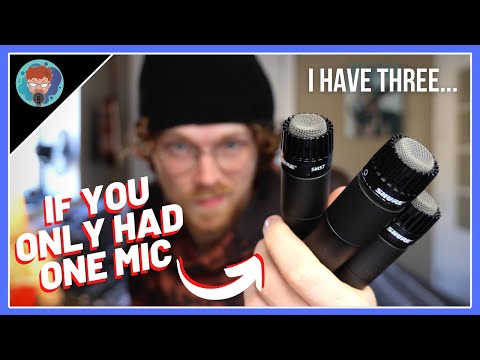
If you are serious about producing professional-quality audio from home, choosing the best home studio mic is arguably the single most important decision you will make. Whether you are recording vocals, podcasting, voiceovers, acoustic instruments, or streaming content, the right microphone can transform a muddy, amateur-sounding track into a polished broadcast-ready recording. The market is overflowing with options ranging from budget-friendly USB mics under a hundred dollars to premium large diaphragm condensers that rival studio legends costing thousands. This guide breaks down the best home studio microphones across every category, every budget, and every use case so you can make a confident, informed purchase.
What Makes a Home Studio Microphone Great?
Before diving into specific models, understanding the core characteristics that define a great home studio microphone will help you navigate the options with clarity. Not all microphones are created equal, and the “best” choice depends heavily on your recording environment, voice type, and intended application.
Three fundamental categories dominate the home recording microphone landscape: dynamic microphones, condenser microphones, and USB microphones. Each has distinct strengths and ideal use cases.
- Dynamic microphones are rugged, forgiving of room imperfections, and excel at handling high sound pressure levels. They are the go-to choice for untreated rooms and loud vocalists.
- Condenser microphones offer superior detail, sensitivity, and frequency response, making them ideal for controlled studio environments where you can manage acoustics and background noise.
- USB microphones provide plug-and-play convenience with built-in analog-to-digital conversion, making them perfect for beginners who want a simple home studio setup without investing in extra equipment.

The polar pattern also matters enormously. Most home studio vocalists gravitate toward cardioid microphones because they pick up sound primarily from the front and reject noise from the sides and rear. This pattern is especially forgiving in untreated spaces where reflections and ambient noise are unavoidable.
Best Dynamic Microphones for Home Studios
Dynamic microphones are the workhorses of home recording. They do not require phantom power, they handle high SPL effortlessly, and they tend to be incredibly durable. For podcasters and vocalists recording in bedrooms, closets, or home offices without professional acoustic treatment, a dynamic mic is often the smartest starting point.
Shure SM7B
The Shure SM7B is widely considered the gold standard for home studio vocal microphones. This dynamic cardioid microphone delivers a warm, rich tone with excellent off-axis rejection, making it virtually immune to room reflections and computer fan noise. It is a favorite among podcasters, broadcasters, and professional singers alike. The SM7B requires significant gain, so pairing it with a quality preamp or an audio interface with clean gain staging is essential.
Audio-Technica AT2020
Wait — the AT2020 is a condenser, but let us talk about the Audio-Technica ATR2100x as the dynamic counterpart in this range. This versatile USB and XLR microphone gives beginners the flexibility to grow their setup over time. It captures clear, detailed vocals and is forgiving of less-than-ideal room acoustics.
Electro-Voice RE20
The Electro-Voice RE20 is a broadcast legend that has found a permanent home in many home studios. Its Variable-D design eliminates the proximity effect, meaning you can move freely in front of the microphone without drastic tonal shifts. This makes it exceptional for podcasters who gesture while speaking or singers who perform with dynamic movement.
Best Condenser Microphones for Home Studios
Condenser microphones bring a level of detail and clarity that dynamic mics simply cannot match. They capture the subtle nuances of a voice — breath, texture, warmth — with stunning accuracy. However, they are more sensitive to room noise and reflections, so a treated or quiet environment is highly recommended.
Audio-Technica AT2020
The AT2020 has been a studio staple for decades. This small diaphragm condenser delivers a smooth, accurate frequency response with minimal self-noise. It is an exceptional value at its price point and handles vocals, acoustic guitar, and overhead percussion with remarkable clarity.
Rode NT1 5th Generation

The Rode NT1 5th Generation redefines the quiet condenser category. With a self-noise floor of just 4 dBA, it is one of the quietest microphones ever produced. The internal shock mount and built-in magnetic shielding make it resistant to handling noise and electromagnetic interference from computers and monitors. For vocalists and voiceover artists in home studios, this microphone is a game-changer.
AKG C214
The AKG C214 is essentially a scaled-down version of the legendary C414, and it brings that heritage into a single-cardioid package at a fraction of the price. It handles vocals, acoustic instruments, and room ambiences with a beautiful, transparent character that flatters most voices without coloring them excessively.
Best USB Microphones for Beginners
If you are just starting out and want to avoid the complexity of audio interfaces, XLR cables, and preamps, a USB microphone for home studio use is the most practical path. These mics connect directly to your computer and are ready to record in minutes.
- Blue Yeti X — Features four polar patterns, a built-in mute button, and a gain knob for real-time control. The Blue Yeti X captures broadcast-quality audio and is the most popular USB mic for podcasting and streaming.
- Elgato Wave:3 — Designed specifically for content creators, this microphone features Clipguard technology that prevents distortion from sudden volume spikes, a beautiful capsule design, and seamless integration with the Elgato Wave software.
- Rode NT-USB Mini — Compact, portable, and surprisingly powerful, the NT-USB Mini delivers studio-quality sound with a cardioid pattern, built-in headphone monitoring, and a mute button. It is one of the best budget studio microphone options under $150.
- Shure MV7 — Bridging the gap between USB and XLR, the MV7 gives you the Shure SM7B sound with the convenience of USB connectivity. You can use it as a standalone USB mic now and add an XLR connection later when you upgrade your interface.
Comparison: Top Home Studio Microphones at a Glance
The following table compares the leading home studio microphones across key specifications to help you narrow your decision.
| Microphone | Type | Pattern | Connection | Best For | Price Range |
| Shure SM7B | Dynamic | Cardioid | XLR | Vocals, podcasting, broadcasting | $399 |
| Rode NT1 5th Gen | Condenser | Cardioid | XLR | Vocals, voiceover, acoustic | $269 |
| Blue Yeti X | Condenser | Multi-pattern | USB | Podcasting, streaming, beginners | $149 |
| Shure MV7 | Dynamic | Cardioid | USB / XLR | Vocals, podcasting, dual use | $249 |
| AKG C214 | Condenser | Cardioid | XLR | Vocals, acoustic instruments | $399 |
| Rode NT-USB Mini | Condenser | Cardioid | USB | Beginners, travel, voiceover | $99 |
How to Choose the Right Microphone for Your Home Studio
Selecting the best microphone for home studio recordings comes down to three practical considerations: your room environment, your recording source, and your budget for the entire signal chain.
If your recording space is untreated and has noticeable background noise, a dynamic microphone will serve you far better than a condenser. The SM7B and RE20 both reject ambient noise beautifully and will make your recordings sound cleaner even in a noisy bedroom. Conversely, if you have treated your room with acoustic panels and bass traps, a large diaphragm condenser like the Rode NT1 5th Gen or the AT2020 will capture every beautiful detail of your voice.
Consider your entire signal chain, not just the microphone alone. A $300 microphone paired with a cheap $50 interface can sound worse than a $100 microphone through a quality preamp. Invest in a clean audio interface with good preamps, quality cables, and a pop filter to protect your microphone from plosives. A reflection filter or portable vocal booth can also dramatically improve your recordings if you are not working in a treated space.
Expert Tips for Getting the Best Sound from Your Home Studio Microphone
- Position the microphone 6 to 8 inches from your mouth for vocals. Too close causes plosives and proximity effect; too far lets room reflections creep in.
- Use a shock mount to isolate the microphone from desk vibrations, foot stomps, and accidental bumps.
- Record in a quiet environment and turn off unnecessary electronics — fans, air conditioners, and humming monitors all introduce noise that is nearly impossible to remove in post-production.
- Apply a pop filter or windscreen to tame harsh plosive sounds on P and B consonants, which can distort your audio and ruin takes.
- Gain stage properly — aim for your loudest peaks to hit around -6 dB on your recording meter, leaving plenty of headroom for post-production processing.
- Record multiple takes and comp the best sections together rather than trying to get a perfect single take. This approach gives you the flexibility to create a polished final product without sacrificing authenticity.
Frequently Asked Questions
What is the best budget home studio microphone under $100?
The Rode NT-USB Mini is widely regarded as the best budget home studio microphone under $100. It delivers surprisingly detailed, warm vocal recordings with a cardioid polar pattern, built-in headphone monitoring, and USB plug-and-play simplicity. For podcasters, voiceover artists, and beginner musicians on a tight budget, the NT-USB Mini offers studio-quality sound that punches far above its price point.
Do I need a condenser or dynamic microphone for podcasting?
For podcasting in a typical untreated home environment, a dynamic microphone is generally the better choice because it rejects background noise and room reflections more effectively. The Shure SM7B and Shure MV7 are both excellent podcasting microphones. However, if your recording space is quiet and treated, a large diaphragm condenser like the Rode NT1 can deliver a more detailed, airy vocal tone that many listeners find appealing for long-form content.
Can I use a home studio microphone for live streaming?
Absolutely. Many of the best home studio microphones double as excellent streaming microphones. The Blue Yeti X, Elgato Wave:3, and Shure MV7 are all designed with streaming and content creation in mind, featuring USB connectivity, mute buttons, and software integration that makes live broadcasting seamless and professional.
What is the difference between a large diaphragm and small diaphragm condenser microphone?
A large diaphragm condenser typically has a capsule diameter of one inch or more and is optimized for capturing the warmth and fullness of vocals and bass instruments. A small diaphragm condenser has a thinner, lighter diaphragm that responds faster to transients and is better suited for acoustic guitar, cymbals, and other instruments where accuracy and detail in the high frequencies matter. For home studio vocal recording, a large diaphragm condenser is almost always the preferred choice.
Is an XLR or USB microphone better for a home studio?
There is no universally “better” option — only what is better for your specific situation. USB microphones offer simplicity and zero additional hardware requirements, making them ideal for beginners and quick setups. XLR microphones require an audio interface or mixer but provide far greater flexibility, better sound quality potential, and the ability to upgrade your entire signal chain over time without replacing the microphone itself. If you plan to grow your home studio into a long-term recording setup, an XLR microphone paired with a quality interface is the smarter long-term investment.
Conclusion
Finding the best home studio microphone is not about chasing the most expensive option or the most hyped model — it is about matching the right tool to your voice, your room, and your goals. Whether you land on the legendary Shure SM7B for broadcast-quality vocals, the remarkably quiet Rode NT1 5th Generation for pristine condenser recordings, or the convenient Blue Yeti X for a hassle-free USB setup, the most important step is simply to start recording. Your microphone is only as good as the confidence and practice behind it. Pair your chosen mic with proper placement, thoughtful gain staging, and a willingness to learn, and you will be amazed at the professional-quality audio you can produce from the comfort of your own home.