Every Sunday morning, congregations deserve an immersive worship experience where every word spoken from the pulpit is crystal clear, every lyric on the screen is vivid, and every moment of praise is amplified by thoughtful lighting and sound. Yet many churches still rely on outdated or insufficient audio visual equipment for churches, leaving members in the back pews straining to hear or squinting at faded projections. Whether you’re a church leader planning your first worship setup or a facilities manager looking to upgrade, this comprehensive guide covers everything you need to know about selecting, installing, and maintaining the best AV solutions for modern worship spaces.
Why Every Church Needs Modern AV Equipment
The role of church AV systems has evolved dramatically. Gone are the days when a single microphone and a slide projector were enough. Today’s congregations expect professional-grade media experiences comparable to auditoriums and theaters. Research consistently shows that enhanced audio-visual environments increase engagement, improve comprehension of sermons, and foster a deeper sense of community during worship services.
Here’s why investing in quality worship AV equipment matters:
- Clarity of message: Congregants seated far from the stage can’t benefit from a sermon they can’t hear. Proper sound reinforcement ensures every spoken word reaches every seat.
- Visual engagement: Lyrics, scripture, announcements, and sermon notes displayed on high-quality screens keep the congregation connected to the service flow.
- Professional worship atmosphere: Thoughtful lighting and media create an environment that elevates the emotional and spiritual experience.
- Versatility: Modern AV setups serve multiple functions — Sunday services, midweek programs, community events, livestreams, and holiday productions.
- Accessibility: Hearing loops, captioning displays, and assistive listening devices make worship inclusive for people with disabilities.
Essential Audio Visual Equipment for Churches
Building a solid church media setup starts with understanding the core components every worship space needs. Let’s break them down from the ground up.
Sound Systems: The Foundation of Worship Audio
A church sound system is arguably the single most important piece of audio equipment for worship. The goal isn’t volume — it’s intelligibility. A well-designed system ensures that speech and music are reproduced accurately throughout the entire sanctuary.
Key components include:
- Main speakers (main PA): Typically line array speakers or point-source speakers mounted on either side of the stage. Line arrays are ideal for larger venues because they project sound evenly across long distances without overwhelming the front rows.
- Subwoofers: These handle low-frequency reinforcement for music-heavy worship. They add depth without muddying vocal clarity.
- Mixing console: This is the command center. Digital mixers like Yamaha TF series, Allen & Heath dLive, or Behringer X32 are popular choices for churches at various budget levels.
- Microphones: Wireless handheld, wireless headset, and condenser microphones for the pulpit, choir, and musicians. Shure, Sennheiser, and Audio-Technica lead this category.
- Signal processing: Equalizers, compressors, and feedback suppression units that shape the sound and prevent screeching.
- Assistive listening systems: Inductive loop systems or FM/DM systems that help congregants with hearing aids receive a direct audio feed.
Projection and Display Systems
Church projection systems serve as the visual backbone of modern worship. They display worship lyrics, sermon outlines, Bible verses, live camera feeds, and community announcements.
The most common options include:
- Projectors (traditional): Short-throw and ultra-short-throw projectors from brands like Epson, BenQ, and Panasonic deliver bright, large-format images. A minimum of 5,000 lumens is recommended for sanctuaries with ambient light.
- LED displays and direct-view LED walls: These are becoming increasingly popular, especially for large churches. LED video walls offer incredible brightness, contrast, and flexibility. Companies like Samsung, Absen, and ROE Visual manufacture church-grade LED panels.
- Large-format TVs: For smaller congregations, commercial-grade displays in 75″ to 110″ sizes work well as secondary or primary screens.
When choosing between projection and LED displays, consider ambient light levels, viewing distance, content type, and long-term maintenance costs.
Lighting Equipment
Church lighting solutions do more than illuminate the stage. They set the tone, direct attention, and create visual interest during worship. LED-based fixtures have largely replaced traditional incandescent and halogen options due to energy efficiency and color versatility.
Essential lighting includes:
- LED par cans: Versatile, wash-style fixtures that provide broad color coverage across the stage.
- Moving head lights: Intelligent fixtures that pan, tilt, and project gobos and beams for dynamic worship moments.
- Spotlights and follow spots: Focused beams for the pastor, soloist, or worship leader.
- Pixel tape and accent lighting: Decorative LED strips that add architectural interest to walls, arches, and stages.
- Lighting controllers: DMX consoles or software-based controllers like GrandMa or QLC+ that synchronize lighting cues with music and preaching.
Choosing the Right AV Setup Based on Church Size
Not every church needs the same equipment. Your congregation size, room acoustics, and budget all determine the appropriate level of church audiovisual solutions.
| Church Size | Recommended Sound System | Display Solution | Lighting |
| Small (50–150) | Powered PA speakers, basic digital mixer, 2–4 wireless mics | 1–2 large TVs (65″–85″) or a single short-throw projector | LED par cans, basic controller, accent lighting |
| Medium (150–500) | Line array or mains + subs, mid-range digital mixer, 6–8 wireless mics, stage monitors | 2–4 projectors or medium LED wall (3m–5m wide) | Moving heads, LED pars, follow spots, DMX controller |
| Large (500+) | Professional line arrays, large-format digital console, 10+ wireless mics, in-ear monitors, broadcast audio | Large LED video wall (5m+) or multiple projectors with edge blending | Full theatrical lighting rig, intelligent fixtures, moving heads, pixel mapping |
Advanced AV Technology for Modern Churches
Churches looking to elevate their worship media production beyond basic setups should explore these advanced technologies:
Livestreaming and Broadcast Integration
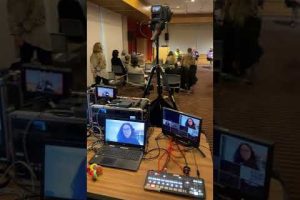
Since the pandemic, livestreaming has become a permanent fixture in church life. A professional livestream setup requires cameras (PTZ or DSLR), a video switcher (like Blackmagic ATEM), encoding software, and reliable internet bandwidth. Many churches now produce multi-camera broadcasts with graphics overlays, prayer request slides, and giving prompts — all managed through integrated church AV control systems.
Content Management and Church Presentation Software
Tools like ProPresenter, EasyWorship, and MediaShout have become industry standards for managing worship slides, lyrics, videos, and cue sheets. These platforms integrate directly with projection and display hardware, allowing operators to trigger content seamlessly in real time.
Immersive Audio
Some forward-thinking churches are adopting spatial audio and immersive sound formats similar to those used in cinemas. Systems like Dan Dugan Sound Design automixing or L-Acoustics immersive arrays deliver a three-dimensional sound field that envelops the congregation, making the worship experience feel incredibly intimate even in large spaces.
Budget Considerations and Expert Tips

Budget is often the biggest constraint when planning audio visual equipment for churches. Here are practical tips from experienced church AV integrators:
- Prioritize sound over visuals. People will tolerate a mediocre screen but will leave if they can’t hear clearly. Allocate at least 40–50% of your budget to the audio system.
- Buy used or refurbished gear. Many churches upgrade every 5–7 years, meaning high-quality equipment is frequently available at 40–60% of retail.
- Hire a professional installer. Improperly mounted speakers, incorrectly calibrated systems, and poorly positioned projectors create more problems than they solve. A qualified AV integrator ensures your investment performs optimally.
- Plan for scalability. Choose equipment that allows future expansion. A mixer with open I/O, a projection system with additional output capability, and a lighting rig with empty channels all provide room to grow.
- Invest in training. The best equipment in the world is useless without people who know how to operate it. Budget for training your volunteers or staff on your specific system.
- Consider total cost of ownership. LED lighting and efficient equipment reduce electricity bills. Service contracts and extended warranties protect against costly repairs.
A typical church AV system cost ranges from $3,000–$15,000 for small congregations, $20,000–$75,000 for medium churches, and $100,000+ for large sanctuaries with comprehensive productions. These numbers vary widely based on brand selection, room complexity, and installation requirements.
Installation and Maintenance Best Practices
Once your church media setup is in place, ongoing maintenance ensures longevity and consistent performance.
- Regular cleaning: Dust projector lenses, clean display screens, and wipe microphone windscreens weekly.
- Software updates: Keep presentation software, mixing console firmware, and streaming platforms updated for security and feature improvements.
- Cable management: Label every cable at both ends. Use cable ramps and truss storage to prevent damage and tripping hazards.
- Seasonal system checks: Before major holidays like Easter and Christmas — when your system sees peak use — run a full diagnostic on audio, video, and lighting.
- Spare parts inventory: Keep backup microphones, cables, fuses, and a spare projector bulb (if applicable) on hand.
Conclusion
Investing in the right audio visual equipment for churches transforms worship from a passive experience into an immersive, engaging, and deeply meaningful gathering. Whether you’re outfitting a small fellowship hall or equipping a multi-thousand-seat sanctuary, the principles remain the same: prioritize clarity, invest in quality sound, choose displays that fit your space, and never underestimate the impact of thoughtful lighting. Work with experienced AV integrators, train your team thoroughly, and maintain your equipment consistently. The result will be a worship environment that honors your congregation and serves your mission for years to come.
Frequently Asked Questions
What is the best sound system for a small church with under 100 members?
For small churches, powered PA speakers from brands like QSC, JBL, or Yamaha paired with a basic digital mixer such as the Yamaha MG series or Behringer X Air provide excellent clarity. Add two wireless handheld microphones and a condenser pulpit mic, and you have a reliable foundation. Avoid oversized systems — they create feedback and complexity that small volunteer teams can’t manage.
How do I choose between a projector and an LED display for my church?
Projectors work well in dimly lit sanctuaries and offer large image sizes at lower cost. However, they require screen replacement over time and lose brightness in ambient light. LED displays are brighter, more durable, and better suited for well-lit environments, but carry a higher upfront cost. For most churches with 200+ members, direct-view LED or commercial displays are becoming the preferred choice.
What lighting equipment do churches actually need?
At minimum, a church needs LED par cans for stage wash, one or two follow spots for the speaker, and a basic DMX controller. As your production grows, add moving head fixtures for dynamic effects and pixel tape for architectural accent lighting. You don’t need a full concert rig — focus on clean, even stage illumination that flatters skin tones and eliminates shadows.

How much does a complete church AV installation cost?
Installation costs vary significantly. A small church AV package typically costs $3,000–$15,000 including equipment and basic installation. Medium churches should budget $20,000–$75,000. Large churches with multi-camera livestreaming, LED walls, and professional lighting can expect $100,000–$500,000+. Always get multiple quotes from reputable church AV integrators.
Absolutely. Modern church audiovisual solutions are designed with multi-platform output in mind. A proper setup includes cameras, a video switcher, an encoder, and integration with platforms like YouTube, Facebook Live, and Twitch. Many churches also produce short-form video content from the same camera setup for social media outreach. Your AV system can easily serve both in-person and digital ministry needs simultaneously.
How often should a church upgrade its AV equipment?
Most church AV equipment has a useful lifespan of 5–7 years for electronics like mixers, projectors, and displays. Lighting fixtures, especially LEDs, can last 10+ years. However, churches that see heavy use or have rapid growth may benefit from upgrading every 4–5 years to keep pace with technological advances and increasing congregation expectations.