If you have always dreamed of sitting down at a piano and playing beautiful music but assumed lessons would cost a fortune, the reality today is far more encouraging. A high-quality free piano course can take you from absolute beginner to confident player without spending a single dollar. The internet is overflowing with structured lessons, interactive tools, and expert guidance that rival traditional instruction — and the best part is that the barrier to entry has never been lower. Whether you are picking up the keys for the first time or refreshing forgotten skills, this guide walks you through everything you need to know about launching your piano journey with completely free resources.
Why Free Piano Courses Are a Game-Changer for Beginners
Historically, learning piano meant hiring a private instructor, purchasing sheet music, and committing to a significant financial investment. Today, that paradigm has shifted dramatically. Free piano course options now offer structured curricula, video demonstrations, interactive feedback, and community support — all at zero cost. This accessibility has democratized music education in a way that was unimaginable just a decade ago. A free piano course removes financial anxiety, letting learners focus entirely on skill development rather than worrying about tuition fees or subscription renewals.

What makes these courses especially powerful is that they are designed by professional pianists and experienced educators who understand how adult and young learners acquire new skills. Many platforms organize content into progressive modules, ensuring that you build a solid foundation before tackling more complex pieces. You can learn at your own pace, revisit tricky sections as many times as needed, and practice on your own schedule.
What You Can Learn Without Spending a Dime
A well-structured free online piano course typically covers a wide range of topics that go well beyond simply reading notes. Here is what most quality programs include:
- Proper hand positioning and finger technique
- Music theory fundamentals including scales, chords, and intervals
- Reading sheet music and understanding rhythm
- Playing popular songs and classical pieces step by step
- Pedal usage and dynamics for expressive performance
- Improvisation and playing by ear
- Basic sight-reading exercises for faster learning
Best Free Piano Courses and Platforms Available Online
Not all free piano resources are created equal. Some offer polished video lessons with clear explanations, while others provide interactive on-screen keyboards that respond in real time. Understanding the strengths of each platform helps you choose the right fit for your learning style.
YouTube Channels That Feel Like a Real Course
YouTube remains one of the most powerful free piano learning ecosystems available. Channels like PianoTV, Pianote, HDpiano, and Pianoteach deliver lessons that feel like being in a classroom. These creators break down complex pieces into manageable sections, explain musical concepts clearly, and often provide multiple camera angles so you can see exactly how each hand moves. Many of these channels follow a curriculum-style format, meaning you can progress sequentially from beginner to advanced levels without getting lost.
Interactive Free Piano Learning Websites
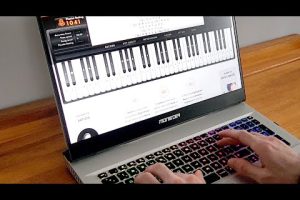
Beyond video platforms, several websites offer structured free piano courses with interactive features. Simply Piano offers a limited free tier that listens to your playing through your device microphone and gives instant feedback. Flowkey provides select songs for free with visual sheet music and hand-position guides. MuseScore offers a massive library of free sheet music that pairs beautifully with any video tutorial. These tools create a more immersive experience compared to passive video watching alone.
How to Structure Your Free Piano Learning Journey
The biggest mistake self-learners make is jumping into songs without building foundational skills. To get the most out of any free piano course, you should follow a deliberate progression that covers three distinct stages.
Beginner Stage: Building the Foundation
During the first few weeks of your free piano course, focus entirely on fundamentals. This means learning the layout of the keyboard, understanding the musical alphabet, and mastering proper posture. Sit at the correct height with your forearms parallel to the floor, keep your wrists relaxed, and use a curved finger position from the very beginning. Beginners should spend time on simple five-finger exercises, basic major scales, and easy songs like “Ode to Joy” or “Chopsticks” that reinforce coordination between both hands.
Intermediate Stage: Expanding Your Skills
Once you can play basic scales and simple songs with both hands independently, it is time to introduce more challenging concepts. An intermediate free piano course should cover minor scales, seventh chords, arpeggios, and more complex rhythm patterns. This is also the stage where you begin playing full songs with both hands simultaneously, learning how to coordinate your eyes reading sheet music with your fingers on the keys. Practice slow hands-separate drills before combining them at full tempo.
Advanced Stage: Mastering Complex Pieces
Advanced learners using free resources should focus on interpretation, expression, and technical precision. Explore works by composers like Chopin, Debussy, and Beethoven using free sheet music libraries. Advanced courses often teach pedaling techniques, voicing chords for richer sound, and memorization strategies. At this stage, playing along with professional recordings and analyzing how skilled pianists interpret pieces becomes an invaluable part of your development.
Comparison Table: Free vs. Paid Piano Courses
Understanding what you gain from a free piano course compared to a paid alternative helps set realistic expectations and highlights the remarkable value of today’s free options.
| Feature | Free Piano Course | Paid Piano Course |
| Cost | $0 | $50 to $2,000+ |
| Video Lessons | Extensive library available | Usually included |
| Interactive Feedback | Limited to some apps | Often includes live teacher feedback |
| Curriculum Structure | Well-organized on top platforms | Typically highly structured |
| Community Support | Active forums and comment sections | Private groups or forums |
| Pace of Learning | Completely self-paced | May follow a fixed schedule |
| Sheet Music Access | Free libraries and links provided | Often included |
| Certification | Usually not offered | Often available |
Expert Tips for Maximizing Free Piano Education
Simply enrolling in a free piano course is not enough — how you use it determines your progress. Here are proven strategies from experienced piano educators and successful self-taught players:
- Set a consistent daily practice schedule. Even fifteen minutes per day produces better results than two-hour sessions once a week. Consistency builds muscle memory far more effectively than cramming.
- Use a metronome from day one. Many beginners neglect timing, which leads to bad habits that are painful to correct later. Free metronome apps are widely available and should become part of every practice session.
- Record yourself regularly. Listening back to your playing reveals issues with timing, dynamics, and hand position that are difficult to notice in the moment.
- Focus on one song or exercise at a time. Jumping between too many pieces leads to shallow learning. Master each piece before moving to the next.
- Supplement video lessons with actual practice. Watching tutorials is passive learning. The real progress happens when your fingers are on the keys, actively applying what you have watched.
- Join online communities for accountability. Reddit’s r/piano, Facebook piano groups, and Discord servers dedicated to piano learning provide motivation, tips, and constructive feedback from fellow learners.

Frequently Asked Questions About Free Piano Courses
Can you actually become a competent pianist using only a free piano course?
Absolutely. Many professional pianists and music educators credit free online resources for a significant portion of their development. While a private instructor provides personalized correction, a disciplined learner using structured free piano course materials can reach a high level of proficiency. The key ingredients are consistent practice, proper technique from the start, and patience with the learning curve.
What is the best free piano course for absolute beginners?
For someone who has never touched a piano, platforms like Pianote (free tier), YouTube’s PianoTV channel, and the beginner modules on Flowkey are excellent starting points. Look for courses that begin with keyboard geography, finger numbering, and simple five-finger positions before introducing reading notation.
How long does it take to learn piano for free?
Progress depends entirely on the frequency and quality of practice. Most learners using a free piano course can play simple songs with both hands within two to three months of daily practice. Reaching an intermediate level where you can tackle classical pieces or complex pop arrangements typically takes one to two years of consistent effort.
Do I need a full-size 88-key piano to start a free online piano course?
No. While an 88-key weighted digital piano or acoustic piano is ideal long-term, beginners can start on a 61-key or 76-key keyboard. Many free piano course lessons use only a portion of the keyboard, especially in the early stages. You can always upgrade your instrument as your skills grow.
Are there free piano courses that provide real-time feedback?
Yes. Apps like Simply Piano and Skoove offer free tiers that use your device’s microphone to listen to your playing and provide instant feedback on accuracy and timing. While not as detailed as a live teacher, this technology has improved dramatically and serves as a helpful supplement to video-based free piano courses.
Conclusion
The availability of a high-quality free piano course today is nothing short of remarkable. Between structured video lessons, interactive apps, comprehensive sheet music libraries, and supportive online communities, anyone with a keyboard or piano and an internet connection can embark on a genuine musical education. The path from novice to confident player does not require expensive tuition or rigid schedules — it requires curiosity, consistency, and the willingness to practice. Start with the fundamentals, progress at your own pace, and remember that every master pianist once sat down at a keyboard for the very first time, just like you. The keys are waiting, and the best time to begin your free piano journey is right now.