Learning to play the piano doesn’t have to drain your wallet, and if you’ve been searching for free piano lessons for dummies, you’re already on the right track. The idea that mastering a musical instrument requires expensive tutors or structured music schools is a myth that has held countless beginners back for decades. Today, anyone with an internet connection can access world-class piano instruction without spending a single dollar. Whether you’re a complete novice who doesn’t know the difference between middle C and a whole rest, or someone picking up the keys after years away, free resources have evolved dramatically in quality and variety. This comprehensive guide walks you through everything you need to know about starting your piano journey from absolute scratch using free tools, strategies, and platforms that actually deliver results.
What Exactly Are Free Piano Lessons for Dummies?
When we talk about free piano lessons for dummies, we’re referring to no-cost educational content designed specifically for people with zero prior knowledge of piano playing. These resources break down fundamental concepts like proper hand positioning, music notation basics, finger exercises, chord progressions, and simple songs into digestible, beginner-friendly formats. Unlike traditional piano instruction that often assumes some background knowledge, these lessons start from the very beginning — what a piano keyboard looks like, how to sit at the instrument correctly, and how to read the musical staff. The term “dummies” here isn’t about intelligence; it’s about meeting learners exactly where they are, with zero assumptions and maximum clarity.
The beauty of modern free piano education is that it covers a full spectrum of learning styles. Visual learners thrive on video demonstrations, auditory learners benefit from listening exercises and play-along tracks, and kinesthetic learners need interactive apps that provide real-time feedback on timing and accuracy. The best free resources combine multiple formats to create a holistic learning experience that rivals traditional lessons in effectiveness.
Why Starting with Free Piano Lessons Is a Smart Move
Zero Financial Risk, Maximum Exploration

The single biggest advantage of beginning with free piano lessons for beginners is the absence of financial commitment. Before you invest in a private instructor or a subscription-based platform, you can test whether piano learning genuinely resonates with you. Many people purchase expensive courses only to discover they don’t enjoy the practice routine or the teaching style doesn’t click. Free resources let you experiment with different approaches — YouTube tutorials, interactive apps, structured online courses — and find what genuinely works for your brain and your schedule.
Building Consistency Through Low-Barrier Access
Psychology tells us that lowering the barrier to entry dramatically increases follow-through. When lessons are free and instantly accessible, you’re far more likely to return for your next practice session. Consistent, daily practice — even just fifteen to twenty minutes — is the single most important factor in piano progress. Free resources remove the guilt and hesitation that sometimes accompany paid commitments, making it easier to build a sustainable habit from day one.
Access to Multiple Teaching Perspectives
When you rely on a single paid instructor, you get one perspective on technique, interpretation, and musical theory. Free platforms give you access to dozens or even hundreds of different teachers, each with unique approaches to explaining the same concept. Some instructors emphasize sight-reading from the start, while others focus on playing by ear and chord-based improvisation. Exploring multiple free sources helps you develop a well-rounded musical foundation and discover which teaching philosophy aligns with your goals.
Best Platforms and Resources for Free Piano Lessons
Not all free piano resources are created equal. Some are polished, comprehensive, and pedagogically sound, while others are rushed or incomplete. Here are the most reliable platforms and resources for beginner piano lessons for absolute beginners that you can start using today.
YouTube Channels That Deliver Real Value
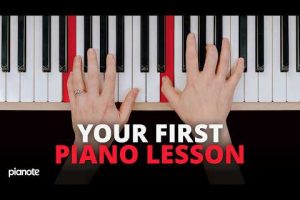
YouTube remains the single most powerful free resource for learning piano. Channels like Pianote, PianoTV, and Hoffman Academy offer structured, curriculum-style content that progresses logically from your first lesson through intermediate and advanced levels. Pianote, for example, provides color-coded sheet music and a community forum where students can share progress and ask questions. Hoffman Academy is particularly beloved for its child-friendly and adult-friendly approach, using engaging characters and stories to teach music theory concepts without overwhelming the learner.
Interactive Apps with Built-In Feedback
Mobile and desktop apps like Simply Piano (with its free tier), Flowkey, and Perfect Piano use your device’s microphone or a MIDI connection to listen to your playing and provide instant feedback on accuracy and timing. These apps gamify the learning process with progress tracking, achievement badges, and song unlocks that keep motivation high. While free tiers often limit access to full song libraries, they still provide excellent foundational exercises and sample lessons that make them invaluable starting points.
Structured Online Course Platforms
Websites like Musictheory.net and Teoria offer free lessons on music theory fundamentals — the grammar behind everything you’ll play on the piano. Understanding key signatures, time signatures, intervals, and chord construction transforms your playing from mechanical note-hitting into genuine musical expression. These sites pair written explanations with interactive exercises and ear-training tools that develop your musicianship holistically.

Community-Driven Learning Resources
Reddit communities like r/piano and r/WeAreTheMusicMakers host ongoing threads where beginners share free resources, ask questions, and receive constructive feedback from experienced players. Forum-based learning creates accountability and exposes you to real-world perspectives that structured courses sometimes miss, including common pitfalls, practice strategies, and repertoire recommendations tailored to your skill level.
Your Step-by-Step Roadmap for Learning Piano for Free
Jumping into random tutorials without a plan leads to confusion and slow progress. Here’s a structured roadmap that takes you from absolute beginner to confident early-intermediate player using exclusively free resources.
- Weeks 1–2: Familiarize Yourself with the Keyboard — Learn the layout of the piano, identify middle C, understand the pattern of black and white keys, and practice proper seated posture and hand position. Focus on playing simple five-finger exercises across all twelve keys.
- Weeks 3–4: Read Basic Music Notation — Study the treble clef and bass clef, learn note names on the staff, understand rhythm and note values (whole notes, half notes, quarter notes, eighth notes), and practice clapping or counting rhythms away from the piano.
- Weeks 5–6: Play Your First Scales and Simple Melodies — Start with C major scale using proper fingering techniques, then attempt beginner songs like “Ode to Joy” or “Chopsticks” that reinforce the notes you’ve learned.
- Weeks 7–8: Introduce Basic Chords and Harmony — Learn major and minor triads, practice simple chord progressions like I-IV-V-I, and begin playing lead sheets that combine melody with chord accompaniment.
- Weeks 9–12: Build Repertoire and Expand Technique — Play complete beginner songs from start to finish, work on hands-separate and hands-together coordination, and explore different musical genres (classical, pop, jazz) to discover your preferences.
- Ongoing: Deepen Music Theory and Ear Training — Continue studying intervals, key signatures, and chord qualities while developing your ability to play by ear and transcribe simple melodies by listening.
Free vs Paid Piano Learning: A Quick Comparison
Understanding what free resources can and cannot do helps you set realistic expectations and make informed decisions about future investments.
| Feature | Free Piano Lessons | Paid Piano Lessons |
| Cost | $0 — completely free | $30–$100+ per lesson or monthly subscription |
| Flexibility | Learn at your own pace, any time | Scheduled sessions with set pace |
| Personalized Feedback | Limited — mostly self-assessment | Direct correction from an instructor |
| Curriculum Structure | Varies — some well-structured, some random | Typically customized to your level |
| Access to Materials | Extensive libraries available immediately | Materials provided by the instructor |
| Accountability | Self-driven — requires discipline | Instructor tracks progress and deadlines |
| Best For | Casual learners, hobbyists, budget-conscious beginners | Serious students preparing for exams or performances |
For most people starting out, free piano lessons combined with occasional paid feedback sessions creates the ideal balance. You can build a strong foundation independently and then invest in targeted lessons once you’ve identified specific technical challenges or musical goals that require expert guidance.
Common Mistakes Beginners Make and How to Avoid Them
- Skipping proper hand position: Developing bad habits early creates technical limitations that are painful to unlearn later. Spend dedicated time on finger curvature, wrist relaxation, and arm weight before rushing into songs.
- Ignoring rhythm and timing: Playing notes correctly but without a steady beat produces music that sounds disjointed. Use a metronome — free apps are available — from your very first lesson.
- Practicing hands together too soon: Hands-separate practice builds muscle memory far more effectively. Master each hand individually before combining them.
- Chasing difficult songs prematurely: Playing pieces far above your current level leads to frustration and reinforces sloppy technique. Choose repertoire that matches your current skill level and build upward gradually.
- Neglecting music theory: Understanding why chords work the way they do, how keys relate to each other, and what intervals create tension or resolution transforms you from a note-player into a genuine musician.
Expert Tips to Accelerate Your Free Piano Learning Journey

Record yourself regularly. Audio and video recordings reveal problems you can’t hear in real time — uneven rhythms, unclear note articulation, and postural tension that creeps in unnoticed. Listening back objectively accelerates improvement faster than any other single practice habit.
Use a practice journal. Even a simple notes app where you log what you practiced, how long you spent, and what felt challenging keeps your learning intentional and measurable. Reviewing past entries reveals patterns and progress you might otherwise overlook.
Join free online communities. Platforms like Discord servers dedicated to piano learners provide peer support, motivation, and the opportunity to share recordings and receive constructive feedback from fellow students and experienced players alike.
Learn songs you actually love. Motivation dies when practice feels like a chore. Supplement your structured lessons with songs you genuinely enjoy — even simplified arrangements — to keep your practice sessions exciting and emotionally engaging.
Conclusion: Your Free Piano Journey Starts Today
The myth that learning piano requires significant financial investment has never been more outdated. With the wealth of high-quality free piano lessons for dummies available online, there has never been a better time to sit down at a keyboard and begin your musical journey. The resources exist, the knowledge is accessible, and the only thing standing between you and progress is showing up consistently and practicing with intention. Start with the fundamentals, build your routine gradually, explore multiple platforms to find your ideal learning style, and remember that every professional pianist once sat in the same position as a complete beginner. Your musical future starts with a single note — play it today.
Frequently Asked Questions
Can I truly learn piano from free resources without ever paying for a teacher?
Yes, many self-taught pianists have achieved impressive proficiency using exclusively free resources. However, having periodic feedback from an experienced teacher — even just once a month — helps correct technical issues early and accelerates progress significantly. Free resources are excellent for building foundations and intermediate skills, but advanced techniques and nuanced musical expression often benefit from expert guidance.
How long does it take to learn piano using free lessons as a complete beginner?
Most dedicated beginners can play simple songs with both hands within 8 to 12 weeks of consistent daily practice (15–30 minutes per day). Reaching intermediate-level fluency where you can tackle more complex repertoire typically takes 1 to 2 years, depending on practice frequency, natural aptitude, and the quality of resources you choose.
What equipment do I need to start learning piano for free?
A keyboard or piano, a device to access free lessons (smartphone, tablet, or computer), and optionally a pair of headphones are the only essentials. You don’t need a digital piano with weighted keys to start, though upgrading to one as you progress will improve your technique development. Free metronome apps and sheet music websites complete the setup without any cost.
Are YouTube piano lessons actually effective for learning piano the right way?
Yes, YouTube lessons can be highly effective when you choose reputable channels with structured curricula rather than random individual tutorials. The best YouTube piano educators break concepts down systematically, provide clear demonstrations, and offer downloadable resources like sheet music. The main limitation is the lack of personalized feedback, which you can partially compensate for by recording yourself and comparing your playing to the instructor’s demonstrations.
What is the best free piano app for absolute beginners?
Simply Piano and Flowkey both offer free tiers that are excellent for beginners, with interactive features that listen to your playing and provide real-time feedback. Hoffman Academy’s free YouTube course is also outstanding for its thorough, step-by-step approach. The “best” app depends on your learning style — if you prefer video instruction, YouTube channels like Pianote excel; if you want interactive feedback, an app is the better choice.