


An at home sleep study has completely transformed the way sleep medicine professionals diagnose obstructive sleep apnea (OSA) and other sleep-related breathing disorders. For years, the only way to get a proper sleep assessment meant spending a night in a sterile sleep lab, hooked up to dozens of electrodes and sensors. Today, patients can complete a home sleep test (HST) in the comfort of their own bed, wearing a compact device that records critical physiological data overnight. Whether you are a chronic snorer, someone who experiences excessive daytime sleepiness, or a person who has been told by a partner that your breathing stops and starts during the night, an at home sleep study offers a convenient, affordable, and surprisingly accurate diagnostic pathway. This comprehensive guide covers everything you need to know about at-home sleep testing, from how the devices work and who qualifies to interpreting results and making informed decisions about your sleep health.
What Is an At-Home Sleep Study?
An at home sleep study, also known as a home sleep apnea test (HSAT) or portable monitoring test, is a diagnostic tool designed to measure key biophysical parameters while you sleep in your natural environment. Unlike a traditional in-lab polysomnography (PSG), which records brain waves, eye movements, muscle activity, and more, a home sleep test typically focuses on variables directly related to breathing disruptions. These include airflow, respiratory effort, blood oxygen saturation (SpO2), heart rate, and body position. The goal is to detect episodes of apnea — complete pauses in breathing — and hypopnea — partial reductions in airflow — that characterize obstructive sleep apnea. Most modern home sleep devices are compact, wearable units that attach to your finger, chest, and nostrils, making setup straightforward even for people who are not technologically inclined.
How Does a Home Sleep Apnea Test Work?
The process of conducting an at home sleep test is far simpler than most people expect. Here is a step-by-step breakdown of what typically happens.
- Prescription and Referral: You visit a physician, sleep specialist, or use a telehealth platform that evaluates your symptoms and risk factors using tools like the STOP-BANG questionnaire or the Epworth Sleepiness Scale.
- Device Selection: A sleep technologist or provider selects the appropriate portable monitor based on your clinical presentation. Common brands include the WatchPAT, Nox T3, Embletta, and Itamar WatchSleep.
- Device Pickup or Shipping: You either pick up the device from a clinic or receive it by mail with detailed instructions.
- Setup at Home: Before bed, you attach sensors according to the provided guide — usually a finger pulse oximeter clip, a nasal cannula or airflow sensor, and a chest strap for respiratory effort.
- Overnight Recording: You sleep normally while the device records data for six to eight hours.
- Return and Analysis: The device is returned or uploaded, and a board-certified sleep physician interprets the data, generating an Apnea-Hypopnea Index (AHI) score and a detailed report.
Many patients are surprised by how painless and non-invasive the experience is. The device is lightweight, and most users report sleeping better during a home test than they ever did in a lab setting — a phenomenon known as the “first-night effect” in clinical sleep research.
Types of At-Home Sleep Study Devices
Not all home sleep testing devices are created equal. Understanding the different categories can help you and your provider choose the right one. Below are the primary types of portable monitors used in modern home sleep diagnostics.
Type 3 Portable Monitors
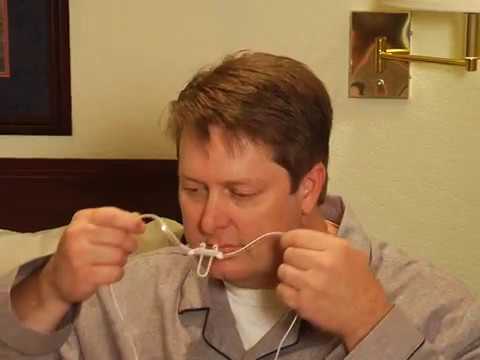
These are the most common devices used for at-home sleep testing. A Type 3 monitor records a minimum of four channels of data, typically including airflow, respiratory effort, oxygen saturation, and heart rate. They are designed specifically for detecting moderate to severe obstructive sleep apnea and are widely covered by insurance providers including Medicare. The WatchPAT One and the Itamar WatchPAT are popular examples that use peripheral arterial tone (PAT) technology for highly reliable readings.
Type 2 Full-Channel Portable Monitors
Type 2 devices are more comprehensive and can record up to seven or more channels, sometimes including EEG-like brain activity channels. They bridge the gap between a full in-lab PSG and a basic Type 3 monitor. These are often used when a more detailed assessment is needed but an overnight lab visit is impractical.
Single-Biomarker Devices
Some newer devices focus on a single measurable indicator, such as finger blood oxygen dips or heart rate variability. While less comprehensive, these can serve as effective screening tools, especially in primary care settings where sleep disorders are underdiagnosed.
At-Home Sleep Study vs. In-Lab Sleep Study: A Comparison
Choosing between a home sleep test and an in-lab study depends on your medical history, symptom severity, and personal preferences. The table below outlines the key differences.
| Feature | At-Home Sleep Study | In-Lab Sleep Study (PSG) |
| Setting | Your own bedroom | Accredited sleep center |
| Data Recorded | Airflow, SpO2, heart rate, respiratory effort | Brain waves (EEG), eye movements, muscle activity, airflow, SpO2, and more |
| Accuracy for OSA | High for moderate-to-severe OSA | Gold standard for all sleep disorders |
| Cost | Typically $150–$500 | Typically $1,000–$3,000 |
| Setup Time | 10–20 minutes | 30–60 minutes with a technologist |
| Comfort Level | High — familiar environment | Lower — unfamiliar surroundings |
| Insurance Coverage | Widely covered for suspected OSA | Covered for complex cases |
| Turnaround Time | 3–7 business days for results | 5–14 business days for results |
For patients with a high pre-test probability of moderate-to-severe obstructive sleep apnea, research consistently shows that home sleep testing delivers diagnostic accuracy comparable to in-lab studies for detecting AHI events. However, in-lab studies remain superior for diagnosing central sleep apnea, insomnia disorders, periodic limb movement disorder, and parasomnias like REM behavior disorder.
Who Is a Good Candidate for an At-Home Sleep Study?
Home sleep testing is ideal for certain patient profiles. You are likely a good candidate if you:
- Are between the ages of 18 and 65 (most device manufacturers specify this range)
- Have a high likelihood of moderate-to-severe obstructive sleep apnea based on symptom screening
- Have no significant comorbidities such as congestive heart failure, neuromuscular disease, or chronic lung disease that could confound results
- Have no diagnosed sleep disorders beyond suspected OSA
- Prefer the convenience and lower cost of testing in your own home
- Have previously had an unsuccessful in-lab sleep study due to anxiety or discomfort
Patients with complex medical histories, suspected central sleep apnea, or coexisting sleep disorders should discuss in-lab testing with their provider. A board-certified sleep medicine physician can use clinical decision tools to determine the most appropriate testing pathway for your specific situation.
How to Prepare for Your Home Sleep Test
Proper preparation can significantly improve the quality of data collected during your at home sleep study. Follow these practical tips to ensure the best possible results:
- Avoid alcohol and sedatives for at least 24 hours before the test, as they can suppress respiratory effort and alter your natural breathing patterns.
- Stick to your normal routine — go to bed at your usual time and wake up at your normal hour.
- Avoid napping during the day of the test so you are genuinely sleepy when you go to bed.
- Keep your bedroom environment typical — use your regular bedding, pillow, and sleep position. Do not try to sleep in an unusual way just because sensors are attached.
- Shower and avoid lotions on your chest or fingers, as these can interfere with sensor adhesion and signal quality.
- Read the instruction manual carefully beforehand so you know exactly where each sensor goes. Most kits include visual guides or video links.
- Keep your phone nearby if your device requires Bluetooth synchronization or a timer to start recording.
One of the most common mistakes patients make is overthinking the setup. The devices are designed to be forgiving — even if a sensor shifts slightly during the night, the algorithm can often compensate. The most important thing is to relax and sleep as naturally as possible.
Pros and Cons of Home Sleep Testing
Like any diagnostic tool, at-home sleep studies come with distinct advantages and limitations.
Pros
- Convenience: Complete the test on your own schedule, in your own bed.
- Cost-effectiveness: Significantly cheaper than in-lab studies, often costing a fraction of the price.
- Accessibility: Ideal for patients in rural areas or those with mobility challenges who cannot easily travel to a sleep center.
- Comfort: Sleeping in a familiar environment reduces anxiety and often produces more representative sleep data.
- Speed: Faster turnaround from test to diagnosis, meaning treatment can begin sooner.
- Higher completion rates: More patients actually complete the test compared to lab-based studies.
Cons
- Limited data channels: Cannot capture brain activity, so it does not measure sleep stages or detect non-breathing sleep disorders.
- False negatives possible: Mild cases of OSA or upper airway resistance syndrome may be missed.
- User error: Incorrect sensor placement can lead to inaccurate or incomplete readings.
- Not suitable for all patients: Those with certain comorbidities or complex sleep presentations need in-lab evaluation.
- No real-time technologist support: If a sensor fails, there is no on-site staff to fix it immediately.
Understanding Your Results
Once your home sleep apnea test results are analyzed, you will receive an Apnea-Hypopnea Index (AHI), which represents the average number of breathing pauses per hour of sleep. An AHI of 5 to 15 indicates mild OSA, 15 to 30 indicates moderate OSA, and anything above 30 is classified as severe OSA. Your report will also include oxygen desaturation indices, time spent below various SpO2 thresholds, and sometimes a sleep efficiency estimate. Based on these findings, your provider will recommend a treatment plan, which commonly includes continuous positive airway pressure (CPAP) therapy, oral appliance therapy, positional therapy, lifestyle modifications, or referral for further evaluation if the results are inconclusive.

It is important to remember that a home sleep test is a diagnostic screening tool, not a replacement for comprehensive sleep medicine evaluation. If your results are negative but symptoms persist, your physician may recommend a full in-lab PSG to investigate further.
Frequently Asked Questions
Can I use an at-home sleep study if I have insomnia?

Home sleep tests are specifically designed to detect breathing-related sleep disorders like obstructive sleep apnea. If your primary concern is insomnia, a home sleep study may not provide useful diagnostic information. An in-lab polysomnography or a specialized insomnia evaluation would be more appropriate for assessing sleep onset difficulties, frequent awakenings, or non-restorative sleep without an obvious breathing cause.
How accurate is a home sleep test for detecting sleep apnea?
For moderate-to-severe obstructive sleep apnea, home sleep tests demonstrate sensitivity and specificity rates of approximately 90% or higher compared to in-lab studies. Accuracy tends to decrease for mild cases because the limited data channels may not capture subtle respiratory events. Working with a qualified sleep physician ensures proper interpretation of your results and minimizes the risk of misdiagnosis.
Does insurance cover an at-home sleep study?
Most major insurance plans, including Medicare and commercial carriers like UnitedHealthcare, Blue Cross Blue Shield, and Aetna, cover home sleep testing when medically indicated. Typically, you need a referral from a physician, documentation of symptoms such as loud snoring, witnessed apneas, or excessive daytime sleepiness, and a qualifying risk assessment. Always verify coverage details with your specific insurance provider before scheduling the test.
What happens if my at-home sleep study results are inconclusive?
If the device does not record enough usable data — for example, if sensors shifted during the night or you did not sleep long enough — the test is considered inconclusive. In this case, your physician will likely recommend either repeating the home test or proceeding to an in-lab overnight polysomnography. An inconclusive result does not mean something is wrong with you; it simply means more data is needed to make an accurate diagnosis.
Can children do an at-home sleep study?
Home sleep testing is primarily validated for adults aged 18 to 65. Pediatric sleep apnea requires a different diagnostic approach, usually involving in-lab polysomnography with pediatric-specific sensors and monitoring parameters. Children with suspected sleep-disordered breathing should be evaluated by a pediatric sleep specialist who can determine the most appropriate testing method based on their age, anatomy, and symptom presentation.
Final Thoughts on At-Home Sleep Studies
The rise of at home sleep study technology represents one of the most meaningful advances in sleep medicine over the past decade. By democratizing access to sleep apnea diagnosis, these portable devices have helped millions of people identify a condition that, left untreated, increases the risk of cardiovascular disease, type 2 diabetes, cognitive decline, and motor vehicle accidents. If you suspect you or a loved one may have a sleep breathing disorder, taking the first step toward diagnosis has never been easier. Talk to your healthcare provider about whether a home sleep test is right for you, and take control of your sleep health from the comfort of home.