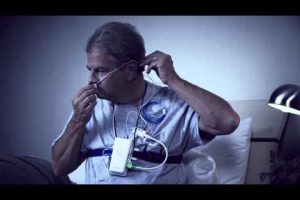
For sleep medicine professionals, home sleep testing (HST) has become one of the most essential diagnostic tools in identifying obstructive sleep apnea (OSA) and other sleep-related breathing disorders. Whether you’re a billing specialist, a sleep technologist, or a clinician looking to streamline your practice’s reimbursement workflow, understanding CPT codes for home sleep study is absolutely critical. These standardized codes dictate how services are reported to payers, determine reimbursement rates, and ensure compliance with evolving regulatory guidelines. In this comprehensive guide, we’ll walk you through every relevant CPT code, the differences between in-lab and home-based testing, Medicare’s specific rules, and practical tips to maximize accuracy and revenue while minimizing claim denials.
What Are CPT Codes for Home Sleep Studies?

Current Procedural Terminology (CPT) codes are the universal language used by healthcare providers to report medical, surgical, and diagnostic services to insurance companies. When it comes to home sleep apnea testing (HSAT), specific CPT codes differentiate unattended portable monitoring from traditional in-laboratory polysomnography. These codes exist across the CPT manual and carry distinct reimbursement implications depending on the payer, the type of equipment used, and the clinical setting.
Using the wrong code, omitting required modifiers, or failing to meet medical necessity documentation requirements can lead to claim denials, delayed payments, and even audit risk. That’s why mastering these codes is not optional — it’s a core competency for any sleep medicine practice.
Key CPT Codes for Home Sleep Testing
The following table breaks down the most commonly reported CPT codes relevant to home sleep studies, including their descriptions and typical use cases.
| CPT Code | Description | Common Use |
| 95806 | Sleep staging with 4 or more additional parameters; unattended home sleep test | Type 3 HSAT with cardiovascular monitoring |
| 95810 | Follow-up sleep study (CPAP titration or repeat study) | Post-diagnostic titration or repeat HSAT |
| 94664 | CPAP initiation and management | Auto-titrating PAP setup following HST diagnosis |
| G0399 | Home sleep test for Medicare beneficiaries | Medicare-covered unattended HST (now often bundled) |
| 95800 | Polysomnography; sleep staging with 4 or more additional parameters | In-lab attended PSG (for comparison) |
| 95803 | Polysomnography; sleep staging with 4 or more additional parameters, split night | In-lab split-night study |
The code 95806 is arguably the most important for home sleep study billing. It specifically covers unattended sleep testing with at least four recording parameters, including airflow, respiratory effort, heart rate, and oxygen saturation. This aligns with Type 3 portable monitoring devices commonly used in home sleep testing workflows.
Understanding Home Sleep Apnea Test Types and Their CPT Codes
Home sleep tests are categorized by the American Academy of Sleep Medicine (AASM) into four types based on the parameters measured:
- Type 1 (PSG): In-lab, attended, full-channel monitoring — typically coded as 95800 or 95803 for split-night studies
- Type 2: Portable monitoring with comprehensive channels, attended or unattended — this code is less commonly billed for home settings
- Type 3: Portable monitoring with a minimum of four channels including airflow, respiratory effort, heart rate, and oxygen saturation — coded as 95806
- Type 4: Continuous single or dual parameters (e.g., SpO2 or airflow only) — often not separately reportable under current guidelines
The distinction between these types directly impacts which CPT code you select. For home sleep study billing, Type 3 monitoring represented by CPT code 95806 is the standard for most commercially insured patients and Medicare beneficiaries.
Medicare Rules and Coverage for Home Sleep Study CPT Codes
Medicare has specific coverage criteria for home sleep testing that differ from commercial payers. Under Medicare’s Local Coverage Determinations (LCDs), home sleep studies must meet strict medical necessity guidelines. The patient must meet one of the following conditions:
- Have a high pretest probability of moderate-to-severe OSA based on a validated screening tool such as the STOP-BANG questionnaire
- Not have another sleep disorder that could explain their symptoms
- Not have a significant comorbidities that would make home testing inappropriate
Medicare previously used G0399 as a dedicated HCPCS code for home sleep testing. However, CMS has since integrated home sleep testing into the standard CPT code framework, meaning 95806 is now the primary code reported for Medicare HSAT claims. Always verify the latest Medicare National Coverage Determination (NCD) and local LCD updates before submitting claims.
Billing and Reimbursement Best Practices for Home Sleep Studies
Accurate billing for home sleep studies requires attention to several critical details. Follow these expert-recommended practices to reduce claim denials and improve reimbursement:

- Verify medical necessity documentation. The ordering provider must document the patient’s clinical symptoms, STOP-BANG score, and justification for an unattended home study rather than an in-lab PSG.
- Use the correct modifier. Append modifier -26 (professional component) or -TC (technical component) when applicable, depending on whether the physician interpretation is separate from the device rental and analysis.
- Document equipment type and channels. Payers want to know exactly which parameters were recorded. Specify in your claim notes that the test meets Type 3 criteria for code 95806.
- Separate the diagnostic study from PAP initiation. CPT code 95806 covers the diagnostic HST. If you are also initiating CPAP therapy, 94664 is reported separately — do not bundle them on the same claim without payer-specific guidance.
- Stay current with payer policies. Commercial insurers like UnitedHealthcare, Aetna, and Cigna each have slightly different HSAT coverage policies. Always check the payer’s medical policy before submitting.
Documentation Requirements for Home Sleep Study Coding
Proper documentation is the foundation of successful home sleep study billing. At a minimum, the medical record should include:
- Patient demographics and clinical history including snoring severity, witnessed apneas, daytime fatigue (Epworth Sleepiness Scale score)
- Pre-test probability assessment using a validated screening instrument
- Device manufacturer, model, and parameters recorded during the test
- Raw data interpretation and final sleep medicine physician interpretation report
- Apnea-Hypopnea Index (AHI) results, oxygen desaturation index, and any other calculated metrics
- Plan of care including CPAP recommendation if applicable
Without this level of documentation, claims for CPT 95806 and related home sleep study codes are at significant risk of denial or down-coding during audit.
Common Coding Errors to Avoid
Even experienced billing teams make mistakes when coding home sleep studies. Here are the most frequent errors that lead to claim rejections:
- Using 95800 instead of 95806: Code 95800 is for in-lab attended PSG. Using it for a home test will almost certainly trigger a denial.
- Omitting required parameters: If the home device does not record at least four channels (airflow, effort, heart rate, SpO2), code 95806 is not appropriate.
- Failing to distinguish attended from unattended: The CPT code system requires you to indicate whether the study was attended or unattended. Home sleep tests are unattended by definition.
- Bundling diagnostic and therapeutic services: Reporting the home sleep test and CPAP setup on a single claim line without proper modifier usage violates most payer guidelines.
- Ignoring modifier -59 or X-modifiers: When the HST and a separate evaluation and management (E/M) visit are performed on the same day, appropriate modifier usage is essential to bypass National Correct Coding Initiative (NCCI) edits.
Expert Tips for Optimizing Home Sleep Study Reimbursement
Top-performing sleep practices go beyond basic coding compliance. They implement systematic workflows that ensure every claim is clean the first time. Here are some advanced strategies:
1. Invest in EHR-integrated coding tools. Many modern sleep medicine EHR platforms include CPT code lookup functionality that auto-suggests the correct code based on the study type and device used. This reduces human error and accelerates claim submission.
2. Conduct regular claim audits. Review a random sample of 10–20 home sleep study claims per month. Check whether the codes, modifiers, and supporting documentation align with payer requirements. Catching errors before claims are submitted saves time and money.
3. Train front-desk staff on pre-authorization requirements. Many payers require pre-authorization before an HST is ordered. Failing to obtain this can result in full denial regardless of coding accuracy.
4. Track denial reason codes. If your practice uses a clearinghouse, review denial reason codes weekly. Patterns in denials — such as missing AHI data or insufficient medical necessity — should trigger workflow adjustments immediately.
5. Stay updated on AASM scoring guidelines. The AASM periodically updates scoring rules that affect how home sleep test results are interpreted and reported. Changes in hypopnea definitions or channel requirements can shift which CPT code is appropriate.
Home Sleep Study CPT Codes: At a Glance
To consolidate everything above, here is a quick-reference comparison of the most relevant CPT codes for home and in-lab sleep testing.
| Code | Setting | Attendance | Key Parameters | Payer Note |
| 95806 | Home | Unattended | 4+ parameters (airflow, effort, HR, SpO2) | Standard for Type 3 HSAT |
| 95800 | Lab | Attended | Full PSG channels | In-lab gold standard |
| 95810 | Lab or Home | Varies | Follow-up or repeat study | Requires separate medical necessity |
| 94664 | Clinical setting | Attended | CPAP titration | Report separately from HST |
| G0399 | Home | Unattended | Cardiovascular parameters | Medicare-specific; largely superseded by 95806 |
Frequently Asked Questions (FAQs)
1. What is the CPT code for home sleep apnea testing for Medicare patients?
The primary CPT code for Medicare home sleep testing is 95806. Medicare no longer uses G0399 as a separate code for home sleep studies; instead, it falls under the standard CPT 95806 descriptor for unattended home sleep testing with cardiovascular monitoring.
2. Can I bill CPT 95806 and 94664 on the same day?
Yes, you can bill both codes on the same date of service, but they represent separate services. CPT 95806 covers the diagnostic home sleep study, while 94664 covers CPAP initiation and management. Ensure your documentation supports both services and check payer-specific bundling rules.
3. What is the difference between CPT 95806 and CPT 95800?
CPT 95800 is used for in-laboratory attended polysomnography with full channel monitoring, while CPT 95806 is specifically designated for unattended home sleep testing with at least four recording parameters including cardiovascular channels. The key distinction is the setting (lab vs. home) and whether the study was attended or unattended.
4. What modifiers are required for home sleep study billing?

Modifier -26 (professional component) is used when the physician interpretation is billed separately from the technical component of the home sleep test. Modifier -59 may be needed when the HST is performed alongside a separate E/M service on the same day to indicate a distinct procedural service. Always confirm modifier requirements with the specific payer.
5. What documentation is needed to support a CPT 95806 claim?
The medical record must include the ordering provider’s clinical notes documenting medical necessity, the home sleep test device and parameters used, the raw data and physician interpretation report, the patient’s AHI and oxygen desaturation results, and a clear plan of care. Incomplete documentation is the leading cause of 95806 claim denials.
6. Is CPT 95806 reimbursed differently by commercial payers versus Medicare?
Yes, reimbursement rates differ significantly between Medicare and commercial payers. Medicare has a national reimbursement rate for 95806 that varies by geographic region, while commercial payers negotiate their own contracted rates. Some commercial plans may also require pre-authorization or impose stricter medical necessity criteria than Medicare. Always verify the payer’s fee schedule and policy before performing the test.
Conclusion
Mastering CPT codes for home sleep studies is no longer a niche skill — it is a core operational requirement for sleep medicine practices of all sizes. From selecting the correct code — primarily 95806 for unattended home sleep apnea testing — to ensuring thorough documentation and avoiding common coding pitfalls, every step in the billing workflow directly impacts your practice’s financial health and compliance standing. By staying current with payer policies, investing in proper staff training, and leveraging modern EHR tools, you can significantly reduce claim denials, accelerate reimbursement cycles, and deliver higher-quality patient care. The home sleep testing market continues to grow, and practices that code accurately and efficiently will be best positioned to thrive in this evolving landscape.