


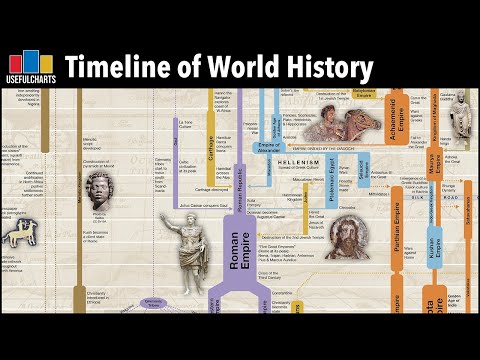
The classical era time period stands as one of the most transformative chapters in human history — a golden age where philosophy, governance, art, and science converged to lay the foundations of Western civilization. Whether you are a student, a history enthusiast, or someone researching ancient cultures, understanding this period unlocks a deeper appreciation for the world we live in today. This comprehensive guide explores the classical era timeline, its defining civilizations, cultural milestones, and lasting influence on modern society.
What Is the Classical Era Time Period?
The classical era generally refers to the period spanning roughly the 5th century BCE to the 5th century CE, with its core centered on ancient Greece and Rome. This timeframe is often subdivided into the Classical Greek period (5th–4th century BCE) and the Classical Roman period (1st century BCE–5th century CE). However, the broader definition of the classical era extends into adjacent civilizations, including Persian, Egyptian, and Hellenistic cultures that interacted with Greek and Roman societies.
The term “classical” derives from the Latin classicus, meaning “first-class” or “of the highest order.” Scholars adopted it to describe the artistic, literary, and intellectual standards that were considered exemplary models for later generations. When historians refer to the classical era time period, they are pinpointing a phase of extraordinary cultural flowering that produced enduring ideas in democracy, architecture, drama, and scientific inquiry.

Key Civilizations of the Classical Era
The classical world was not defined by a single empire or culture. Instead, it was a network of interconnected civilizations that influenced one another through trade, conquest, and intellectual exchange.
Ancient Greece
Ancient Greece is widely regarded as the cradle of the classical era. The Athenian Golden Age, under the leadership of statesmen like Pericles, witnessed the construction of the Parthenon, the birth of Athenian democracy, and the flourishing of tragic and comedic theater. Greek city-states — Athens, Sparta, Corinth, and Thebes — competed and collaborated in ways that drove innovation across every domain of life.
Key Greek contributions include:
- The development of direct democracy in Athens
- The works of philosophers like Socrates, Plato, and Aristotle
- The founding of the Olympic Games in 776 BCE
- Advances in mathematics, including Euclid’s geometry
- Masterpieces in sculpture, pottery, and temple architecture
The Roman Republic and Empire
Rome absorbed Greek culture and amplified it across Europe, North Africa, and the Near East. The Roman Republic (509–27 BCE) evolved into the Roman Empire (27 BCE–476 CE), creating one of the largest political entities in ancient history. Roman engineering, legal systems, and military strategy set standards that influenced societies for millennia.
Major Roman achievements during the classical era include:
- The construction of roads, aqueducts, and the Colosseum
- The codification of law through the Twelve Tables and later the Corpus Juris Civilis
- The spread of Latin, the ancestor of the Romance languages
- The adoption and dissemination of Christianity across the empire
The Hellenistic World
Following Alexander the Great’s conquests (336–323 BCE), Greek culture spread across the Middle East and Central Asia, creating the Hellenistic period. Cities like Alexandria, Antioch, and Pergamon became centers of learning, blending Greek, Egyptian, Persian, and Indian traditions. This fusion accelerated scientific progress and enriched the classical era time period with remarkable diversity.
Major Events and Milestones
Understanding the classical era requires familiarity with pivotal events that shaped its trajectory.
| Event | Date | Significance |
| Persian Wars | 490–479 BCE | Athenian naval victory secured Greek independence and sparked the Golden Age |
| Golden Age of Athens | 480–404 BCE | Flourishing of democracy, drama, philosophy, and monumental architecture |
| Conquests of Alexander the Great | 336–323 BCE | Spread of Hellenistic culture across three continents |
| Founding of the Roman Republic | 509 BCE | Establishment of republican governance in Rome |
| Julius Caesar’s Assassination | 44 BCE | Precipitated the end of the Republic and rise of the Empire |
| Fall of the Western Roman Empire | 476 CE | Marked the conventional end of the classical era in Europe |
Cultural and Intellectual Achievements
Philosophy and Science
The classical era produced some of history’s most influential thinkers. Socrates pioneered the Socratic method of questioning, while his student Plato founded the Academy in Athens — often considered the first institution of higher learning. Plato’s student Aristotle cataloged knowledge across subjects ranging from biology and ethics to politics and poetics.
In science, Archimedes made groundbreaking discoveries in physics and engineering, and Eratosthenes calculated the Earth’s circumference with remarkable accuracy. The Hellenistic period also saw the medical advances of Hippocrates, who is often called the “Father of Medicine” for separating medical practice from superstition.
Art, Architecture, and Literature
Classical art emphasized proportion, balance, and idealized human form. Greek sculptors like Phidias and Praxiteles created works that remain benchmarks of aesthetic perfection. The architectural orders — Doric, Ionic, and Corinthian — defined the visual language of Western buildings for centuries.
In literature, Homer’s Iliad and Odyssey (composed around the 8th century BCE) set the stage for epic storytelling. Sophocles, Euripides, and Aeschylus elevated Greek tragedy, while Aristophanes perfected comedic satire. Roman writers including Virgil, Ovid, Cicero, and Seneca translated Greek intellectual traditions into Latin prose and poetry that became foundational texts for Western education.
How the Classical Era Shaped Modern Civilization
The legacy of the classical era time period is unmistakable in modern institutions. The United States Constitution drew heavily from Roman republican principles, while the French Revolution invoked Greek ideals of liberty and equality. Neoclassical architecture — visible in the U.S. Capitol Building, the British Museum, and the Panthéon in Paris — deliberately references Greek and Roman forms to convey authority and civic virtue.
Modern education systems still rely on the liberal arts framework rooted in classical trivium (grammar, logic, rhetoric) and quadrivium (arithmetic, geometry, music, astronomy). Universities worldwide continue to study classical texts as cornerstones of Western intellectual tradition.
Expert Tips for Studying the Classical Era
If you are diving into this period, here are practical strategies to deepen your understanding:
- Start with primary sources: Read translated works by Homer, Plato, Aristotle, and Livy to experience these civilizations through their own words.
- Use timelines: Map out key events chronologically so you can see how political upheavals, cultural shifts, and scientific discoveries relate to one another.
- Compare civilizations: Study Greek and Roman societies side by side to understand how one influenced the other and how they differed in governance and daily life.
- Visit museums and archaeological sites: The Acropolis Museum in Athens and the Roman Forum in Italy bring the classical era to life in ways that textbooks cannot.
- Explore interdisciplinary connections: Connect classical history with philosophy, political science, art history, and linguistics to see the full picture of this interconnected era.

Conclusion
The classical era time period represents humanity’s first great intellectual and cultural explosion. From the marble temples of Athens to the marble corridors of Rome, this epoch produced ideas, institutions, and artistic traditions that continue to shape our world. Whether you are exploring the birth of democracy, the brilliance of Greek philosophy, or the engineering marvels of the Roman Empire, the classical era rewards every layer of study with fresh insights. By engaging deeply with this period, you join a conversation that has been ongoing for over two millennia — one that remains as vital and relevant today as it was in antiquity.
FAQs About the Classical Era Time Period
What years does the classical era time period cover?
The classical era is most commonly defined as spanning from the 5th century BCE to the 5th century CE, with its epicenter in ancient Greece and Rome. Some scholars extend the beginning earlier to the 8th century BCE to include the Archaic Greek period, while others narrow the end to 476 CE, the fall of the Western Roman Empire.
How is the classical era different from the Hellenistic period?
The classical period in Greece (5th–4th century BCE) is characterized by the independent city-state system, particularly Athens, and the cultural achievements of the fifth century BCE. The Hellenistic period (323–31 BCE) began after Alexander the Great’s death, when Greek culture merged with Eastern traditions across a vast empire stretching from Egypt to India. The Hellenistic era was more cosmopolitan and less politically centralized than the classical Greek period.
What are the most important classical era texts to read?
Essential classical texts include Homer’s Iliad and Odyssey, Plato’s Republic, Aristotle’s Politics and Nicomachean Ethics, Virgil’s Aeneid, Ovid’s Metamorphoses, and Cicero’s philosophical and rhetorical works. These texts provide direct access to the intellectual and artistic achievements of the classical world.
Why did the classical era end?
The conventional end of the classical era in Western history is tied to the fall of the Western Roman Empire in 476 CE, when Germanic chieftain Odoacer deposed the last Roman emperor, Romulus Augustulus. However, the decline was gradual, driven by political instability, economic strain, military pressures from migrating peoples, and internal social transformations over several centuries.
What is the difference between the classical era and the medieval period?
The classical era emphasized Greco-Roman ideals of reason, civic participation, and human-centered artistic representation. The medieval period (roughly 5th–15th century CE) shifted toward feudal governance, Christian theological dominance, and a more symbolic and religious approach to art and architecture. The transition between these periods — often called the Late Antiquity phase — was gradual and culturally complex rather than abrupt.