


Learning to play the basic piano is one of the most rewarding journeys you can undertake as a musician, whether you are a complete beginner picking up the instrument for the first time or someone revisiting foundational skills after years away. The piano stands as one of the most versatile and universally beloved instruments in the world, forming the backbone of countless musical genres from classical and jazz to pop and film scoring. But where do you actually start? This guide walks you through everything you need to know about basic piano fundamentals — from understanding the layout of the keyboard and proper hand positioning, to reading sheet music, building chords, and establishing a practice routine that delivers real results. We will also explore how to choose your first instrument, compare acoustic and digital options, and give you practical tips that will accelerate your progress from day one.
Understanding the Basic Piano Layout and Key Arrangement
Before you can play a single note, you need to understand the physical layout of the piano keyboard. A standard piano contains 88 keys, spanning over seven octaves. However, many beginner keyboards and digital pianos come with 61 or 76 keys, which are perfectly adequate for starting out. The keys alternate between two patterns: the longer white keys and the shorter black keys grouped in sets of two and three. This repeating pattern is the foundation of your entire understanding of the instrument.
The Keyboard and Key Arrangement

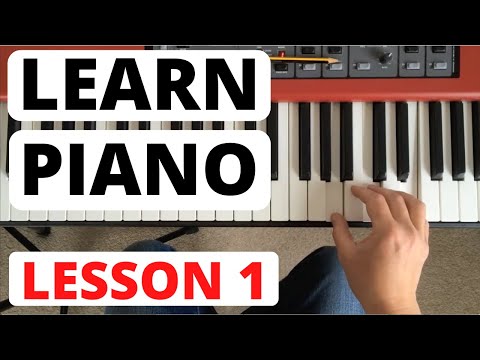
The black keys serve as visual landmarks that make navigation much easier. Each group of two black keys sits between a C and a D, while each group of three black keys sits between an F and a G. Start by memorizing middle C, the white key located near the center of the keyboard. Middle C is your anchor point, and from it, you can identify every other note on the piano. The white keys following the C-D-E-F-G-A-B pattern repeat across the entire keyboard. Understanding this layout is absolutely essential before you attempt to play scales, chords, or simple melodies.
- Middle C is your reference point and starting position
- Groups of two black keys correspond to the C and D notes
- Groups of three black keys correspond to the F and G notes
- The pattern repeats across all octaves on the keyboard
- A standard 88-key piano covers seven full octaves plus a few additional keys
Essential Piano Techniques for Beginners
Once you are comfortable with the keyboard layout, the next critical step is learning proper piano technique. Many self-taught players develop bad habits early on that become incredibly difficult to correct later. Investing time in foundational technique now will save you from frustration and potential injury down the road.
Hand Positioning and Posture
Your posture at the piano matters more than most beginners realize. Sit at the bench with your back straight but relaxed, your forearms parallel to the floor, and your wrists loose and flexible. Your fingers should curve naturally, as if you are holding a small ball or resting your hand on a table. Avoid flattening your fingers or collapsing your wrists, as these are among the most common mistakes new pianists make. Keep your fingertips firm but not rigid, and press the keys using the pads of your fingers rather than the tips of your nails.
Finger Numbering System
Piano pedagogy uses a standardized finger numbering system that every beginner must learn. Your thumbs are numbered one, index fingers are two, middle fingers are three, ring fingers are four, and pinkies are five. This system applies to both hands and is used universally in sheet music and exercises. Practicing finger exercises like the five-finger scale — placing fingers 1 through 5 on consecutive white keys starting from middle C — builds dexterity, independence, and muscle memory that will serve you throughout your entire piano journey.
- Right thumb (1) on middle C, fingers 2 through 5 on D, E, F, G
- Left pinky (5) on the C below middle C, working up to G with finger 1
- Practice hands separately before combining them
- Use a metronome to maintain steady rhythm during exercises
- Focus on even volume and tone across all five fingers
Reading Piano Music: Notes, Scales, and Chords
Reading sheet music is a skill that opens up an entirely new world of musical possibility. While some players rely on ear training or chord charts, understanding written notation gives you access to the full repertoire of piano music across every genre and era.
The Musical Alphabet and Staff Notation
The musical alphabet consists of seven letters: A through G. On the grand staff, the treble clef handles higher-pitched notes typically played with the right hand, while the bass clef handles lower-pitched notes for the left hand. Each line and space on the staff corresponds to a specific note. The mnemonic “Every Good Boy Deserves Fudge” helps you remember the lines on the treble clef (E, G, B, D, F), and the spaces spell out F-A-C-E. For the bass clef, the lines spell G-B-D-F-A, and the spaces spell A-C-E-G.
Major and Minor Scales
Scales are the building blocks of melody and harmony. The major scale follows a specific pattern of whole steps and half steps: whole, whole, half, whole, whole, whole, half. Starting from C, the C major scale uses only white keys (C-D-E-F-G-A-B-C), making it the easiest scale for beginners. The natural minor scale follows a different pattern — whole, half, whole, whole, half, whole, whole — and the A minor scale is the relative minor of C major, also using only white keys. Practicing both major and minor scales daily develops finger strength, dexterity, and a deep understanding of how music is constructed.
Building Your First Piano Chords
A chord is simply two or more notes played simultaneously, and understanding chords is the fastest path to playing songs. The three essential chord types every beginner should learn are major, minor, and diminished chords. A major chord is built using the root note, a major third, and a perfect fifth. A minor chord lowers the third by a half step, creating a different emotional quality. Start with C major (C-E-G), A minor (A-C-E), and F major (F-A-C). These three chords alone allow you to play hundreds of popular songs. Practice transitioning smoothly between these chords to build fluency and hand coordination.
Basic Piano Practice Routine That Actually Works
Consistency matters far more than duration when it comes to piano practice. A focused 20 to 30-minute daily session will produce dramatically better results than an unfocused two-hour session once a week. Here is a structured routine that balances technique, theory, and repertoire.
| Time Block | Activity | Duration |
|---|---|---|
| Warm-Up | Five-finger scales and finger stretches | 5 minutes |
| Technical Work | Scales and arpeggios in major and minor keys | 5 minutes |
| Chord Practice | Chord transitions and progressions | 5 minutes |
| Repertoire | Working on a specific song or piece | 10 minutes |
| Sight-Reading | Reading a new, short piece of notation | 5 minutes |
This routine covers the core pillars of piano development: finger technique, harmonic understanding, repertoire building, and sight-reading. Rotate your scales and chord practice through different keys each week to ensure balanced development. Keeping a simple practice journal where you note what you worked on and what needs improvement is one of the most effective habits any pianist can adopt.
Choosing Your First Piano: Acoustic vs Digital
One of the most important decisions for any beginner is selecting the right instrument. Your choice will significantly impact your learning experience, so it is worth understanding the key differences between acoustic and digital pianos before making a purchase.
| Feature | Acoustic Piano | Digital Piano |
|---|---|---|
| Price Range | $3,000 – $15,000+ | $300 – $2,000 |
| Key Action | Hammer-weighted, natural feel | Graded hammer action (varies by model) |
| Portability | Very heavy, permanently placed | Lightweight, portable options available |
| Maintenance | Regular tuning required | No tuning needed |
| Volume Control | Fixed volume | Headphone output available |
| Sound Variety | Single acoustic tone | Multiple instrument sounds and effects |
| Best For | Serious classical study | Beginners, portability, versatility |
For most beginners, a digital piano with weighted keys is the most practical and cost-effective choice. Look for models with at least 88 keys and hammer-action or weighted keybeds that replicate the feel of an acoustic piano. Popular reliable brands for beginners include Yamaha, Roland, and Casio. If budget is a significant constraint, even a 66-key or 76-key keyboard with touch sensitivity can serve you well during your first year of study.
Advancing Beyond the Basics: Intermediate Next Steps
Once you have a solid grasp of basic piano fundamentals — scales, chords, simple songs, and reading music — it is time to start pushing into intermediate territory. This is where your progress can either plateau or accelerate, depending on the habits you build. Introduce triad inversions, so you can move smoothly through chord progressions without jumping around the keyboard. Start exploring seventh chords, which add richness and sophistication to your playing. Begin practicing hands together more frequently, and work on playing simple melodies in the right hand while accompanying with chords in the left hand. This coordination challenge is one of the most rewarding aspects of learning piano, and it is where the real magic of playing songs starts to happen.
Consider working with a qualified piano teacher, even on a biweekly basis, to get personalized feedback on your technique and musicality. Online resources, structured courses, and apps can supplement your learning, but nothing replaces the eye of an experienced instructor who can spot and correct issues you might not notice on your own. Set specific, measurable goals for each month — such as learning a new scale, mastering a particular song, or improving your sight-reading speed — to keep your progress on track and your motivation high.
Frequently Asked Questions
Q: How long does it take to learn basic piano?
With consistent daily practice of 20 to 30 minutes, most beginners can play simple songs with both hands within three to six months. However, mastering the fundamentals of scales, chords, and sight-reading typically takes one to two years of dedicated study.
Q: What is the best age to start learning basic piano?
Children as young as four or five can begin introductory piano lessons, though the ideal starting age depends on the child’s attention span and finger strength. Adults can learn basic piano at any age, and research shows that adult learners often progress faster than young children due to better cognitive processing and discipline.
Q: Do I need to learn to read sheet music to play piano?
While it is possible to play piano using chord charts, tabs, or by ear, learning to read standard musical notation significantly expands your capabilities and access to the full piano repertoire. Even a basic understanding of staff notation and rhythm notation will transform how quickly you can learn new pieces.
Q: What are the easiest beginner piano songs to start with?
Songs that use simple chord progressions and limited hand movement are ideal for beginners. “Ode to Joy” by Beethoven, “Chopsticks,” “Heart and Soul,” and “Amazing Grace” are classic starting points that teach fundamental skills while producing recognizable, satisfying melodies.
Q: How often should I practice piano as a beginner?
Daily practice, even if it is only 15 to 20 minutes, is far more effective than infrequent longer sessions. Consistency builds muscle memory, reinforces music theory concepts, and develops the ear training skills that are essential for becoming a competent pianist.
Q: Should I start with a keyboard or an acoustic piano?
A digital piano with weighted keys is generally the best starting point for most beginners due to its affordability, portability, and lack of maintenance requirements. If you are certain about pursuing piano seriously and have the budget, an acoustic upright piano offers an unmatched playing experience and touch response.
Mastering basic piano fundamentals is a journey that rewards patience, curiosity, and consistent effort. Every great pianist started with the same first steps: learning the layout of the keys, placing their hands correctly, and playing their first few notes with intention. By following a structured approach to technique, music reading, chord building, and daily practice, you will build a foundation that supports your growth for years to come. Whether your goal is to play classical compositions, accompany yourself singing, improvise jazz, or simply enjoy the profound pleasure of making music, the basic piano skills you develop today will open every door. Start where you are, stay curious, and let the keys guide you on this incredible musical journey.